Languages
Tuesday, November 24, 2026



News and Views from the Global South
Economy & Trade

India Undercuts Tribal Rights
Over a decade ago, the Dongria Kondh tribe – tucked away in the Niyamgiri hills, a mountain range in the eastern Indian state of Orissa – found itself under attack.
No Rest for Weary Massage Workers
Times are tough in this Southeast Asian nation of 14 million people, where over 30 percent of the population lives below the poverty line of a dollar a day. Formal employment is hard to come by and many workers find themselves drifting in the murky waters of the “informal” market, where wages are unregulated and labour laws are seldom honoured.
Mozambican Farmers Fear Foreign Land Grabs
Mozambican farmers’ unions believe that soon land will become very scarce for locals as the government leases more and more of it to foreign agribusinesses – thus displacing thousands of rural communities and smallholder farmers with no official title deeds to their land.
Arms Bazaars Proliferate as U.N. Tries to Regulate Trade
When a 20-year-old went on a deadly shooting spree killing 26 students and teachers in an elementary school in Connecticut last December, there was the inevitable outcry either for a ban or a tight control on gun shows, where firearms can be purchased over the counter with no background checks on the buyer.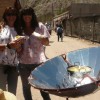
Carnival Food Carts Go Solar in Northern Argentina
It’s carnival time in sunny northwest Argentina, and as usual, food vending carts are everywhere. But some of the carts are different this year: they offer food cooked on the spot – by the sun.
Agriculture on the Air
The sun is just beginning its descent as a knot of farmers gathers around a small, portable radio in the grounds of the Nachol Pilot High School in Bangladesh’s northwestern Chapainawabganj district, about 300 kilometres from the capital, Dhaka.
Controversy Erupts Over “Corporate Carnival”
A transnational pesticides manufacturer is sponsoring the Vila Isabel samba school, which won the main contest in Rio de Janeiro's carnival this year, raising questions about financing mechanisms for "the greatest show on earth", as carnival is described in Brazil.Widening Social Divide Fuels Protest Mood in Kazakhstan
In the official narrative of Kazakhstan’s post-Soviet history, President Nursultan Nazarbayev is lauded for fostering widespread prosperity while maintaining inter-ethnic harmony.Golf Plays Against Local Democracy
More than 10,000 people living in the coastal Adriatic town Dubrovnik have done what many others in the region could never. They are holding a referendum on a controversial development project that they believe endangers their city.
UN Looks, Sri Lanka Ducks
It has now become an annual affair. When the Geneva based UN Human Rights Council readies itself for the first of its annual regular sessions in February, the government in Sri Lanka gets ready to ward off yet another attempt to scrutinise its rights record.
No-till Farming Holds the Key to Food Security
No-till farming is a response to climate change that fits well with the needs of the Caribbean: it increases the ability to capture water, while withstanding both drought and excessive rains, says expert Theodor Friedrich, representative of the United Nation’s Food and Agriculture Organisation (FAO) in Cuba.Mexico Mired in Oil Debates
Oil, the symbol of modern Mexico, is once again stirring up local political waters, with turbulent debates on the fate of the state-owned oil monopoly and conflicts over the privatisation of key economic and strategic areas.
Q&A: “Neoliberalism Negates Human Rights”
Thousands of people marched through the streets of cities across Portugal "against exploitation and impoverishment" caused by the government's austerity cuts, in a protest organised by the General Confederation of Portuguese Workers (CGTP), the country's largest trade union.
Correa Calls for Irreversible “Citizens’ Revolution”
Ecuador's President Rafael Correa secured yesterday his third term in office by a landslide, after vowing to radically deepen his project of citizens' revolution by making the changes achieved thus far "irreversible", fully achieving the goals of eradicating poverty, transforming the model of production and consolidating the "rule of the people”.India Tightening Child Labour Laws
After one of the six males under trial for the rape and subsequent death of a 23-year-old woman was deemed an adolescent and therefore entitled to leniency, juvenile rights activists have found themselves pitted against irate members of the public demanding death sentences for all the perpetrators.
Haiti-Dominican Republic Trade: Exports or Exploits?
"I get everything at the Haiti-Dominican Republic: carrots, squash, eggplant, cabbage, peppers, eggs, salami," explained a merchant at the Croix des Bossales marketplace, her stand teeming with goods. "The border is what feeds us."
Climate Rally Draws “Line in the Sand” on Canadian Pipeline
The largest climate rally in U.S. history is expected Sunday in Washington DC with the aim of pressuring President Barack Obama to reject the Keystone XL tar sands pipeline.
Yemen’s Youth Denied the Revolutionary Change
This week in Sana’a thousands of Yemenis – mostly youth - crowded the highway near the landmark ‘Change Square’ to celebrate the second anniversary of the revolution. Adjacent to the university, this was the site of a tented encampment that drew tens of thousands of demonstrators throughout 2011.
Climate Change Added to U.S. Government “High Risk” List
For the first time, a U.S. government auditor has added climate change to a list of issues that pose the greatest financial risk to the government and country. It is also warning that Washington is markedly unprepared to deal with the scope of the problem.
Brazilian Ethanol in the Slow Lane to Global Market
Following a promising start, Brazil's dream of positioning ethanol in the global market on an equal standing with petroleum-based fuels is hindered by new and old challenges.
Tenants in Spain Win First Battle against Evictions
Public outcry against evictions this week led Spain's parliament to accept a popular initiative against mortgage-related evictions for unpaid debts, which in the past seven days have led to four suicides.« Previous Page — Next Page »


 UN Commission on International Trade Law Holds Colloquium on Harmonizing Law in Age of Digital Trade and Finance. Credit: UN Photo/Manuel Elías
Trade has historically been a geopolitical tool that can both be used to propel development as well as entrench inequalities. In various nations in East Asia and Latin America, increased trade, as often seen in export booms, has allowed them to achieve influential standings within the global economy. On the other hand, many low-income countries in Sub-Saharan Africa, Asia, and Latin America struggle to maintain a robust trade performance, and oftentimes are subjugated to exploitative trade dynamics through intense extraction of their natural resources. In recent decades, international trade has reached a new era as emerging economies across the world are rising in economic preeminence. Stable international trade is crucial to world peace as global interconnectedness facilitates reliable diplomacy. Nevertheless, significant challenges are on the rise. Notably, a major wave of United States tariff escalations in January 2025 lifted US import taxes to their highest level since the 1930s, changing market dynamics and forcing renegotiations with global trading partners.These articles are aimed at informing readers about the complexities of trade and its varying effects on development, with a special focus on the consequences of the global economic crisis, the potential of fair trade and the gender implications of trade policies.
Updated by Yilan Batista and Shuli Wong August 2026

The Week with IPS

NEXT STOP - SDGs
Tracking global progress towards a sustainable world
