Languages
Wednesday, November 11, 2026



News and Views from the Global South
Editors' Choice

On World Press Freedom Day, A View From Asia
Travel in many parts of Asia, as I do, and you are likely to find everyone looking at their smartphones – even in remote areas - hungry for information wherever they can find it.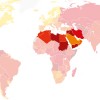
Mideast: 1 in 3 Bribes to Access Basic Public Services
Just an ordinary citizen living in a Middle East and North of Africa country and requring a birth certificate for your new-born daughter? No problem—just take something with you, either some cash, a pack of cigarettes or buy a glass of tea with milk and a lot of sugar.
Indian Women Worst Hit by Water Crisis
A staggering 330 million Indians, making up a quarter of the country's population (or roughly the entire population of the United States), are currently reeling under the effects of a severe drought, resulting in an acute drinking water shortage and agricultural distress.
The Family Garden Going Out of Style in Cuban Countryside
In the past, all rural homes in Cuba had gardens for putting fresh vegetables on the dinner table. The local term for these gardens is “conuco”, a word with indigenous roots that is still used in several Caribbean nations.
Can the UN Security Council Stop Hospitals Being Targets in War?
Hospitals, health care workers and patients in war zones are supposed to be protected under international humanitarian law yet recent attacks from Syria to Afghanistan suggest that they have become targets.
Violence Against Women Journalists Threatens Media Freedom
For women journalists, violence and intimidation don't just happen in conflict zones, they are every day experiences.
UN Predicts 40 Percent Water Shortfall by 2030
Ten presidents and prime ministers from around the world will work together to resolve the growing global water crisis amid warnings that the world may face a 40 percent shortfall in water availability by 2030.
How We Can Keep Press Freedom from Withering Away?
Media freedoms appear increasingly under siege around the world, with concerning signs that achieving middle-income status is no guarantee for an independent political watchdog in the form of the press.
Why we need to stand united against governments cracking down on dissent
Last month, after receiving threats for opposing a hydroelectric project, Berta Caceres, a Honduran indigenous and environmental rights campaigner, was murdered. A former winner of the Goldman Environmental Prize for her opposition to one of Central America’s biggest hydropower projects, Berta was shot dead in her own home.
Opinion: Increasing Productivity Key to Revive Growth and Support Sustainable Development in Asia and the Pacific
The Asia-Pacific region’s successful achievement of the 2030 Agenda for Sustainable Development needs to be driven by broad-based productivity gains and rebalancing of economies towards domestic and regional demand. This is the main message of the Economic and Social Survey of Asia and the Pacific 2016, published today by the Economic and Social Commission for Asia and the Pacific. Such a strategy will not only underpin the revival of robust and resilient economic growth, but also improve the quality of growth by making it more inclusive and sustainable.
Playing Ping Pong with Disability
Despite formally adopting progressive laws, such as Law Number 4, and ratifying the UN Convention on the Rights of People with Disability, Palestinian authorities still struggle to get beyond rhetoric when it comes to supporting the 7 to 11 per cent of the population that is affected by disability.
Times of Violence and Resistance for Latin American Journalists
Mexico is the most dangerous country in Latin America for journalists. In 2015 it accounted for one-third of all murders of reporters in the region, and four more journalists have been added to the list so far this year.
Why the World Needs a UN Leader Who Stands Up for Human Rights
Last August, Balla Hadji, a 61-year-old truck driver in Bangui in the Central African Republic, was having breakfast with his wife when they heard shots outside. He ran out to call his daughter inside, but troops were already there, and shot him in the back as he ran away. His 16-year-old son, Souleimane, was also shot when he ran towards his father. Balla died on the spot, his son Souleimane the next day.
The Hypocrisy of the West and Fiscal Paradise
The publication of the Panama Papers has now been digested, like any scandal, after just a few days. We are now getting so accustomed to scandals, that it is confusing, and the general public reaction often is: all are corrupt and politics is all about corruption.
Choose Humanity: Make the Impossible Choice Possible!
We have arrived at the point of no return. At this very moment the world is witnessing the highest level of humanitarian needs since World War Two. We are experiencing a human catastrophe on a titanic scale: 125 million in dire need of assistance, over 60 million people forcibly displaced, and 218 million people affected by disasters each year for the past two decades.
Organised Civil Society Increasingly Hemmed In by Global Elites
Collusion, according to the dictionary, means “secret or illegal cooperation or conspiracy, especially in order to cheat or deceive others.” That is what the world’s political and economic elites engage in, according to Danny Sriskandarajah, secretary general of the international civil society alliance CIVICUS.
Eastern Europe’s Claims for UN Chief Questioned
As the campaign for a new UN Secretary-General (UNSG) gathers momentum, there is one lingering question that remains unanswered: does the now-defunct Eastern European political alliance have a legitimate claim for the job on the basis of geographical rotation?
Any Ways to Combat Extremism?
“The objective of extremists is for us to turn on each other [and] our unity is the ultimate rebuke for that bankrupt strategy.”
Harvesting Rainwater to Weather Drought in Northeast Argentina
In a semiarid region in the northeast Argentine province of Chaco, small farmers have adopted a simple technique to ensure a steady water supply during times of drought: they harvest the rain and store it in tanks, as part of a climate change adaptation project.
Developing Countries Take Lead at Climate Change Agreement Signing
An unprecedented 175 countries signed the Paris Climate Change Agreement here Friday, with 15 developing countries taking the lead by also ratifying the treaty.
How the Definition of Development Aid is Being Eroded
The traditional definition of aid is being eroded at the same time that governments have committed to achieving the UN's ambitious Sustainable Development Goals (SDGs), Jeffrey Sachs special adviser to the UN Secretary-General on development told IPS Thursday.« Previous Page — Next Page »





The Week with IPS

NEXT STOP - SDGs
Tracking global progress towards a sustainable world
Tracking global progress towards a sustainable world
