
Monday, November 16, 2026



News and Views from the Global South
Climate Change

Civil Society Pushes for More Active Participation in Green Climate Fund
The Green Climate Fund (GCF), created under the auspices of the United Nations to finance the huge investments demanded by climate change, was opened up to participation by civil society and private sector representatives as observers in March.
/CORRECTED REPEAT*/River Diversion Project Spells Disaster
Tsetseghkorol, a Mongolian herder, stares out nostalgically at the Orkhon River, the longest in the country.
Insuring Ghana’s Smallholder Farmers Against the Weather
Smallholder farmer Suleman Mustapha Simbia, 40, is pleased with the introduction of an insurance initiative called the Ghana Agriculture Insurance Programme. The programme is being implemented in this West African nation to help farmers who had been suffering from loss of income as a result of the bad weather conditions that affect their yields.
Measuring CO2 in Green Ecosystems of the Mexican Caribbean
Jungles, forests, mangroves, swamps and lagoons are natural carbon storehouses or “sinks” in the Caribbean regions of Mexico. But now studies are being conducted to measure their capacity for absorbing carbon dioxide from the atmosphere.
Caribbean Launches New Tool to Deal with Climate Change
If the studies conducted by the International Code Council (ICC) are true, then by 2025, Caribbean countries will witness a significant increase in Category 4 and 5 hurricanes from the present level of 1.4 annually to four.
Russia Contests U.S. Proposal for Major Antarctic Conservation Zone
International negotiations between more than two-dozen countries to set up conservation areas in the Antarctic seas were thrown into confusion Monday when the Russian and Ukrainian delegations questioned the body’s legal standing to make such designations, despite previous precedent.
In Kenya, Small Is Vulnerable
With the country's food security and farmers' livelihoods at risk from climate change, Kenya has divergent policy options. One is reliant on deploying new technologies as well as improving and expanding use of fertilisers and pesticides; while the other would turn to indigenous knowledge and the country's natural biodiversity.
REDD a ‘False Solution’ for Africa
REDD – reducing emissions from deforestation and forest degradation – would seem to be a mitigation strategy that perfectly matches Africa's needs.
EU Bank ‘Funding Polluters’
The European Investment Bank, the largest institutional bank in the world, is facing criticism for its funding of fossil fuel projects and for weaker standards for lending to coal plants than currently proposed in both the U.S. and Canada.
Mexico’s Cities Not Ready for Climate Change
Towns on Mexico’s Caribbean coast are behind schedule on the design and implementation of plans to face the challenges of climate change, in spite of the urgency of measures to reduce vulnerability.
Climate Change Takes Centre Stage in U.S.-China Talks
The United States and China have agreed on a suite of potentially far-reaching initiatives aimed at cutting greenhouse gas emissions in the world’s two largest economies and largest polluters.
Q&A: Hurricanes Are Getting Stronger in the Caribbean
Rather than talk about forecasts for hurricanes at the start of this year’s season, Cuban meteorologist José Rubiera prefers to discuss the importance of reducing the country’s vulnerability and improving preparedness.
Indonesia’s Recurring Forest Fires Threaten Environment
Indonesia's forest fires, a predictable annual ritual, will continue to have serious implications for health and the environment in Southeast Asia unless the government strengthens forest protection, warn environmental groups.
Over a Barrel, Caribbean Seeks Finance for Clean Energy
When James Husbands, a 24-year-old Barbadian businessman, began weighing the possibility of manufacturing solar water heaters, there was already a prototype on the island that had been designed and installed by an Anglican priest living there in the early 1970s.
Fighting Drought, One Pond at a Time
 Bangladesh, a country of 150 million people who depend on rice as their main staple, is gearing up for drought. Already huge areas of the rice-producing regions are on a knife's edge, as elusive rains and hotter temperatures team up on thirsty paddy fields and threaten to disrupt food supply.

U.S. Navy’s “Green Fleet” Sparks Praise and Cynicism
The United States military, an organisation that consumes 90 percent of the country's federal oil allowance, is trying to become a greener institution.
Cyclone-Resistant Construction Materials, Cuban Style
Houses with sturdy masonry walls and reinforced concrete roofs, looking like they could survive any tropical storm or hurricane, are sprouting up on the outskirts of this city in central Cuba, thanks to the development of local production of construction materials.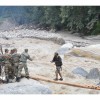
In the Land of the Gods, Disaster Response Falls Short of Divine
Over 580 bodies have so far been found. Hundreds more will likely never turn up. Survivors say they are suspended in a kind of nightmare, either haunted by memories of their brush with death or desperate for news of loved ones. At least 3,000 are reported to be missing.
Q&A: World Needs a Plan for Expected Waves of Climate Refugees
Untold thousands dead and thousands more stranded or missing - these are the latest figures from various reports on the devastation caused by flash floods in the Indian state of Uttarakhand.
World Bank to “Cease Providing” Funding for New Coal Projects
The World Bank is set to consider dramatically cutting down its funding for coal-related power projects, according to a draft strategy document leaked this week.
Are Humans Responsible for the Himalayan Tsunami?
On the outskirts of Rudraprayag, a town in the northern Indian state of Uttarakhand whose many temples draw tourists and Hindu pilgrims with magnetic force, visitors often stop for a meal at a popular hotel built right on the river Alakananda.« Previous Page — Next Page »


As unsustainable human consumption and production systems are driving changes in average temperatures and weather patterns, "abnormal" is increasingly becoming the norm. So far, a lack of financing has been standing in the way of a comprehensive global plan for climate adaptation, and a global financial crisis has contributed to an increasing reliance on public-private partnerships. Our Climate Change page provides you with the latest news about international and local efforts to address what's frequently been called "the challenge of our time", the forces behind the climate change and the impact it has on the world's most vulnerable populations. Along the way, we bring you stories on growing citizen awareness, new scientific data, and emerging climate policies towards sustainable development.

The Week with IPS

Tracking global progress towards a sustainable world

