Languages
Thursday, November 12, 2026



News and Views from the Global South
Featured

Benin’s Agriculture Has a Good Season, But it Wasn’t Easy
Théophile Houssou, a maize farmer from Cotonou, has spent sleepless nights lying awake worrying about the various disasters that could befall any farmer, often wondering, “What if it rains heavily and all my crops are washed away?” or “What if the armyworms invade my farm and eat up all the crops and I’m left with nothing?”
Trump’s Arms Control Gambit: Serious or a Poison Pill?
Smart U.S. leadership is an essential part of the nuclear risk reduction equation. Unfortunately, after more than two years into President Donald Trump’s term in office, his administration has failed to present a credible strategy to reduce the risks posed by the still enormous U.S. and Russian nuclear arsenals, which comprise more than 90 percent of the world’s nuclear weapons.
“In Venezuela, Union Organising is Illegal”
Maduro or Guaidó? Neither, according to José Bodas. He is the former General Secretary of the FUTPV, Venezuela’s main oil workers trade union, and according to him, neither the president nor the challenger from the opposition has the people’s best interests in mind.
Massacre of the Innocents: Whereto from Here?
We have been here before. This blooded precipice is familiar, this looming abyss. What is unfamiliar, what renders the Easter Sunday massacre most vile and truly nightmarish is the total absence of any knowable rationality.
Coping With World Bank-Led Financialization
The World Bank has successfully promoted its ‘Maximizing Finance for Development’ (MFD) strategy by embracing the United Nations’ Sustainable Development Goals, internationally endorsed in September 2015. It has also secured support from the G20 of twenty biggest economies, and effectively pre-empted alternative approaches at the third UN Financing for Development summit in Addis Ababa in mid-2015.
Kenya and Ethiopia Cross-Border Initiative: A Move Towards Sustainable Peace
Many years of internecine conflict is being replaced by a new narrative of peace along the Kenya-Ethiopia border. Communities that once fought each other are now dreaming of a joint journey towards a better future.
Renewables to Become the Norm for the Caribbean
Jamaica and other Small Island Developing States (SIDS) are embracing renewable energy as part of their plans to become decarbonised in the coming decades.
Land Conservation: A Risky Business
In light of land degradation and climate change, the protection of the environment is crucial—but the protection of the very people working tirelessly and with much risk to preserve nature should be just as important.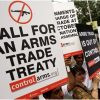
US Takes Back Signature on Arms Trade Treaty
The United States dropped a political bombshell when President Donald Trump announced his administration would withdraw from the historic Arms Trade Treaty (ATT) which the former Obama administration signed in September 2013.
Improving the Lives of Millions of Mothers and Children
It is slightly after 3pm on a hot Wednesday afternoon in Chipata district, eastern Zambia, and a group of women are gathering for a meeting. It is Elizabeth Tembo’s turn to stand amongst the other mothers like herself and share key lessons on nutrition.
Muslim Terrorists Heading Towards a Jihadist Hell Hole
The history of terrorism in Sri Lanka reveals a clear pattern. The first to take up arms in the post-Independent era were the misguided Sinhala youth. They were educated youth desperately running in search of a quick solution to establish their classless paradise. Their violence did not take them anywhere.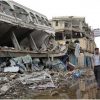
US & Western Arms in Yemen Conflict Signal Potential War Crime Charges
When US political leaders urged the Trump administration to either reduce or cut off arms supplies to Saudi Arabia – largely as a punishment for its indiscriminate bombings of civilians in the four-year old military conflict in Yemen—President Trump provided a predictable response: “If we don’t sell arms to Saudi Arabia, the Chinese and the Russians will.”
A Treaty to End Corporate Immunity?
When Ecuadorean diplomat Luis Gallegos first proposed a “Binding Treaty on Business and Human Rights,” many countries and environmental activists welcomed the idea with open arms.
Women and Girls “Preyed on as the Spoils of War”
“They forcefully took us away and kept us like prisoners,” Lydia Musa, a former Boko Haram captive who was abducted at the age of 14 during an attack on her village in Gwoza, in Nigeria’s north eastern Borno State, tells IPS. Musa and two other underaged girls were captured and forced to marry Boko Haram fighters in spite of their protests that they were too young to marry.
Russia’s First Female Central Bank Governor in a Challenging Job
Within a few short months after taking up her post as governor of the Central Bank of Russia in 2013, Elvira Nabiullina faced a growing economic crisis brought on by plunging oil prices, geopolitical tensions, and sanctions.
After the Rain: The Lasting Effects of Storms in the Caribbean
Sustainability is constitutive of the concept of development. Just as economist Amartya Sen has argued that there is no point in discussing the relationship between development and democracy, because democracy is constitutive of the concept of development, there is no point of trying to disentangle sustainability from the notion of development itself.
Against All Odds, Indigenous Villages Generate Their Own Energy in Guatemala
In the stifling heat, Diego Matom takes the bread trays out of the oven and carefully places them on wooden shelves, happy that his business has prospered since his village in northwest Guatemala began to generate its own electricity.
Bleak Outlook for Press Freedom in West Africa
When former footballer George Weah became president of Liberia in 2018, media practitioners felt they had in him a democrat who would champion media freedoms. “But we were mistaken,” journalist Henry Costa told IPS.
Why Climate Action Plans are not Good Enough to Deliver a Low-Carbon Future in Cities
Though climate policies aim to reduce GHG emissions, they miss out on emphasizing the importance of urban planning policies Cities that have ratified the Paris Agreement and pledged to reduce carbon emissions are adopting climate action plans aimed at reducing greenhouse gas (GHG) emissions.
Privatization Promotes Collusion and Corruption
At the risk of reiterating what should be obvious, the question of private or public ownership is distinct from the issue of competition or market forces. Despite the misleading claim that privatization promotes competition, it is competition policy, not privatization, that promotes competition.
Sri Lanka’s Easter Sunday Carnage: Quo Vadis?
I returned from attending a three-hour Easter Sunday mass at the Fordham University Church around midnight New York time on April 20, 2019, when my phone rang and a colleague asked me what’s going on in Sri Lanka? I said what is going on? He said there were a series of coordinated terrorist bombings with multiple fatalities and scores of injuries in my native country. For the next four and a half hours I was on the phone trying to piece together what happened, including reaching out to Sri Lanka’s Secretary of Defence Hemasiri Fernando.« Previous Page — Next Page »





The Week with IPS

NEXT STOP - SDGs
Tracking global progress towards a sustainable world
Tracking global progress towards a sustainable world
