Languages
Tuesday, November 10, 2026



News and Views from the Global South
Gender

Adultery Laws Unfairly Target Women, U.N. Says
When one of the Asian countries embraced Islamic Sharia law back in the 1990s, the rigidly conservative government threatened to enforce a provision that called for convicted adulterers to be stoned to death.
‘Malala’s Cause Is Our Cause’
Less than two weeks after being left for dead by the Taliban, Malala Yousafzai is standing up on her own two feet.
Migrant Women Trapped in Sex Trade
When French police broke up a Nigerian human trafficking ring that allegedly forced young migrant women into prostitution, the arrests cast a sharp light on the plight of what the authorities called “modern-day slaves”, here and throughout Europe.Amidst Controversy, World Bank to Review Influential Rankings
The World Bank released its 10th annual Doing Business report on Monday, using the occasion to track business- and investment-friendly reforms put in place around the world over the past decade.
The Face of Food Security Is Female
In a major endorsement for investment in women - the bulk of food growers in the developing world - United Nations Secretary General Ban Ki-moon said food security could not be achieved without women, and that the world's hungry also needed leaders to prioritise actions.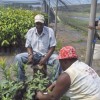
Amid Food Crisis, Caribbean Agriculture Going to Seed
With the average age of a farmer in the Caribbean now 62 years old, there is growing concern that commercial agriculture is on a path to extinction – a dire scenario for a region already shouldering a massive food import bill.
Cooperatives Help Women Farmers Tighten Ranks
It is a tried and tested truth that when women come together in groups they can address their issues more powerfully than they can as individuals.
Violence Against Women Surging in India
As gender-based violence across India becomes more frequent, and more savage, increasing numbers of women are speaking out against the cruelty.
Women’s Groups Say Uruguay’s New Abortion Law Falls Short
The Uruguayan Congress passed a law Wednesday decriminalising abortion, making it one of the few countries in the region where abortion is allowed in cases other than rape, incest, malformation of the fetus or danger to the mother’s life. But activists who backed the bill are not pleased with modifications introduced in the final version.
Violence Against Women Persists in Bangladesh
Bangladesh, often cited as a model of progress in achieving the United Nations Millennium Development Goals (MDGs), appears to be sliding backwards when it comes to dealing with violence against women (VAW).
Giving Women Land, Giving them a Future
Clarisse Kimbi barely ekes out a living from a tiny parcel of land in Kom village in the North West Region of Cameroon. Today, the mother of six finds it hard to put food on the table for herself and her children. But five years ago she, her husband and children were considered well-off.
Women Hit Hard by Natural Disasters
In the aftermath of a natural disaster, women are often the most vulnerable. Particularly in rural areas, women suffer disproportionately from inadequate shelter and poor sanitation facilities and are often tasked with rebuilding shattered homes.
Q&A: Disaster Resilience Starts with Grassroots Women
Women and girls can be powerful agents of change, but they are disproportionately affected by disasters because of social roles, discrimination and poverty.
Malawi’s Heroines of the Floods
For many women in Malawi’s disaster-prone southern district of Nsanje, resilience is essential to survive the cyclical flooding.
Women Are the New ‘Emerging Market’
Empowering women in the business world is not only a smart political decision, but also makes good economic sense.Experts Urge Focus on Microeconomics in Maghreb
A failure to focus on small-scale economics could be the most significant obstacle to stability in North Africa in the aftermath of the Arab Spring, economists, diplomats and development workers warned here on Friday.
Brazil’s Gender Quota Law Off to Underwhelming Start
Brazil’s new law requiring that 30 percent of candidates must be women made a less than impressive debut in Sunday’s municipal elections, although female candidates for mayor made better headway than women running for town councils.
Rural Women in Peru Cope “Where Life Is Very Sad”
When the crops in her rural highlands community in southern Peru were covered with a thick layer of ice one night, Felícitas Quispe, 43, organised her neighbours to make an effort to keep people from starving to death.
Cooperatives Summit Celebrates Power in Diversity
The migratory seeds of cooperatives were sown and first thrived in Europe, but have since adapted to the climate of nations worldwide.
Girls Determined to Fight Guns With Books
Shazia Begum, one of three girls injured in the attack on the Pakistani schoolgirl Malala Yousafzai says the Taliban had sought to silence a very influential schoolgirl.
U.N. Launches Global Campaign to Abolish Child Marriages
The United Nations has launched a global campaign to abolish an anachronistic social practice still prevalent in some communities around the world: child marriages.« Previous Page — Next Page »





Women make up half the world's population, but don't nearly share half of the world's wealth, well-being and opportunity. Two-thirds of the world poor are women, disproportionally exposing women to precarious living conditions, disease and unmitigated natural disasters. The media, meanwhile, remains a male-dominated sector in much of the world, contributing to women's voices lacking a crucial amplifier to put their concerns on political agendas and unleash the development potential of their ingenuity. Rather than then stereotypical victims of local and global forces, women are also organizer, innovators, conservators and community builders. These are some of their stories.

The Week with IPS

NEXT STOP - SDGs
Tracking global progress towards a sustainable world
Tracking global progress towards a sustainable world
