Languages
Wednesday, November 11, 2026



News and Views from the Global South
Gender
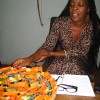
Building a Company in Mozambique – One Peanut at a Time
When you board Mozambique’s national carrier, Linhas Aéreas de Moçambique, you will most likely be given small blue packets of peanuts to munch as the jet whisks you from the country’s capital, Maputo, to as far afield as Europe. Sugar, salt or chilli flavour. Take your pick.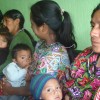
Midwives Play Key Social Role in Guatemala
"Midwives in Guatemala attend to women during pregnancy, the birth and the post-partum period. They give the women warmth and support, because they speak the same language and belong to the same culture," said Silvia Xinico with the Network of Organisations of Indigenous Women for Reproductive Health.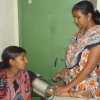
Bangladesh Braces for HIV Epidemic
Bangladesh has shown low HIV prevalence rates so far but may be silently moving towards an epidemic, say experts pointing to underreporting and poor monitoring for the virus in the general population.Women Look for a Place in New Egypt
"It was so frustrating but so exciting at the same time," recalls 15-year-old Mariam Assam, a year-10 student in Cairo. Assam was recalling the days she tried to join protestors during the Egyptian revolution in January 2011 but was intially prevented by her parents who said street protests were no place for a girl to be.Battle Rages to Stretch the Legal Concept of Family in Nicaragua
A bill under discussion in the Nicaraguan parliament has unleashed a nationwide debate on the concept of family.
Q&A: The World Must Learn From Smallholder Farmers
As Africa's Sahel region faces a new food crisis, smallholder famers hold the key to making future development policies sustainable.
Climate Change and Family Planning – Twin Issues for LDCs
The reproductive rights agenda, from improving women’s access to education to systematic family planning to reducing birth rates and combating poverty, has become a cornerstone of most industrialised nations’ development policies toward the least developed countries (LDCs), comprised primarily of sub-Saharan African states.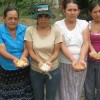
Rural Women in Peru Key to Adaptation of Seeds to Climate Change
For ages, rural women in the Peruvian highlands have been selecting and storing seeds, ensuring their preservation. But the authorities have failed to tap into this storehouse of knowledge and experience, despite the contributions it could make to the design of effective policies for adaptation to climate change, which poses a growing threat to the women’s livelihoods.
South Africa’s ‘Traditional Courts Bill’ Impairs Rights of 12 Million Rural Women
The Traditional Courts Bill currently under discussion in South Africa’s parliament and due to be enacted by the end of 2012 could undermine the basic rights of some of the country’s most vulnerable inhabitants: the 12 million women living in remote rural communities across the country.HIV-Positive Women in Argentina Mainly Infected by Stable Partners
The immense majority of women diagnosed with HIV in Argentina in the last two years were infected through unprotected sex with their stable partners, a new report says.‘More Indian Working Women Aborting Motherhood’
A young professional in India’s burgeoning IT hub Gurgaon, a major satellite city of national capital New Delhi, Manideepa Moitra works as a software content writer not just to make a living but to secure a career in the demanding sector that catapulted India on the global outsourcing industry map.
Conference Reaffirms Reproductive Rights
While much of the world is facing a global financial crisis, made worse by government cuts in social spending, members of parliament meeting here Wednesday agreed the economic crunch is no reason for governments to relax their commitment to women’s reproductive rights and health, made 18 years ago.
OP-ED: The Paradox of Losing Life While Giving Life in Africa
Three years ago, the African Union began a continent-wide campaign to reduce the number of women who die when pregnant or giving birth.
India’s Economic Growth Leaves Human Development in the Dust
Ahead of the Universal Periodic Review (UPR) of India, a coalition of NGOs denounced the gap between the country’s growth rate and the rate of poverty, malnutrition and lack of health and sanitation.TAJIKISTAN: Divorce Spurs Female Labour Migration
Four years ago, Farida Hajimova's husband left Tajikistan to work in Russia. After a time, he stopped calling. Ultimately, he never returned. She was left at home in Dushanbe with two daughters and not a lot of options.
Nothing to Show for Hard Work but Burnt Fields of Maize
Gertrude Mkoloi earns a living harvesting maize on a small piece of land in rural Zimbabwe. Or at least she used to.
While Men Go Drinking, Women Go Fishing
Climate change may have led to declining water levels in Genda Village in Zambia’s Eastern Province, but Mercy Mwanza and the women here discovered there was a positive side to it and found a new way to earn a living.Calls for Angola to Investigate Abuse of Congolese Migrants
The Angolan government is being urged to carry out a thorough and independent investigation into allegations of sexual and physical abuse by its security forces against Congolese migrants.
Helping Victims of Post-Election Crisis Obtain Justice in Côte d’Ivoire
Thousands of people suffered rape, torture and other violence during the post- electoral crisis in Côte d'Ivoire beginning in December 2010. But many survivors of rights violations have been afraid to seek justice for fear of reprisals by the perpetrators. An initiative by the International Federation of Human Rights aims to support 75 such victims as they bring their cases to court.Parliamentarians Track Progress on Reproductive Rights
Have women around the world become more empowered in their reproductive health and rights over the past 18 years? This is one of the questions that some 300 parliamentarians from around the world will be examining when they meet in Istanbul, Turkey, this week for the Fifth International Parliamentarians’ Conference on the Implementation of the International Conference on Population and Development (ICPD) programme of action.Buenos Aires Offers Same-Sex Marriage to Foreign Couples
Foreign non-residents, gay or straight, can now get married in the Argentine capital, thanks to a resolution that removed bureaucratic obstacles and streamlined the procedure.« Previous Page — Next Page »





Women make up half the world's population, but don't nearly share half of the world's wealth, well-being and opportunity. Two-thirds of the world poor are women, disproportionally exposing women to precarious living conditions, disease and unmitigated natural disasters. The media, meanwhile, remains a male-dominated sector in much of the world, contributing to women's voices lacking a crucial amplifier to put their concerns on political agendas and unleash the development potential of their ingenuity. Rather than then stereotypical victims of local and global forces, women are also organizer, innovators, conservators and community builders. These are some of their stories.

The Week with IPS

NEXT STOP - SDGs
Tracking global progress towards a sustainable world
Tracking global progress towards a sustainable world
