Languages
Monday, November 23, 2026



News and Views from the Global South
Headlines

Failing States: Many Problems, Few Solutions
Regardless of whether they are called fragile, failed, or failing states, scores of countries around the globe are plagued by overwhelming problems with few solutions in sight. Moreover, the instability and dire straits of these countries are spilling across national borders, destabilizing neighboring countries and regions, while posing enormous challenges for international organizations and donors.
Interoceanic Canal Bogged Down in Nicaragua
Nearly three years after Nicaragua granted a 50-year concession to the Chinese consortium HKND to build and operate an interoceanic canal, the megaproject has stalled, partly due to a severe drought that threatens the rivers and lake that will form part of the canal.
Turning to Agriculture
Facing an unprecedented economic crisis, South Sudan -- the newest nation of the world -- has urged its 12 million inhabitants to turn to agriculture instead of depending on declining oil revenues.Money Makes the Mare Go
That some Indians have stashed money abroad was known even when I began my journalism career almost 60 years ago. The West German government once provided us with a list of depositors from India, but nothing came out of it because the people involved enjoyed political patronage. The much-hidden Swiss accounts were also given to the government when it made an official request. No action followed since it was once again seen that the people who had kept their money were influential.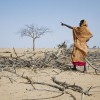
‘Little Boy’ Devouring African Food
There is a ‘Little Boy’ who has nothing to do with the atomic bomb that the United States dropped on the Japanese city of Hiroshima on 6 August 1945. This time it is about another ‘Little Boy’ who has been devastating the harvests in many regions, especially in Africa.
OPINION: Learning from History for Progress
The Chinese character for crisis combines the characters for ‘danger’ and ‘opportunity’. Our ability to improve the human condition depends critically on our ability to recognize and address dangers, but also to seize opportunities made possible by recognizing that crises offer rare opportunities to pursue extraordinary options not normally available.Heavenly Havens
Spring has not shed its bloom, yet its roses have turned the colour of congealed blood. The latest massacre of our innocents took place this time at Gulshan-i-Iqbal Park Lahore on March 27. Over 75 children, their parents and other holiday-goers died. More than 340 were injured. It was a cruelly premature Easter resurrection for the Christians amongst them, and a hellish holiday for their Muslim co-victims.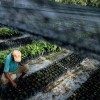
Too Hot for Chocolate
In the last months of 2014 breaking news shocked the world’s chocolate lovers: within a few years the world could face a significant potential cocoa shortage due to climate change.
Global Guidelines on Land Tenure Making Headway in Latin America
Voluntary guidelines on land tenure adopted by the international community to combat the growing concentration of land ownership and improve secure access to land have begun to make headway in Latin America, a region that is a leader in the fight against hunger and that is taking firm steps towards achieving food security.Debunking Stereotypes: Which Women Matter in the Fight Against Extremism?
Violent extremism is the topic du jour, as government officials are busy developing plans of action on “preventing or countering violent extremism” (P/CVE). In these plans there is dutiful reference to engaging “women”. The more progressive mention gender sensitivity.
Want to Feel Fit? Eat Falafel, Dahl, Cow Pea and…!
This is not a minor issue. Chickpea, faba bean, lentil, common bean, field pea, mung bean, black gram, pigeon pea, cowpea, and grass pea are the major pulse crops produced globally. And these especially play an important role in food and nutritional security and sustainable agricultural production systems in the drylands, which cover over 40 per cent of the world’s land area and are home to approximately 2.5 billion people.Linking Economies Through Transportation Infrastructure
More than six kilometres of water separate the southwest region from the rest of Bangladesh. The longstanding Padma Bridge project holds potential to span that gap both physically and economically, linking the region with Dhaka, Chittagong, and the rest of the country to the east.
OPINION: Indian Economy: Fading Promise or Gearing for Growth
It was in 2001 that the Chief Economist of Goldman Sachs, Jim O’Neill, coined the acronym, BRICs, to denote the special category of large emerging economies, which he predicted were destined to transform the structure of the global economy, through sustained growth in the twenty first century. According to him, the BRICs, namely, Brazil, Russia, India and China, which at the turn of the century accounted for 25% of global Gross domestic product (GDP), could double their share to 50%.Power and Greed
The Panama Papers only confirm what has long been known. The unprecedented leak of confidential documents provides some insight into how the rich and powerful stash away their wealth in secret offshore companies. The trail leads to national leaders, top politicians, celebrities and businessmen around the world. Information gleaned from over 11 million documents from a Panama-based law firm is just the tip of the iceberg. The disclosure has triggered global investigations into secret offshore money.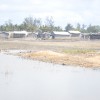
Saving Beira
Mozambique’s second largest city, Beira, is heading for climate change-induced disaster. Cyclones, floods, storm surges and the rising sea level are threatening to annihilate this important Indian Ocean coastal city; a city which is strategic for landlocked countries like Zimbabwe and Zambia.
OPINION: Why South Africa Must Not Lose Plot on Civil Society
South Africa celebrated human rights month this March with President Zuma recalling the “heroism of our people who stood up for their rights.” However, this same month which commemorates the sacrifices of those who took part in the struggle against apartheid and those who died in the Sharpeville Massacre of 21 March 1960 was not a happy one for today’s civil society activists and organisations engaged in defending human rights. Two shocking incidents raise troubling questions for the future of civil society in the country.
Leading the Climate Change Resistance
Climate change is the harsh reality of today, and its impacts are undeniable for nations such as ours. Global warming is leading to unprecedented rise in sea level, and for a low lying nation like Bangladesh, that means widespread inundation. Changing weather patterns are also wreaking havoc on agricultural production which is dependent on regular patterns of rainfall, heat and cold. Frequency and intensity of droughts, floods and cyclones are on the rise. And millions of hapless victims are finding themselves in dire straits.
Temple Tantrums
Women comprise nearly half of India's 1.2 billion population, yet gender bias and patriarchal mindsets continue to plague them well into the 21st century. Even holy places -- temples and mosques -- it seems aren't free from discriminating against the fair sex.
Climate Change Dries Up Nicaragua
A three-year drought, added to massive deforestation in the past few decades, has dried up most of Nicaragua’s water sources and has led to an increasingly severe water supply crisis.Strange Spectacle: Nuclear Security Summit 2016
At the invitation of President Obama, on April 1 more than 50 leaders of countries, including all countries possessing nuclear arsenals, except Russia and North Korea, gathered in Washington for the fourth Nuclear Security Summit.
Violence at Home
Amidst robust campaigning by liberal sections to activate the feminist lobby and strong criticism by clerics defending Islam’s endowment of women’s rights, there is a risk of overlooking the essence of what is a major human rights and public health issue — domestic violence.« Previous Page — Next Page »


