Languages
Wednesday, November 25, 2026



News and Views from the Global South
Headlines

Acute Malnutrition: A Community Fights Back
In the semi-darkness of her hut in Berdaballa, a forest village 610 km northeast of Mumbai, 28-year old Babita Mavaskar sat with her newborn baby boy watching him checked by a paramedic in an important antenatal exam. After about 20 minutes the health worker emerged from the shelter and made a big announcement, “All is well. Everything, the weight, temperature and height … is normal.”
From Bangladesh to Bihar
Times are a-changing for Bihar, a state popularly described as a state of mind. The recent elections have brought back Nitish Kumar as the chief minister for the fifth time. Since his first innings as a developmental CM from 2005, he has transformed Bihar from being an archetype of India’s backwardness to one of its fastest growing states. Besides improving governance, he has also politically empowered women in that benighted state. Not surprisingly, the women’s vote was decisive for his electoral success. He now has the historic opportunity to shift gears towards sustainable gender-based development.
Climate Change Bites Kenyan Tea Farmers
You wouldn't typically expect heavy rainfall and frost in East Africa. But the Earth's climate is changing - and this is affecting one of the world's largest tea-producing regions, in central Kenya.Refugee Crisis May Threaten Development Aid to World’s Poor
As the spreading refugee crisis threatens to destabilize national budgets of donor nations in Western Europe, Secretary-General Ban Ki-moon Wednesday appealed to the international community not to forsake its longstanding commitment for development assistance to the world’s poorer nations.
Latin American Legislators, a Battering Ram in the Fight Against Hunger
Lawmakers in Latin America are joining forces to strengthen institutional frameworks that sustain the fight against hunger in a region that, despite being dubbed “the next global breadbasket”, still has more than 34 million undernourished people.
Opinion: Economic Slowdown Threatening Progress
Slower economic growth since 2008, and especially with the commodity price collapse since the end of last year, threatens to reverse the exceptional half-decade before the financial crash when growth in the South stayed ahead of the North. From 2002, many developing countries – including some of the poorest– had been growing much faster after a quarter century of stagnation in Africa, for example.
El Nino Creates Topsy Turvy Weather in Sri Lanka
Residents in the Sri Lankan capital Colombo and outlying areas have been waking up to misty mornings of late. A decade ago, regular mist in this area just above the equator would have been a noteworthy event. These days, it is a regular occurrence in some parts north of the capital.Climate Change May Increase World’s Poor by 100 Million, Warns World Bank
The UN’s heavily-hyped Sustainable Development Goals (SDGs), which were approved by more than 160 world leaders at a summit meeting in September, are an integral part of the world body’s post-2015 development agenda, including the eradication of hunger and poverty by 2030.
Analysis: Is Empowerment of Women a Will-o’-the-Wisp?
Few dispute that women’s autonomy and betterment of their lives are moral imperatives. But whether these are also key to economic development is contested.
Opinion: The Grant of Patents and the Exorbitant Cost of “Lifesaving” Drugs
The important relationship between the examination of patents carried out by national patent offices and the right of citizens to access to medicines hasn't always been well-understood. Too often these are viewed as unrelated functions or responsibilities of the state. And the reason is clear: patentability requirements are not defined by patent offices, but frequently by the courts, tribunals, legislation or treaty negotiators.
Frequent Floods Intensify Migration, Food Security in Pakistan’s Mountainous North
Ishaq Khan shivers as he recounts an unfortunate flash flood in 2010, which covered his maize and potato crop with mud and washed away over a dozen fruit trees he planted 45 years ago.
OPINION: Refugee Crisis – Diverting Funds From Civil Society is a Bad Idea
Europe is in the throes of a refugee crisis and it’s not difficult to see that it does not quite know how to respond to it. By mid-October more than 600,000 people had reached Europe by sea.
Opinion: From Despair to Hope – Fulfilling a Promise to Mothers and Children in Mandera County
Mandera in northeastern Kenya, has often been described as “the worst place on earth to give birth.” Mandera’s maternal mortality ratio stands at 3,795 deaths per 100,000 live births, almost double that of wartime Sierra Leone at 2,000 deaths per 100,000 live births.
School Meals Bolster Family Farming in Brazil
“That law should have existed since the end of slavery, which threw slaves into the street without offering them adequate conditions for working and producing, turning them into semi-slaves,” said Brazilian farmer Idevan Correa.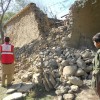
Disaster Strikes Pakistan’s Khyber Region, Aid Efforts Slow in Coming
Jauhar Shah lost everything. His house came tumbling down while his family was sleeping. He survived but his wife and daughter did not. The October 26 tremor measuring 8.1 Richter scale changed his life forever.
Analysis: Press Freedom Shaken in Zimbabwe
Press freedom in this Southern African nation has been shaken abruptly, this time surprisingly, with members of the police force heavily descending on journalists working for state-owned media
Africa Demands for More Input to Save the Climate
African civil society organisations championing for climate justice have criticised the Intended Nationally Determined Commitments (INDC’s) presented to the United Nations Framework Convention on Climate Change, calling them “weak, inadequate and not ambitious enough.”
Parliamentary Forum to Set New Goals Against Hunger
Undertaking the challenge of pushing for new legislation to guarantee food security in their countries, legislators from Latin America and the Caribbean, together with guest lawmakers from Africa and Asia, will hold the Sixth Forum of the Parliamentary Front Against Hunger Nov. 15-17.
Opinion: Will We Find the Resources to Create a Better World?
The UN General Assembly adopted the ambitious Sustainable Development Goals (SDGs) at a global summit of world leaders in September. They agreed on 17 new universal goals, and 169 targets that will provide the framework for economic and political policies of UN Member States over the next 15 years to make the world a better place for humanity.
Kenya’s Market-Based Youth Project Changing Lives
Though the Kenyan government has demonstrated a commitment to lift its youth out of poverty, particularly those in the informal settlements, projects designed for youth continue to be crippled by rampant corruption.
Caribbean Agriculture Looks to Cope with Climate Change
Climate change represents a clear and growing threat to food security in the Caribbean with differing rainfall patterns, water scarcity, heat stress and increased climatic variability making it difficult for farmers to meet demand for crops and livestock.« Previous Page — Next Page »


