Languages
Tuesday, November 24, 2026



News and Views from the Global South
Civil Society
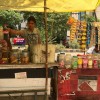
The Neglected Street Vendors of India
For the past nine years, 27-year-old Jignesh has been hawking bed sheets on the bustling pavements of Janpath, a major throughway in India’s capital, New Delhi, as kamikaze traffic swirls around him.
Growing Mobilisation Against Introduction of Fracking in Spain
Thousands of people in Spain have organised to protest the introduction of “fracking” – a controversial technique that involves pumping water, chemicals and sand at high pressure into shale rock to release gas and oil.Indigenous Voices Ignored in Financing Panamanian Dam Project
Indigenous people who would be directly affected by the impact of a hydroelectric project in Panama were not consulted despite national and international human rights obligations to obtain their free, prior and informed consent, according to a just-released report.
Thousands Rally to Demand Freedom for Puerto Rican Activist
Children in strollers held placards. Those unable to make it into the streets leaned out of high-rise apartment building windows, shouting support to the river of protestors below. For hours, several city blocks became a mass of red and blue, as scores of people waved the national flag of Puerto Rico. One name was on everyone’s lips, but the cause was broader than a single man.
Garment Sweatshops in Argentina an Open Secret
The death of two Bolivian boys in a fire and the mistreatment and sexual abuse of a young Bolivian woman put the problem of slave-like labour conditions in clandestine sweatshops back in the headlines in Argentina.
Australia’s ‘Stolen Generations’ Not a Closed Chapter
Every year since 1998, Australia has marked ‘National Sorry Day’ on May 26, a day to remember the tens of thousands of indigenous children who, between the 1890s and 1970s, were forcibly removed from their communities by government authorities and placed into the care of white families or institutions to be assimilated into settler society.
Latin America’s Relative Success in Fighting Hunger
The Latin American and Caribbean region is the first in the world to reach the two global targets for reducing hunger. Nevertheless, more than 34 million people still go hungry.
Scores of Sri Lankan Tamils Still Living Under the ‘Long Shadow of War’
In many ways, Jayakumari Balendran epitomizes the plight of the Tamil people in Sri Lanka’s northern and eastern provinces, both during and after the island nation’s 26-year-long civil conflict.
Relief Organisation Urges Mandatory Funding for Humanitarian Appeals
The United Nations is not only overwhelmed by a spreading humanitarian crisis, largely in Africa and the Middle East, but also remains hamstrung by a severe shortfall in funds, mostly from Western donors.
U.N. Security Council Takes “Historic” Stand on Killings of Journalists
When war breaks out, most non-combatants run the other way. But a handful of courageous reporters see it as their duty to tell the world what's happening on the ground. And many pay a high price.
Opinion: Internet Should be Common Heritage of Humankind – Part II
The Internet – and the applications that it has spawned – is the single most important technological innovation that has brought together and interlinked humankind in a real, tangible and interactive way.
Sri Lankan Women Stymied by Archaic Job Market
Wathsala Marasinghe, a 33-year-old hailing from the town of Mirigama, just 50 km from Sri Lanka’s capital, Colombo, once had high hopes that the progressive education and employment policies of this South Asian island nation would work in her favour. Today, she feels differently, believing that “an evil system” has let her down.
Laissez Faire Water Laws Threaten Family Farming in Chile
Family farmers in Chile are pushing for the reinstatement of water as a public good, to at least partially solve the shortages caused by the privatisation of water rights by the military dictatorship in 1981.
Pineapple Industry Leaves Costa Rican Communities High and Dry
Twelve years after finding the first traces of pesticides used by the pineapple industry, in the rural water supply, around 7,000 people from four communities in Costa Rica’s Caribbean region are still unable to consume their tap water.
Q&A: Papua New Guinea Reckons With Unmet Development Goals
As Papua New Guinea celebrates 40 years of independence, 2015 marks a defining year for the largest Pacific Island nation, set to record 15 percent GDP growth this year.
Accusations of ‘Apartheid’ Cause Israelis to Backpedal
A decision by the Israel Defence Forces (IDF) to segregate buses in the occupied West Bank has backfired after causing an uproar in Israel’s Knesset, or parliament, and political damage on the international stage.
Failure of Review Conference Brings World Close to Nuclear Cataclysm, Warn Activists
After nearly four weeks of negotiations, the Nuclear Non-Proliferation Treaty (NPT) Review Conference ended in a predictable outcome: a text overwhelmingly reflecting the views and interests of the nuclear-armed states and some of their nuclear-dependent allies.
School Gardens Combat Hunger in Argentina
In Argentina, where millions of families have unmet dietary needs despite the country’s vast expanse of fertile land, the Huerta Niño project promotes organic gardens in rural primary schools, to teach children healthy eating habits and show them that they can grow their own food to fight hunger.
Bougainville: Former War-Torn Territory Still Wary of Mining
From Arawa, once the capital city of Bougainville, an autonomous region in eastern Papua New Guinea in the southwest Pacific Ocean, a long, winding road leads high up into the Crown Prince Ranges in the centre of the island through impenetrable rainforest.
Opinion: Voice of Civil Society Muffled in Post-2015 Negotiations for Better Future
In September, the United Nations will agree on new Sustainable Development Goals (SDGs) which will set development priorities for the next 15 years. The draft goals that have been developed are ambitious – they seek to end poverty and ensure no one is left behind.
Germany’s Asylum Seekers – You Can’t Evict a Movement
In a move to take their message of solidarity to refugees across the country and calling for their voices to be heard in Europe’s ongoing debate on migration, Germany's asylum seekers have taken their nationwide protest movement for change on the road under the slogan: “You Can't Evict a Movement!”.« Previous Page — Next Page »


 Representatives of Civil Society, Sierra Leone. Credit: UN Photo/Eskinder Debebe
Civil society faces mounting threats worldwide, even as it remains essential for democratic accountability, especially in countries struggling with economic instability and social inequality. However, at the same time, nations with weak democratic governance structures also systemically suppress the power of civil society. Human rights activists across the Global South frequently challenge issues such as political persecution and gender oppression, but in return face state-sanctioned punishment for their advocacy. Imprisonment and exile are common mechanisms of punishment that seek to erode the strength of civil society. The 2026 World Press Freedom Index has reached its lowest level in 25 years, with more than half of the world’s countries now falling into the "difficult" or “very serious” category for press freedom. IPS seeks to highlight the work of civil society across the Global South as well as the challenges that they face.
Updated by Yilan Batista and Shuli Wong August 2026

The Week with IPS

NEXT STOP - SDGs
Tracking global progress towards a sustainable world
