Languages
Friday, November 27, 2026



News and Views from the Global South
Civil Society

Grief Veils Eid for Syrian Refugees
This week the Islamic world marks one of its holiest holidays, Eid al-Adha - honouring Ibrahim’s commitment to sacrifice his first-born son to Allah. The festival involves large family gatherings, bountiful lunches and generous gift giving.
Walking an Economic Tightrope with No Safety Net
With the richest one percent of the population now owning 40 percent of global assets, and the bottom half sharing just one percent, inequality is fast being recognised as a stubborn underlying obstacle to development.
Programme to Boost Small Farmers Fights for Continuity
When it launched in 2007, the FAO programme known as Food Security through Commercialisation of Agriculture (FSCA) tried to adopt an approach that differed from on-going efforts to achieve food security, which focused primarily on food production.Russia May Do Better Than its Nuclear Rhetoric
Despite a seemingly entrenched resistance to change on its nuclear disarmament policy, the Kremlin’s recent initiative to get Syria to destroy its chemical weapons provides hope that Russia could play a more positive role in reducing the world’s global nuclear stockpiles, experts say.Armenia’s Fight against Gender Equality Morphs into Fight Against EU
Europe is getting a surprise bashing in Armenia over a law on gender equality that many Armenians claim is designed to “promote” homosexuality as a “European value.”
Chevron Fights Amazon Pollution Verdict in U.S. Court
Two years after they were awarded 18 billion dollars by an Ecuadorian court for environmental damage caused by Chevron in the Amazonian rainforest, a group of indigenous villagers and their U.S. lawyer went on trial Tuesday in New York, accused by the oil company of bribery and racketeering.Giant Companies Pinpricked by ‘Direct Democracy’
A Swiss village has decided to reject tax money from the firm Glencore and to instead donate it to charities. Other towns may follow, sending a strong signal to the government to follow the U.S. and the EU and introduce transparency rules for the extractive industry.
Sicilian Town Opposes U.S. Transmitters
Niscemi, with its 30,000 local residents and its white houses, is a typical southern Sicilian town. But it stands out not only for its ancient cork forest, but also for the Naval Radio Transmitter Facility located within the protected forest itself.
Not Fukushima Again
Two and a half years ago, Ayako Oga, now 30, found herself helpless as an earthquake and the tsunami it triggered hit Japan and crippled four reactors at the Fukushima Daiichi nuclear plant. She and her husband were forced to abandon their village Ookuma Machi, barely five kilometres away.
U.S. Science Reporters Becoming an Endangered Species
The news for environmental journalism in the United States is grim and getting grimmer.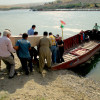
Kurds Build Bridges At Last
After fleeing the war three months ago, Gulnaz is headed back for Syria to bury her brother within the 24 hours Islam stipulates. But it is far from easy to take the coffin across the Syrian-Iraqi border.
Mystery Attackers Hit Sinai
A period of more than three months since former president Mohamed Morsi's ouster by Egypt's powerful military establishment have been marked by almost daily attacks on Egyptian security personnel, especially in the restive Sinai Peninsula. The identity of the attackers remains a mystery.OP-ED: Grenada’s IMF Sunday School
As the International Monetary Fund shares initial proposals for Grenada's debt restructuring during the Washington DC meetings this week, the Caribbean island could gain a reputation for more than nutmeg, calypso, beaches and the 2012 gold medal sprinter Kirani James.
Swat Not at Peace With Malala
Back in Swat Valley in Pakistan where she comes from, Malala Yousafzai who had been tipped to win the Nobel peace prize this year, has not only left behind more girls in school now than there were a year ago but also large numbers of people who are now distanced – and even hostile – to her.U.S. Accused of Unprecedented Assault on Press Freedom
Press freedom advocates here charge that the administration of President Barack Obama is engaged in a war on “leaks” of secret information that is without parallel in this country.
Nobel Laureate Fights African Pullout from Global Court
South Africa's Desmond Tutu, the 1984 Nobel Peace prize laureate, has launched a global campaign to stop African nations from abandoning the Hague-based International Criminal Court (ICC).
Ethiopian Government Choking Muslim Unrest
The refusal by the Ethiopian government to redress grievances harboured by the Muslim community here, which comprises about 34 percent of the country’s 91 million people makes this Horn of African nation vulnerable to extremism.
World Bank Mulls First Strategic Overhaul in Two Decades
World Bank President Jim Kim has formally put forward a major new proposal to refocus both the bank’s priorities and how it pursues those aims.
Building a Better World, One Block at a Time
One evening in the small village of Ashton Hayes in Cheshire, England, someone started a conversation about climate change and energy at the local pub. It was 2005. Two years later, residents had cut their carbon dioxide emissions and energy costs by 20 percent.Pakistan Government Failing to Go Local
Had the provincial governments of Pakistan heeded their apex court, the country’s four provinces - Punjab, Sindh, Balochistan and Khyber Pakhtunkhwa - would have had local governments in place by now. The Supreme Court of Pakistan had in July this year directed that local government elections be held by Sep. 15.
Pacific Pact – a Minefield for Health Care
The Trans Pacific Partnership Agreement (TPP), the negotiation of which is set to conclude this year, could drive research into new drugs and improve access to medicines. Except – it won’t.« Previous Page — Next Page »


 Representatives of Civil Society, Sierra Leone. Credit: UN Photo/Eskinder Debebe
Civil society faces mounting threats worldwide, even as it remains essential for democratic accountability, especially in countries struggling with economic instability and social inequality. However, at the same time, nations with weak democratic governance structures also systemically suppress the power of civil society. Human rights activists across the Global South frequently challenge issues such as political persecution and gender oppression, but in return face state-sanctioned punishment for their advocacy. Imprisonment and exile are common mechanisms of punishment that seek to erode the strength of civil society. The 2026 World Press Freedom Index has reached its lowest level in 25 years, with more than half of the world’s countries now falling into the "difficult" or “very serious” category for press freedom. IPS seeks to highlight the work of civil society across the Global South as well as the challenges that they face.
Updated by Yilan Batista and Shuli Wong August 2026

The Week with IPS

NEXT STOP - SDGs
Tracking global progress towards a sustainable world
