Languages
Saturday, November 14, 2026



News and Views from the Global South
Development & Aid

While Developing Nations Hang on to a Cliff’s Edge, G20 & IMF Officials Repeat Empty Words at Their Annual Meetings
Held in-person for the first time in three years, the annual meetings of the International Monetary Fund and World Bank last week in Washington, D.C. failed to offer solutions to the dozens of developing countries in debt distress or on the forewarned global recession instigated by monetary tightening.
Macroeconomic Policy Coordination More One-Sided, Ineffective
Widespread adverse reactions to the UK government’s recent ‘mini-budget’ forced new Prime Minister Liz Truss to resign. The episode highlighted problems of macroeconomic policy coordination and the interests involved.
Europe in Its Labyrinth
European politicians continue to run in all directions to find a way out of their energy crisis. One of them – Simonetta Sommaruga, the Swiss Environment Minister, asked people to ‘shower together’. Others are competing to grant the business of transporting energy from the North of Africa to the continent. All this is not new.
U.S. Political Divides on Demographic Issues
Given the upcoming midterm elections in the United States and the consequences of the outcome for domestic legislation and programs as well as the country’s foreign policy, it’s useful and fitting to review fundamental differences between America’s two major political parties on vital demographic issues.
Indian Village Unlocks Treasure of Organic, Indigenous Farming
At Jhargram, a far-flung village in India’s West Bengal state, a group of farmers sit together in one of the open fields. They debate, deliberate, and confabulate about the marketing strategy they should use when selling their harvest on the open market.
Public Development Banks Can’t Drag Their Feet When It Comes to Building a Sustainable Future
A coalition of civil society organisations is demanding public development banks (PDBs) to take radical and innovative steps to tackle human rights violations and environmental destruction. No project funded by PDBs should come at the expenses of vulnerable groups, the environment and collective liberties, but should instead embody the voices of communities, democratic values and environmental justice.
Saving Lives Can’t Ever Be Divisive
That’s why a new ship with a big white “E” will navigate the Mediterranean Sea. The vessel has a red hull, is more than fifty meters long and has low decks. Soon, it will leave the port of Genoa and go out into the open sea. If those living on the north shore of that ‘water cemetery’ bearing the name of Mediterranean had chosen life, the "Life Support" would not have been greeted by the applause of a people packed square, on a late summer night, in the Italian city of Reggio Emilia. It would not be ready to sail now; . if they had chosen life, that ship would have another job.
Accelerating Post-Pandemic SDG 6 Achievements on Water & Sanitation
Global progress has been staggeringly inadequate against Sustainable Development Goal 6, “clean water and sanitation for all.” According to the latest SDGs progress assessment, 2 billion people still lack safely managed drinking water, 3.6 billion lack sanitation services, and 3 billion lack basic hygiene services.
Solar Energy, the Solution for Remote Communities in Argentina
When asked about the impact of incorporating solar energy at the school he runs in Atraico, a remote rural area in the Patagonian steppe in southern Argentina, Claudio Amaya Gatica is unequivocal: "Life has changed, not only for the school but for the whole community.”
Time is Running Out for Decisions on Debt Relief as Countries Face Escalating Development Crisis
Developing low- and middle-income economies are taking hard hits from global economic developments outside their control. Monetary tightening in advanced economies coupled with increasing fears of a global recession have weakened currencies, sent interest rates soaring, and investors fleeing.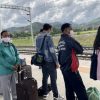
Farmers in Laos Imagine Improved Livelihoods Thanks to New Cross-border Links
Mountainous terrain in northern Laos has until now restricted chances for farmers and producers in much of the nation to export their goods, limiting them primarily to subsistence farming and also curbing development, education and poverty reduction in their communities.
Are Climate Summits a Waste of Time?
Next month, the latest annual United Nations climate extravaganza, COP27, will take place in Sharm el-Sheikh, Egypt. Last year it was in Glasgow. Next year it will be held in (drum roll please) … Dubai!
With Planning Aging Population Could Result in a Silver Dividend
An aging population needn’t be a burden, experts told Parliamentarians at a conference co-hosted by UNFPA Asia Pacific Regional Office and the Asian Population and Development Association (APDA).
Gabon’s Environment Minister Reflects on Conservation Successes, Future Challenges
Over the past few years, Gabon has been successful in its forest conservation efforts. The country has also been able to work hard to achieve the goal of limiting the rise in global temperatures to the 1.5-degree target. Minister of Water, Forests, the Sea, and Environment, Lee White, talks to IPS Correspondent Francis Kokutse:
Stop Worshiping Central Banks
Preoccupied with enhancing their own ‘credibility’ and reputations, central banks (CBs) are again driving the world economy into recession, financial turmoil and debt crises.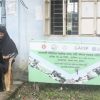
Bangladesh Coastal People Turn to Digital Devices to Succeed against the Odds
A barefoot young man in rolled-up jeans clutches a laptop as he slogs through a narrow muddy aisle between rice fields on a drizzling late September afternoon. He’s rushing to help a farm couple who are facing trouble with their ducks in a coastal village in southern Bangladesh.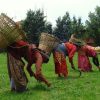
Rural Women Work the Hardest, Produce the Most, Eat the Least
Make no mistake. Violence against women has been perpetuated, specially when it comes to those who have already been deprived of their basic human rights, as it is the case of rural women in over two-thirds of the world.
Poverty Haunts Resettled Farmers in Zimbabwe
Edious Murewa has for years boasted of owning a 10-hectare piece of land, but now the 52-year-old is full of regrets. He faces poverty years after he invaded part of a farm once owned by a white commercial farmer.
Local Solutions Boost Sustainable Micro-Mobility in Cuba
The incorporation of small electric vehicles for public transport, together with initiatives that encourage the use of bicycles, represent opportunities and challenges for Cuba to sustainably and inclusively combat the chronic problems in urban mobility.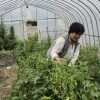
Farmers in Bhutan Turn To Asparagus and Strawberries To Boost Incomes
Zam, 57, sits at her kitchen table looking out the window at her orchard of four dozen apple trees. In the past eight years she has sold only two crates (100 kilogrammes) of the fruit because of poor harvests. She turned her attention to vegetables instead but the production was low because of a water shortage.
WORLD FOOD DAY 2022
 In 2022, an ongoing pandemic, global conflicts, climate change, rising prices and international tensions…
…are affecting global food security.
« Previous Page — Next Page »


 2026 High-level Political Forum on Sustainable Development. Credit: UN Photo/Eskinder Debebe
In 2015, the United Nations and its Member States adopted the Sustainable Development Goals (SDGs) in an effort to make the world a more sustainable and peaceful place for future generations. Progress on the 17 SDGs has been uneven, and inequality persists across the globe. 10 years after adoption, the 2025 UN SDGs Report revealed that only 35% of the SDG targets are on track, with more than half moving too slowly, and 18% moving backwards from the 2015 baseline. Poverty remains one of the world’s most pressing issues, with hunger, violence, and inequality impeding the opportunities for all people to achieve success. In September 2024, the United Nations Summit of the Future introduced a new goal: to eradicate global poverty by 2030, ensure universal rights to basic services, and increase the overall standard of living in terms of industrialization, economic well-being, citizen health, and literacy. Furthermore, recent shifts in United States foreign aid policy – notably, major budget cuts to USAID and the termination of thousands of development programmes– have severely threatened vital lifelines of financial aid to impoverished communities around the world. Additionally, the United States’ withdrawal from the Paris Climate Agreement has undercut international efforts at sustainable development. With the upcoming 2030 deadline, the UN Secretary-General has called for urgent multilateralism across six priority areas: food systems, energy, digital connectivity, education, jobs and social protection, and climate and biodiversity. IPS sheds light on marginalized communities that struggle on a daily basis to survive and have their stories heard and respected.
Updated by Yilan Batista and Shuli Wong August 2026

The Week with IPS

NEXT STOP - SDGs
Tracking global progress towards a sustainable world
Tracking global progress towards a sustainable world
