Languages
Saturday, November 28, 2026



News and Views from the Global South
Economy & Trade
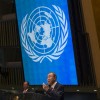
OPINION: A Climate Summit to Spark Action
On Sep. 23, I have invited world leaders from government, business, finance and civil society to a Climate Summit in New York so they can show the world how they will advance action on climate change and move towards a meaningful universal new agreement next year at the December climate negotiations in Paris.
Organic Farmers Cultivate Rural Success in Samoa
Rural farming families in Samoa, a small island developing state in the central South Pacific Ocean, are reaping the rewards of supplying produce to the international organic market with the help of a local women’s business organisation.
World’s Most Unequal Region Sets Example in Fight Against Hunger
Latin America and the Caribbean, the world’s most unequal region, has made the greatest progress towards improving food security and has become the region with the largest number of countries to have reached the first Millennium Development Goal (MDG) of halving the proportion of undernourished people.
Blue Halo: A Conservation Flagship, or Death Knell for Fishermen?
Local fishermen are singing the blues over a sweeping set of new ocean management regulations, signed into law by the Barbuda Council, to zone their coastal waters, strengthen fisheries management, and establish a network of marine sanctuaries.
Panama Turns to Biofortification of Crops to Build Food Security
Panama is the first Latin American country to have adopted a national strategy to combat what is known as hidden hunger, with a plan aimed at eliminating micronutrient deficiencies among the most vulnerable segments of the population by means of biofortification of food crops.
For These Asylum Seekers, the Journey Ends Where it Began
"Of course I'm scared, but what else can I possibly do?" asks Ahmed, a middle-aged man seated on the carpeted floor of a hotel located on the southern edge of Afghanistan. He is bound for Iran, but he still has no idea when or how he’ll cross the border.World Bank Tribunal Weighs Final Arguments in El Salvador Mining Dispute
A multilateral arbitration panel here began final hearings Monday in a contentious and long-running dispute between an international mining company and the government of El Salvador.
A Flood of Energy Projects Clash with Mexican Communities
Since January, villagers and townspeople near the Los Pescados river in southeast Mexico have been blocking the construction of a dam, part of a multi-purpose project to supply potable water to Xalapa, the capital of the state of Veracruz.
U.N. Climate Summit: Staged Parade or Reality Show?
The much-ballyhooed one-day Climate Summit next week is being hyped as one of the major political-environmental events at the United Nations this year.
Rattled by Russian Expansionism, Tashkent Looks East
Russia’s aggressive actions toward Ukraine are vexing Central Asian states.
Salvadoran Farmers Stake Their Bets on Sustainable Development
Peasant farmers from one of El Salvador’s most fragile coastal areas are implementing a model of sustainable economic growth that respects the environment and offers people education and security as keys to give the wetland region a boost.
Majority of Consumer Products May Be Tainted by Illegal Deforestation
At least half of global deforestation is taking place illegally and in support of commercial agriculture, new analysis released Thursday finds – particularly to supply overseas markets.
OPINION: Ebola Crisis Reversing Development Gains in Liberia
As the Ebola crisis continues to take a toll on people’s lives and livelihoods in West Africa, the focus is increasingly not just on the health aspects of the crisis, but also on its social and economic consequences.
Free Economic Zone Plan Slammed as ‘Suicide’ Pact for Taiwan Farmers
The Taiwan government’s plan to liberalise tariff-free imports of agricultural produce from China and other countries for processing in free economic pilot zones, which will then be exported as ‘Made in Taiwan’ items, may mean suicide for Taiwanese farmers if approved by the national legislature.
Africa’s Dividing Farmlands A Threat To Food Security
When Kiprui Kibet pictures his future as a maize farmer in the fertile Uasin Gishu county in Kenya’s Rift Valley region, all he sees is the ever-decreasing plot of land that he has to farm on.
Global Commission Urges Decriminalisation of Drug Use
A top-level international panel called Tuesday for a major shift in global drug-control policies from prohibition to decriminalisation and regulation.
OPINION: Testing Time for Tourism
It is testing time for global tourism. The ongoing political conflicts across North Africa, compounded by military action in the Middle East, Ukraine and Afghanistan, and the spread of the Ebola virus disease in West Africa have put to the test the ability of international tourism to continue to grow amidst crises.Global Summit Urged to Focus on Trillion-Dollar Corruption
New analysis suggests that developing countries are losing a trillion dollars or more each year to tax evasion and corruption facilitated by lax laws in Western countries, raising pressure on global leaders to agree to broad new reforms at an international summit later this year.
Latin America’s Anti-drug Policies Feed on the Poor
Poor young men, slumdwellers and single mothers are hurt the most by anti-drug policies in Latin America, according to representatives of governments, social organisations and multilateral bodies meeting at the Fifth Latin American Conference on Drug Policies.
Women – the Pillar of the Social Struggle in Chile’s Patagonia Region
In few places in Chile are women the pillars of community, grassroots rural and environmental movements as they are in the southern wilderness region of Patagonia. It is a social role that history forced them to assume in this remote part of the country.
Indigenous Peoples Seek Presence in Post-2015 Development Agenda
The world's 370 million indigenous people, who say they were marginalised in the Millennium Development Goals (MDGs), want to play a key role in the U.N.'s post-2015 development agenda, which will be finalised next year.« Previous Page — Next Page »


 UN Commission on International Trade Law Holds Colloquium on Harmonizing Law in Age of Digital Trade and Finance. Credit: UN Photo/Manuel Elías
Trade has historically been a geopolitical tool that can both be used to propel development as well as entrench inequalities. In various nations in East Asia and Latin America, increased trade, as often seen in export booms, has allowed them to achieve influential standings within the global economy. On the other hand, many low-income countries in Sub-Saharan Africa, Asia, and Latin America struggle to maintain a robust trade performance, and oftentimes are subjugated to exploitative trade dynamics through intense extraction of their natural resources. In recent decades, international trade has reached a new era as emerging economies across the world are rising in economic preeminence. Stable international trade is crucial to world peace as global interconnectedness facilitates reliable diplomacy. Nevertheless, significant challenges are on the rise. Notably, a major wave of United States tariff escalations in January 2025 lifted US import taxes to their highest level since the 1930s, changing market dynamics and forcing renegotiations with global trading partners.These articles are aimed at informing readers about the complexities of trade and its varying effects on development, with a special focus on the consequences of the global economic crisis, the potential of fair trade and the gender implications of trade policies.
Updated by Yilan Batista and Shuli Wong August 2026

The Week with IPS

NEXT STOP - SDGs
Tracking global progress towards a sustainable world
