Languages
Saturday, November 21, 2026



News and Views from the Global South
Editors' Choice

Knocking on an Uncertain Gateway to the World
“I waited from 10 am till 5 pm for my wife to cross from Egypt. She was among many hundreds who were coming into Gaza. Some waited since 6 am, some since the day before.”Irregular Migrants Face the Boot in Greece
A crackdown on irregular migration has entered its fourth week in Greece. The government is shutting the Greek-Turkish northeastern border across river Evros, and removing massive numbers of undocumented migrants from big urban centres into makeshift detention camps.
Detention in Italy Better Than Home in Tunisia
A year ago Salim, a 23-year-old from the ancient Tunisian city Gafsa decided to leave his country using a smugglers’ network notorious for transporting desperate Tunisian citizens to Europe by boat.
Organ Trafficking Resurfaces in Pakistan
About two months back, 28-year old Asif Ahmed* put up an announcement on the internet to sell one of his kidneys.
There’s Bride at the End of the Tunnel
Mai Ahmed, a 26–year-old from the West Bank fell in love over the Internet with Mohammed Warda from Nussirat refugee camp in Gaza after they ‘met’ on the Internet. The Israeli government refused permission for her to travel to Gaza. Mai travelled to Jordan, flew from there to Egypt, drove across the Sinai, and then crossed through a tunnel into Gaza, where she now lives. “It’s a story I will tell my grandchildren,” she says.
Veil Falls Over Egyptian Media
The former regime of Hosni Mubarak tightly controlled the press and intimidated journalists who dared to criticise it. Now it appears the Muslim Brotherhood has adopted similar tactics to stifle dissent.
Gangs and Government Put Their Cards on the Table in El Salvador
The two main youth gangs in El Salvador and the government have exchanged the main points they would like to discuss in talks aimed at bringing to an end to two decades of spiraling criminal violence. But the media, legislators and the public at large remain hostile to the possible start of negotiations.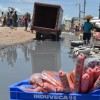
Marketing in the Mud Along the Dominican Border
Getting around on market day along the muddy border between the Dominican Republic and Haiti is almost impossible for those unfamiliar with the art of dodging the trucks, motorcycles and bicycles swerving amidst the messy piles of products scattered all over, and weaving among the hundreds of people coming and going between the two countries.
Syrian Crisis Brings a Blessing for Kurds
The smuggler wants 200 dollars but Jewan negotiates him down to 100. That’s still a lot for this 26-year-old Syrian Kurd, but he can hardly wait to cross the border to Syria from Iraq. It’s been three years since he last saw his family.
Palestinians Live on the Edge in New Libya
Just before the overthrow of the Gaddafi regime one year ago, Huda and her Palestinian family were forcefully evicted from their Tripoli home.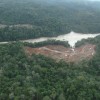
Hydropower Dam to Flood Sacred Amazon Indigenous Site
The Sete Quedas or “seven waterfalls” on the Teles Pires River, which runs through the Amazon rainforest states of Mato Grosso and Pará in central Brazil, are a spiritual oasis venerated by several indigenous groups.
Palestinians Step Again Towards Nationhood
A year after their bid for statehood flopped in the United Nations’ Security Council, the Palestine Liberation Organisation is again planning to seek an upgrade in UN status. On Sep. 27, the PLO will approach the UN General Assembly in hopes of becoming a non-member observer state. If their bid is successful, the Palestinians will be eligible to join various UN agencies and will also be able to bring allegations of Israeli war crimes to the International Criminal Court.
Belo Monte Dam Can No Longer Ignore Native Communities
A judicial order to halt construction of the Belo Monte dam in Brazil’s Amazon rainforest may be just one more battle in a long-drawn-out war in the courts over the controversial hydroelectric project.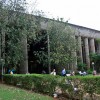
Quotas in Brazil’s Public Universities to Democratise Education
A new law about to enter into effect in Brazil will reserve half of all admission slots in public universities for students who attended public primary and secondary schools. But the measure, aimed at expanding access to the country’s best universities, will require structural reforms.
In Jerusalem the Past Is Alike, And Alive
“This is King David’s palace!” proclaims the Israeli tour guide with much fanfare, ignoring the cautionary “King David’s Palace?” legend on the sign. Opportunely opening the Bible, he reads from 2 Samuel 6:16, “As the Ark of the Lord came to the City of David…”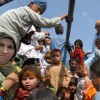
Back Home With Help and Hope
Thousands who fled their homes in the Taliban-led violence over the past three years have now returned to rebuild their lives, and their homes.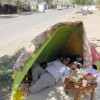
“Latin America’s Miracle” – the Land of Invisible Inequality
It’s Friday morning, and Carlos, an executive at a real estate firm in the Chilean capital, gets up knowing that he will knock off early that day, as he does at the end of every week, to enjoy the weekend in the family’s vacation apartment on the coast with his wife and three daughters.
Swapping Trash for Fresh Produce in Mexico City
Isabel Becerril has come with some friends to the “barter market” in the Mexican capital, to exchange 40 kgs of recyclable refuse for fresh produce, sweets and plants. “This is the first time I have come here, and I like it,” the university student tells IPS, with her ecological bag in hand.
Rescuing an Art to Save a People
Sitting on the floor, deep in concentration, Marta Llampa interlaces red and black threads that converge in sinuous shapes, gradually forming khurus or mythical creatures through a unique, age-old technique rescued from extinction by the Jalq'a people.
Discovering the Ancient Green Past of Argentina’s Arid Puna Plateau
The arid high Andean Puna plateau in northwest Argentina was much greener thousands of years ago. Climate changes forced the local inhabitants to develop adaptation strategies that could offer lessons for today, researchers say.
Colonised by the Arabs, Abandoned by the World
Untamed stone villages line up over imposing green valleys. In winter they are white with snow. The luckiest have a view to the deep blue sea. "It’s gorgeous, isn’t it," says Amzi from his yellow cab. "Nobody would say we’re living in an open-air prison."« Previous Page — Next Page »


The Week with IPS

NEXT STOP - SDGs
Tracking global progress towards a sustainable world
Tracking global progress towards a sustainable world
