
Sunday, November 22, 2026



News and Views from the Global South
Environment

Caribbean Looks Ahead to Stave Off Fresh Water Scarcity
Two years after a severe drought wreaked havoc with a number of Caribbean countries, some are now adopting new strategies in a bid to prevent a repeat of a situation where countries were rationing water and imposing strict restrictions on residents.
Papua New Guinean Landslide Survivors Wait in Vain for Justice
Early morning on Jan. 24, in the remote Southern Highlands of Papua New Guinea, a massive landslide destroyed communities living below a quarry used by the country’s largest liquefied natural gas (LNG) project, operated by Esso Highlands, a subsidiary of Exxon Mobil.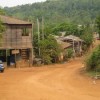
Integration Can Help Amazon’s Post-Megaproject Blues
Trade with the rapidly expanding market in Peru will aid Porto Velho, in northwest Brazil, to cushion the blow of job and business losses in the wake of the construction of two hydroelectric plants on the Madeira river.
ANGOLA: Solar Panels Turning Dirty Water Clean
The brightly painted old shipping container with solar panels on its roof and high-specification filtration devices inside looks out of place in this dusty Angolan village of Bom Jesus, 50 kilometres east of the capital Luanda.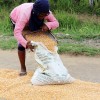
PHILIPPINES: Women Weather Climate Change
As the world commemorates International Women’s Day today, women around the globe are speaking out on various issues that affect them. In light of recent natural disasters and calamities in the Philippines, women are increasingly citing climate change as one of their most pressing concerns.
CHILE: Promoting Women’s Empowerment on Two Wheels
What does riding a bike have to do with women’s rights? According to the Chilean feminist group Macleta, which promotes cycling and a gender perspective on public transport, a bicycle is a powerful tool for social change.Thai Province Shows the Green Way
As fingers of morning light slip through the mango and banana orchards of his village, Suchin Utanarat heads out in a boat to net a fresh catch from the nearby canals teeming with shrimp.
French Alternative Water Forum Says ‘No’ to Privatisation
Back in 2001, Gérard Mestrallet, CEO of the transnational water giant GDF- Suez, highlighted his company’s "commitment to fight for better access" to safe water and sanitation throughout the world, in order to put an end to all deadly water-borne diseases, from children’s diarrhoea to parasitic diseases to dysentery.
Temporary Toilets Threaten Permanent Damage in Haiti – Part 2
Complete with gallery and garden, the 534 wood and plasterboard houses are arranged in neat rows on a gravel plot of former sugarcane land northwest of the capital.
Money for Cleaning Toilets in Haiti Down the Drain? – Part 1
The drawdown of hundreds of non-governmental organisations which have been in Haiti since the disastrous 2010 earthquake was inevitable. But with their departure, so too goes their purse and the millions earmarked for cleaning latrines.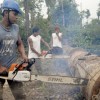
Green Economy Seeks to Maintain Growth Threatened by Disasters
There is every indication that major disasters could be the new midwives of history. Seeking to prevent them, the green economy aims to reduce "environmental risks" and "ecological scarcities" while improving human well-being and social equity.Green Credit Scarce in Latin America
In Latin America, where bank loans for environmentally sustainable activities are rare, the United Nations Environment Programme (UNEP) is seeking to foment green credit.Green Credit Scarce in Latin America
In Latin America, where bank loans for environmentally sustainable activities are rare, the United Nations Environment Programme (UNEP) is seeking to foment green credit.Malaysians Fight Radioactive Waste From Oz
Malaysians protesting against an Australian-owned rare earth refinery, that will generate radioactive waste, are determined to agitate until the project is abandoned.
Mesoamerican Coral Reef on the Way to Becoming a Marine Desert
Scientific studies show that global warming is causing irreversible damage to the Mesoamerican Barrier Reef System, the world’s second largest coral reef, yet efforts to protect this biologically and economically vital ecosystem remain insufficient.Prospects for War with Iran Unclear As Obama, Netanyahu End Summit
Is war against Iran, either by Israel, the U.S. or both, closer or farther off after this week's meeting here between President Barack Obama and Prime Minister Benjamin Netanyahu?
Green Economy Seeks to Maintain Growth Threatened by Disasters
There is every indication that major disasters could be the new midwives of history. Seeking to prevent them, the green economy aims to reduce "environmental risks" and "ecological scarcities" while improving human well-being and social equity.
World Has Met Development Target on Water, U.N. Claims
When the U.N. General Assembly unanimously adopted a resolution back in September 2000 laying out eight Millennium Development Goals (MDGs), it specified 2015 as the target date to achieve them.Quake Empowers Japanese Women
Devastating as the Tohoku earthquake was it gave the local women of the remote region an opportunity to come into their own and take on leadership roles in an essentially patriarchal country.
Mesoamerican Coral Reef on the Way to Becoming a Marine Desert
Scientific studies show that global warming is causing irreversible damage to the Mesoamerican Barrier Reef System, the world’s second largest coral reef, yet efforts to protect this biologically and economically vital ecosystem remain insufficient.
World Has Met Development Target on Water, U.N. Claims
When the U.N. General Assembly unanimously adopted a resolution back in September 2000 laying out eight Millennium Development Goals (MDGs), it specified 2015 as the target date to achieve them.« Previous Page — Next Page »


Through our global network of local writers, we are continuing our award-winning coverage of global and local environmental challenges, with a focus on the people for whom the ecosphere matters in a direct way: rural dwellers who have little means to protect themselves against adverse conditions; communities that need to switch to sustainable development in order to survive; poor women and children, who are the most vulnerable in natural disasters. Sponsored by the United Nations Environment Program (UNEP), the United Nations Development Program (UNDP) and The World Bank (WB), IPS also maintains the award-winning Tierramérica, a specialised information service on environment and development.

The Week with IPS

Tracking global progress towards a sustainable world


