Languages
Thursday, November 12, 2026



News and Views from the Global South
Featured

World Moving Towards a “Devastating Marriage” of Artificial Intelligence & Weapons of War
Landmines are among the most insidious and cruel weapons of all, because they do not distinguish between armed soldiers, civilians or even children.
Studying Marine Life’s Brief Break from Human Noise
Travel and economic slowdowns due to the COVID-19 pandemic have combined to brake shipping, seafloor exploration, and many other human activities in the ocean, creating a unique moment to begin a time-series study of the impacts of sound on marine life.
People’s Leader: A Dalit Woman Becomes The Voice of Farmers In India
On 12 January this year, somewhere in the outskirts of the capital, New Delhi, 24 year old Dalit activist Nodeep Kaur was arrested by the Haryana police for protesting outside a factory. During the lockdown in 2020, Nodeep joined a local workers’ rights organization called Mazdoor Adhikar Sangathan (MAS) in the Kundli Industrial Area in Haryana. In January Nodeep was accused of allegedly manhandling management and staff of an industrial area during a protest and also assaulting the police team.
UN’s Most Powerful Political Body Remains Paralyzed Battling a New Cold War
A new Cold War – this time, between the US and China —is threatening to paralyze the UN’s most powerful body, even as military conflicts and civil wars are sweeping across the world, mostly in Africa, the Middle East and Latin America.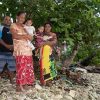
COVID-19 Teaches Us to Better Manage Global Systemic Risks
Millions of lives lost. Trillions of dollars in economic damage. Over 120 million more people pushed into extreme poverty. The human and economic toll of the COVID-19 pandemic is almost unimaginable – a once-in-a-century catastrophe.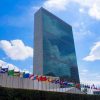
Profound Reform or Redundancy – United Nations’ Quandary?
Three recent developments bring about again the reasoning on the dire need to immediately reform the United Nations (UN) and avoid its predictable slide to redundancy.
New Report Calls for Improved Eating Habits in a World of Extremes
With the two extremes of global hunger and obesity on the increase, a new report suggests a radical reset for food and nutrition to ensure the long-term sustainability of livelihoods and the environment.
Barilla Foundation Brings Health and Climate Together in New Double Pyramid
Following an extensive scientific review, the Barilla Center for Food and Nutrition Foundation (BCFN) is preparing to launch a new food systems model which incorporates nutrition and climate.
Farmers in Brazil Benefit as Biogas Replaces Firewood
"Biogas is worth gold to us, we can no longer live without it," Claudete Volkswey, a poultry farmer in the municipality of Toledo, in the southwestern state of Paraná, Brazil, said enthusiastically about the new source of energy that has allowed her to get a good night’s sleep again, because she no longer has to get up to stoke the fire every two hours.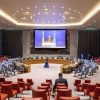
The UN Security Council and the “New US-China Cold War”
Commentators talk about a “new Cold War” between the United States and China. They sometimes conclude that the geopolitical rivalry between these two major powers has ruined the effectiveness of the UN Security Council through hostile vetoes and other barriers to Council action.
Palestinians are Suffering from Hunger, Poverty, Conflict & a Global Pandemic
The Trump administration’s decision to cut off assistance to the United Nations Relief and Works Agency (UNRWA) caused considerable hardship for Palestinian refugees during the coronavirus pandemic, particularly those in Gaza where a majority of the population are refugees and poverty is rampant due to Israel’s blockade, Khaled Elgindy, a Senior Fellow at the Middle East Institute (MEI), told IPS.
Rohingya Children Find Refuge in Education
Although learning centres in Cox’s Bazar Kutupalong Refugee Camp are closed because of the COVID-19 pandemic, Mariom Akhter, a Rohingya mother of four, is grateful not only for the schooling her children have had but the training sessions she as a parent was able to attend. The skills she learnt has helped her assist her children with their education at home in a crisis. It’s something she’s likely needed to help her children with over the last few weeks after a Mar. 22 fire spread through the camp, destroying the shelters of at least 45,000 people as well as important infrastructure, including hospitals, learning centres, aid distribution points and a registration centre. At least 15 people were reported dead and 400 missing.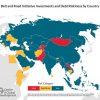
In the Secretive World of Government-to-Government Lending, 100 Chinese Debt Contracts Offer a Trove of New Information
Is Chinese financing good for developing countries? This has become a provocative question, freighted with ideology, geopolitics, and commercial rivalries. That doesn’t mean it isn’t worth trying to answer factually and empirically.
Cost of Being ’Honour Bearers’ Sexual Violence During Communal Riots in India
Delayed, or no, justice and perpetrators’ impunity effectively silence rape and sexual assault survivors of communal violence in India. Activists and human rights lawyers have been speaking out about how rape and sexual violence, especially during communal conflicts, aims to humiliate religious and other minorities by turning the women into symbols of dishonour.
Indonesia’s Climate Villages Where Communities Work Together to Mitigate Climate Change
Residents of Ngadirejo village in Sukaharjo regency, Central Java province, had often found themselves helpless when their wells dried up or water flooded through their homes. But thanks to a national campaign called Program Kampung Iklim, known by its acronym ProKlim, they now have solutions to this flooding that generally occurs because of a lack of adequate water catchments.
A Post-COVID-19 Recovery will not be Possible if Water, Sanitation & Hygiene are not High on the Agenda
This World Health Day, G20 finance ministers will meet in Rome, Italy, to discuss how they will build back from the pandemic. The global economy is and concerted effort, coordination and imagination is needed to enable not only a worldwide recovery but also to ensure that the world’s poorest people are not left behind.
Women and Girls to the Front
Women hold up half the sky. Some years ago, Sarah al-Amiri, a young Emirati engineer, had a fixed gaze beyond the sky and towards our galaxy. “Space was a sector that we never dared to dream growing up,” she noted.
Disability Discrimination at the World Bank: Is it Immunity or Impunity?
The 15,900-strong World Bank, which has funded over 12,000 development projects worldwide since 1947, is an international institution with a superlative reputation for its sustained efforts to end poverty in the developing world—with loans, interest-free credit and outright grants.
Mexico Looks to the Heavens for a Solution to Its Water Crisis
In neighbourhoods like Tehuixtitla in southern Mexico City, rain brings joy, because it provides water for showering, washing dishes and clothes, and cooking, by means of rainwater harvesting systems (RHS).
Pandemic Accentuates Need for Caribbean Countries to Improve Food and Nutrition Security
Last year, Jaxine Scott was off work as a caregiver at a primary school as a result of the pandemic. One day, she noticed a green shoot emerging from some garlic in her fridge. She decided to plant it, and to her surprise, it thrived. “I thought ‘It looks like I have a green thumb, let me plant something else,’” Scott says. She now has a backyard garden, including cucumber, pumpkin, melon, callaloo, cantaloupe, pak choy and tomatoes. “It makes me feel good,” she says. “I can help my family members and neighbours. It has saved me money. I’m not going to stop, I’m going to continue,” she says.
Conserving Tigers, Elephants and Bison, One LPG Stove at a Time
As the sun sets over the canopy of Albizia amara trees, a thin blanket of fog begins to descend over the forests of the Malai Mahadeshwara Hills Wildlife Sanctuary, which lies roughly 150 km south of the Indian city of Bangalore. Not so long ago, plumes of smoke would rise from the hamlets dotting the forests as women busily cooked dinner for their families over wood stoves. But tonight, dinner will be a smokeless affair in dozens of villages as communities have opted for the use of liquefied petroleum gas (LPG), a clean burning fuel that has given a boost to the health and safety of both the forest and its people thanks to a unique conservation project.« Previous Page — Next Page »





The Week with IPS

NEXT STOP - SDGs
Tracking global progress towards a sustainable world
Tracking global progress towards a sustainable world
