Languages
Friday, November 27, 2026



News and Views from the Global South
Featured

Q&A: “Israel’s Heavy-Handed Abuse of Palestinian Children Is Unacceptable”
After a fact-finding tour of the Israeli-occupied Gaza Strip - and following hearings in Amman and Cairo - a three-member United Nations committee has lambasted Israel for the harsh treatment of Palestinian children held in custody.
Native Canadians Fear Mining Boom in “Ring of Fire”
With accusations that Canadian resource companies and government officials are disregarding the need for indigenous consent in development projects, First Nations leaders have lashed out by approving a resolution calling for a moratorium on mining development in the so-called Ring of Fire until proper consultation begins.
Profiting from Sustainable Forests on Communal Land in Mexico
Mario Guzmán plans to start cutting down trees again in August and September, the last months of the rainy season. “Now the roads are impassable, and the trucks can’t get in to haul out the timber,” the Mexican farmer, whose community is sustainably managing its forests, told IPS.Caribbean Sees Progress on HIV/AIDS, Fears Funding Cuts
Ian McKnight, executive director of the Caribbean Vulnerable Communities Coalition (CVCC), used one word - “tokenistic” - to sum up his perspective on the 19th International AIDS Conference that ended here over the weekend.
Private Sector Debt Gnawing at Developing Countries
Twelve years after a global campaign successfully advocated the cancellation of some of the world’s poorest countries’ public debt, developing economies are again facing unsustainable debt burdens. Only this time, it is the private sector’s debt in developing economies that is inflating dangerously.
Lebanon Heading for Failed State Status?
Every day Lebanon is being plunged further into a state of general insecurity, as chaos from the war in Syria seeps across the border.
Trading Across the Line of Control
As part of recent confidence building measures aimed at minimising tensions between India and Pakistan, which arose largely due to conflicting claims over Kashmir, the two countries have decided to make the Valley an economic bridge, rather than a bone of contention.
Israeli Group Maps Palestinian Removals
Sitting in an airconditioned car along Road 60 in the heart of the occupied West Bank, Ovad Arad explained how he goes about his job: driving unannounced into Palestinian towns and villages, taking photographs, having coffee with families, and leaving almost as quickly as he arrived.
And How Muslims Hold the Key to Christ
“A prayer knocks till the door opens,” a songster from the Church of the Holy Sepulchre sings from outside the door.
U.N. Chief Recounts Poverty and Plenty in South Korea
Secretary-General Ban Ki-moon, a former foreign minister of South Korea, is visibly emotional whenever he speaks about the striking political and economic achievements in his home country.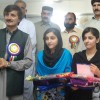
Schoolgirls Beat Taliban
Far from fears that female education is on the decline after the Taliban campaign against girls’ schools, female students outclassed their male counterparts in the secondary school examination for 2012.Hezbollah Losing its Grip
Since its inception, Hezbollah’s clout within its community has been solid. However, in recent weeks, the Party of God has been facing increasing difficulties controlling its support base and stymieing discontent. These developments have led analysts to question whether or not Hezbollah is losing its grip on its followers.
Govts Boost Nukes While Cutting Aid, Social Services
As U.N.-led talks on disarmament resume in Geneva Monday, calls are growing for nuclear-armed nations to cut spending on their stockpiles and instead divert resources to development.
Military Service Leaves Culture of War Behind in Guatemala
“I feel proud to be a part of this change. Malnutrition cannot be wiped out in just two or three years, but this is the beginning and I want to be a part of it,” says Isabela Tzoc, a civic service volunteer involved in a youth programme aimed at fighting extreme poverty in Guatemala.
Orange Shadow Over Olympics
Agent Orange (AO), often called the ‘last legacy’ of the United States war in Vietnam (1955-1975), has popped up again thanks to its manufacturer Dow Chemical’s controversial sponsorship of the Olympic Games.
Africa Must Earn Its Climate Change Adaptation Finance
With the United Nations Climate Change Conference less than four months away, African countries need to present convincing arguments and successful adaptation projects to attract competitive funding for adjusting to changes in global weather patterns, climate finance experts say.
President’s Death Could Drive National Unity in Ghana
The death of President John Atta Mills will have a sobering effect on national politics in the months leading up to Ghana’s December 2012 election, according to the Executive Secretary of the West Africa Network for Peace, Emmanuel Bombandey.Banksters Hijack Microfinance
For several decades, microcredit presented itself as a magical and benign financial tool for the poorest people in the world, who were otherwise completely excluded from conventional commercial banking services, to secure easy access to loans in order to set up their own businesses and live a dignified life.
Papua New Guinea Casts Wide Net Against Malaria
In Papua New Guinea, a Pacific Island nation located south of the equator, 90 percent of the population is at risk of malaria and 1.9 million cases are reported every year. But, according to a recent medical study, a programme to distribute long-lasting insecticide treated mosquito nets to every district in the country has dramatically reduced malaria infections.
Bolivia’s Indigenous Women Seek the Political Kingdom
A growing number of Bolivia's indigenous women are participating in politics, ready to break the barriers of gender and ethnicity.
Climate Change and Poverty, a Deadly Cocktail for Dominicans
"Nobody mourns the poor, you know." That is the grim conclusion of a resident of La Ciénaga, one of the many poverty-stricken settlements clustered along the banks of the Ozama River in the Dominican capital, and which are at the mercy of the weather.« Previous Page — Next Page »


The Week with IPS

NEXT STOP - SDGs
Tracking global progress towards a sustainable world
