Languages
Thursday, November 26, 2026



News and Views from the Global South
Food and Agriculture

Climate Change Makes Life Tougher for Solomon Island Farmers
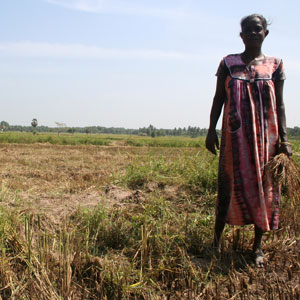
Life is difficult enough for communities on the remote southern Weather Coast of Guadalcanal in the Solomon Islands. Sustaining a livelihood from the land is a daily struggle on the steep coastal mountain slopes that plunge to the sea, made worse by the absence of adequate roads, transport and government services. And now, climate change is taking its toll on the already precarious food situation here.
Building an Agricultural Empire
Genghis Khan knew about hard times. The founder of the Mongol Empire, which spanned most of Eurasia until roughly 1227, Genghis and his clan had to survive on their wits and natural surroundings, often resorting to meals of “green leafy things” when food was scarce.
From Herders to Cultivators
 When the food-strapped Democratic People’s Republic of Korea (DPRK) appealed to the Mongolian government for food last month, it signaled a major turning point in the public image of this Central Asian country, which has long struggled to feed its own population of three million.

Hunger Rises in Great Britain
The social consequences of austerity economics have been most visible in Europe’s southern periphery. In the UK, the coalition government has brought in sharp cutbacks in welfare state provision in the name of dealing with the financial crisis. Their impact is becoming increasingly visible.
Preserving the Soil and Reaping Greater Harvests
Smallholder farmer Peter Mcharo, from Morogoro Region in eastern Tanzania, has a reason to smile. His fields are full of green, healthy maize plants, he has richer soil and he spends less time farming now than he did two years ago.
U.S. Links Pesticides to Honey Bee Deaths, but Resists Ban
A major study by the U.S. government’s environment and agriculture agencies has suggested a strong link between the use of certain pesticides and the widespread deaths that have afflicted honey bee populations around the world in recent years.
Imminent Outbreak of Violence on Brazilian Amazon Estate
A fresh outbreak of violence between large landowners and landless peasants is looming in the Amazonian state of Pará, in northern Brazil.
U.N. Says Somalia Famine Killed Nearly 260,000
Almost 260,000 people, half of them young children, died of hunger during the last famine in Somalia, according to a U.N. report that admits the world body should have done more to prevent the tragedy.
Bolivian Entrepreneur Helps Quinoa Shine in U.S.
Ana Chipana, from Bolivia, did not like eating quinoa when she was a girl. But this grain-like crop native to the Andes was her ticket to becoming a successful entrepreneur who has visited NASA and the United Nations.
U.S. Activists Outraged Over So-Called ‘Monsanto Protection Act’
Food safety advocates are outraged over revelations that U.S. Congress and President Barack Obama approved an act that includes a provision purporting to strip federal courts of the ability to prevent the spread of genetically modified organisms (GMOs).
Malawi’s Maize Shortage Hits Women
Each night Esnart Phiri, a widow with five children, sleeps outside the gates of the state-run maize trader or Admarc market, in Malawi’s capital Lilongwe, as she waits for days on end to buy maize.
Rural Colombia Takes Its Place on the Agenda
International Fund for Agricultural Development (IFAD) initiatives working to overcome poverty and improve food security in the Colombian countryside can make a positive contribution to government efforts to tackle some of the most neglected problems facing this South American country.
Come Grab Our Land
Bordered by a rubber plantation in the west, a forestry plantation in the east and a palm oil farm in the south, the 18 local communities that live in Ocean Division, southern Cameroon, have had an uphill struggle for the rights to their land.
U.S. Proposal Would Require Labelling on Genetically Modified Foods
A decades-long push to require the labelling of foods containing genetically modified ingredients in the United States received a significant boost Wednesday, when bipartisan bills on the issue were simultaneously proposed in the House and Senate.
Land, But No Paradise, for Brazil Massacre Survivors
The order came from the office of the governor of the northern Brazilian state of Pará, Almir Gabriel, at 5:00 PM on Apr. 17, 1996: clear route PA-150, the epicentre of social protests for land reform, at any cost.
The Brazilian State of Pará, Where Land is Power
Toiling beneath a blazing sun in the humid heat of the Amazon, Waldemar dos Santos, 60, tends the community garden he shares with other landless peasant farmers in the Brazilian state of Pará, as they wait for agrarian reform to provide them with the opportunity for a better life.
Senegal’s Leader Urged to Save Sardinella
Hours after President Macky Sall of Senegal met in Washington with President Barack Obama late last month, he stepped into a brightly lit hotel meeting room to accept the Peter Benchley Award for National Stewardship of the Ocean, the only prize for ocean conservation given to heads of state.
Storm in a Teacup Between EU and South Africa
A trademark system which is used to protect Europe’s finest wines, cheeses and hams could soon brew up benefits for a humble tea from a remote region of South Africa.
Agriculture Still the Cinderella of Colombia
Wearing a dusty hat and a smile that lights up his face, the septuagenarian José Alicapa does not shrink from the overwhelming bustle of the Colombian capital, which he reached after a 13-hour bus drive from the western province in Caldas.
In Haiti, April Showers Don’t Always Bring Flowers
In Haiti, a simple spring shower that would barely be noticed in most countries can cause devastating floods, due to the severe deforestation and erosion that impedes the absorption of rain.
OP-ED: Letting Nature Take Its Course?
Is sustainability still possible? Yes. Is it still probable? No. With bold action today, tomorrow, and in years to come, we could succeed in creating a sustainable and prosperous society. But what does bold action actually mean?« Previous Page — Next Page »


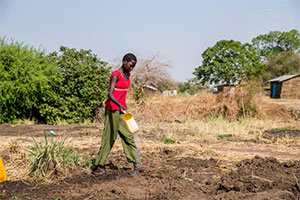 Farming on the Outskirts of Juba. Credit: UN Photo/JC McIlwaine
Promoting human and planetary health is a central focus of the United Nations, as laid out in the 2030 Sustainable Development Goals (SDGs). World hunger and unsustainable farming practices continue to be pressing concerns for the world. According to the 2025 State of Food Security and Nutrition in the World report by the Food and Agriculture Organization (FAO), 673 million people faced hunger in 2024. There are stark regional disparities, with the FAO projecting that 60% of the world population facing hunger will reside in Africa by 2030. Globally, the prevalence of food insecurity has remained consistently higher for women than men.
Sustainable and efficient national food systems are essential in preserving health, education, environmental well-being, peace, economy, and security. However, creating sustainable food systems can be a challenging endeavor, as food production takes a heavy toll on the environment. The agricultural sector accounts for a significant portion of greenhouse gases. Finding safe, sustainable, and ethical strategies to feed the world is crucial in ensuring planetary longevity. A recent initiative from 2023, the EU Regulation on Deforestation-free Products (EUDR), seeks to advocate for sustainable food systems. The main driver of deforestation is the expansion of agricultural land used to produce commodities like cattle, wood, cocoa, coffee, etc. The EUDR is part of the 2020 European Green New Deal and the EU Biodiversity Strategy for 2030 and aims to limit Europe’s consumption of products linked with deforestation by requiring that companies prove that their products are deforestation-free. Despite aiming to achieve major strides in sustainability, policies such as EUDR also raise socioeconomic concerns for targeted countries. Many emerging Latin American economies are impacted by the policy, and have raised the question of how developing countries can grapple with the tensions between economic development and advancing sustainability.
IPS has been at the forefront of providing compelling and insightful stories on communities facing hunger as well as the cost of food production. IPS uses statistics from FAO, the World Food Programme (WFP) and the International Fund for Agricultural Development (IFAD) to bring relevant and hard-hitting facts to readers. This gathering of information and data from such organizations helps bring the best stories from IPS journalists working in the different regions in consultation with experts on the ground.

The Week with IPS

NEXT STOP - SDGs
Tracking global progress towards a sustainable world