Languages
Friday, November 27, 2026



News and Views from the Global South
Food and Agriculture
SRI LANKA: Poorest Still Go Hungry
Experts agree that Sri Lanka's free pre and postnatal clinics across the island nation have helped bring infant mortality down to 15 per 1,000 live births and the under-five mortality rate to 21 per 1,000 live births.AFRICA: Miracle Tree is Like a Supermarket
When a food crisis hits the continent, African countries tend to look to the international donor community to mobilise aid. But a fast-growing, drought- resistant tree with extremely nutritious leaves could help poor, arid nations to fight food insecurity and malnutrition on their own.
PUERTO RICO: Cleaner Energy Sources Prove Divisive
As Puerto Rico seeks to lower soaring utility rates while simultaneously shifting toward cleaner energy sources, it faces grassroots opposition to two major projects even though at least one is 100-percent renewable.PAPUA NEW GUINEA: Informal Economy Ensures Equitable Development
Although Papua New Guinea is known as a resource-rich country, 85 percent of the population depends on the informal economy for a living.INDIA: Advancing Economy Reveals a Hungry Underbelly
Even a year after Rani, a three-year-old tribal girl in the backward Wayanad district of southern Kerala state, was treated in a government hospital for gastroenteritis she remains grossly underweight and suffers from frequent bouts of diarrhoea.GERMANY: While Some Waste, Others Feast
Shortly before midnight last Saturday, Alexander, a 24-year-old law student, stepped out of his small apartment in Hamburg and set off for a jaunt around the local supermarkets to pilfer their garbage containers.Progress Towards a Food-Secure Africa
A growing number of African countries are making significant progress towards eradicating extreme hunger and poverty. Ghana, Liberia, Malawi, Rwanda, Sierra Leone and South Africa are some of the countries that have made tremendous achievements towards achieving these goals.Money Is All That’s Green in Biodiesel
The only green in biodiesel fuel is the money producers make from it, new research has revealed.MIDEAST: Flowers Fight Their Way Out
Ayman Siam, 41, is not growing carnations as usual this year. It’s limonium and statice flowers instead because they are hardier. Given the risks of an Israeli blockade, it’s a political decision.EL SALVADOR: Pesticides Fill Graveyards in Rural Villages
Sitting in the shade under a tree at a careful distance, Francisco Sosa watches his son prepare the land for planting by spraying the weeds with an herbicide from a tank carried on his back.Bumper 2011 Grain Harvest Fails to Rebuild Global Stocks
The world's farmers produced more grain in 2011 than ever before. Estimates from the U.S. Department of Agriculture show the global grain harvest coming in at 2,295 million tonnes, up 53 million tonnes from the previous record in 2009.Brown Revolution Brings New Hope
Picking spots for cattle to graze could reverse desertification and even do its bit to retard climate change, new experiments in Zimbabwe have shown. It’s what is coming to be called the Brown Revolution.MIDEAST: The Olive Branch Fights Back
"During hard times, we have survived off olive oil," says Ahmed Sourani from the Palestinian Agricultural Relief Committee. "During the last war many people who couldn’t leave their homes had only bread and olive oil to sustain them for long periods."BOLIVIA: Artificial ‘Islands’ to Protect Cattle from Annual Floods
Small-scale dairy farmers in this remote area of Bolivia's northeastern Amazon region of Beni have a new hope for protecting their livestock from the fierce annual floods that start in December.BANGLADESH: Farmers Bet on Climate-Proof Crops
With floods, droughts and other calamities battering deltaic Bangladesh regularly, farmers need little prompting in switching to climate-resistant varieties of rice, wheat, pulses and other staples.KENYA: Walking Metres Rather Than Kilometres to Fetch Water
The acute lack of water in Kenya means families have to trek long distances every day to fetch water. In both rural and urban areas, people often walk as far as 30 kilometres or more to collect water from rivers, streams or wells. But thanks to self-help projects backed by NGOs, some communities are coming up with solutions.KAZAKHSTAN: Give Them Bread, But Not So Much
Kazakhstan, intent on diversifying its economy away from oil and mining, has extended its cereal acreage by a third in the past ten years, doubled the value of its grain harvest. It has eradicated rural poverty in the north, the country's breadbasket.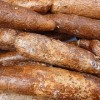
NIGERIA: Not Everyone Pleased with New Vitamin A-Fortified Cassava
Using hybridisation and selective breeding, researchers in Nigeria have developed three new yellow varieties of cassava, a staple crop in much of Africa, which they say will help fight malnutrition caused by vitamin A deficiency in the region.AFGHANISTAN: Killing Heroin With Saffron
Weaning Afghanistan’s poppy farmers away from growing the raw material for the bulk of the world’s illicit heroin has never been easy, but Kashmir’s saffron cultivators may have the answer.DEVELOPMENT-INDIA: Tribal People on the Warpath
This small town, barely 150 km away from the bustling eastern metropolis of Kolkata, hit news headlines in December 2008 when adivasis (indigenous people) led by Maoist rebels briefly captured it.EL SALVADOR: Women Demand to Be Included in Climate Solutions
Some 100 rural women in El Salvador demanded that the government halt mining and hydroelectric projects that are harming their communities and establish specific programmes with a gender perspective for combating climate change.« Previous Page — Next Page »


 Farming on the Outskirts of Juba. Credit: UN Photo/JC McIlwaine
Promoting human and planetary health is a central focus of the United Nations, as laid out in the 2030 Sustainable Development Goals (SDGs). World hunger and unsustainable farming practices continue to be pressing concerns for the world. According to the 2025 State of Food Security and Nutrition in the World report by the Food and Agriculture Organization (FAO), 673 million people faced hunger in 2024. There are stark regional disparities, with the FAO projecting that 60% of the world population facing hunger will reside in Africa by 2030. Globally, the prevalence of food insecurity has remained consistently higher for women than men.
Sustainable and efficient national food systems are essential in preserving health, education, environmental well-being, peace, economy, and security. However, creating sustainable food systems can be a challenging endeavor, as food production takes a heavy toll on the environment. The agricultural sector accounts for a significant portion of greenhouse gases. Finding safe, sustainable, and ethical strategies to feed the world is crucial in ensuring planetary longevity. A recent initiative from 2023, the EU Regulation on Deforestation-free Products (EUDR), seeks to advocate for sustainable food systems. The main driver of deforestation is the expansion of agricultural land used to produce commodities like cattle, wood, cocoa, coffee, etc. The EUDR is part of the 2020 European Green New Deal and the EU Biodiversity Strategy for 2030 and aims to limit Europe’s consumption of products linked with deforestation by requiring that companies prove that their products are deforestation-free. Despite aiming to achieve major strides in sustainability, policies such as EUDR also raise socioeconomic concerns for targeted countries. Many emerging Latin American economies are impacted by the policy, and have raised the question of how developing countries can grapple with the tensions between economic development and advancing sustainability.
IPS has been at the forefront of providing compelling and insightful stories on communities facing hunger as well as the cost of food production. IPS uses statistics from FAO, the World Food Programme (WFP) and the International Fund for Agricultural Development (IFAD) to bring relevant and hard-hitting facts to readers. This gathering of information and data from such organizations helps bring the best stories from IPS journalists working in the different regions in consultation with experts on the ground.

The Week with IPS

NEXT STOP - SDGs
Tracking global progress towards a sustainable world

