Languages
Friday, November 27, 2026



News and Views from the Global South
Human Rights

Q&A: “In Portugal, We Fight the Illness, Not the People Who Suffer from It”
Portugal’s anti-drug policies have been gaining international visibility since this country began to publish the results of its 2001 decision to eliminate all criminal penalties for personal possession of drugs.
U.S., Russia and China Stick to Their Guns
The protracted negotiations on an Arms Trade Treaty (ATT) with the ambitious aim of eradicating the illicit trade in conventional arms hit a deadlock Friday at United Nations as Washington, Moscow and Beijing required "more time" after six years of preparatory meetings.
Q&A: “Israel’s Heavy-Handed Abuse of Palestinian Children Is Unacceptable”
After a fact-finding tour of the Israeli-occupied Gaza Strip - and following hearings in Amman and Cairo - a three-member United Nations committee has lambasted Israel for the harsh treatment of Palestinian children held in custody.
Native Canadians Fear Mining Boom in “Ring of Fire”
With accusations that Canadian resource companies and government officials are disregarding the need for indigenous consent in development projects, First Nations leaders have lashed out by approving a resolution calling for a moratorium on mining development in the so-called Ring of Fire until proper consultation begins.Caribbean Sees Progress on HIV/AIDS, Fears Funding Cuts
Ian McKnight, executive director of the Caribbean Vulnerable Communities Coalition (CVCC), used one word - “tokenistic” - to sum up his perspective on the 19th International AIDS Conference that ended here over the weekend.
Private Sector Debt Gnawing at Developing Countries
Twelve years after a global campaign successfully advocated the cancellation of some of the world’s poorest countries’ public debt, developing economies are again facing unsustainable debt burdens. Only this time, it is the private sector’s debt in developing economies that is inflating dangerously.
Breaking the Ghostly Silence on Rape
It was the ghostly silence that struck him hardest as he walked through the Colombo suburb of Kirulapone the day after the lifeless body of a six-year-old girl had been discovered floating in a filthy canal, Kumar de Silva, a well-known local media personality, told IPS.
Lebanon Heading for Failed State Status?
Every day Lebanon is being plunged further into a state of general insecurity, as chaos from the war in Syria seeps across the border.
Trading Across the Line of Control
As part of recent confidence building measures aimed at minimising tensions between India and Pakistan, which arose largely due to conflicting claims over Kashmir, the two countries have decided to make the Valley an economic bridge, rather than a bone of contention.
Israeli Group Maps Palestinian Removals
Sitting in an airconditioned car along Road 60 in the heart of the occupied West Bank, Ovad Arad explained how he goes about his job: driving unannounced into Palestinian towns and villages, taking photographs, having coffee with families, and leaving almost as quickly as he arrived.
And How Muslims Hold the Key to Christ
“A prayer knocks till the door opens,” a songster from the Church of the Holy Sepulchre sings from outside the door.
PERU: Fujimori’s Lawyers See Opportunity in Reduction of Death Squad Sentences
Former Peruvian president Alberto Fujimori's defence lawyers said the Supreme Court decision to reduce the prison sentences of army intelligence agents found guilty of human rights abuses is "relevant" to his case.
Pouring Edible Oil on Pakistan’s Troubled Areas
PESHAWAR, Jul 28 2012 (IPS) -Taking turns to lug a heavy can of edible oil, Mushtari and Sheema Gul, twin sisters aged nine, trip home happily from their school in Ghareebabad village in Pakistan’s troubled Bajaur Agency.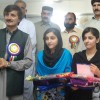
Schoolgirls Beat Taliban
Far from fears that female education is on the decline after the Taliban campaign against girls’ schools, female students outclassed their male counterparts in the secondary school examination for 2012.AIDS Meet Ends with Talk of Cure, But Realities of Scourge Persist
As the International AIDS Conference ended in Washington on Friday, organisers unveiled groundbreaking new research on the promise of early anti-retroviral (ARV) drug therapy.Hezbollah Losing its Grip
Since its inception, Hezbollah’s clout within its community has been solid. However, in recent weeks, the Party of God has been facing increasing difficulties controlling its support base and stymieing discontent. These developments have led analysts to question whether or not Hezbollah is losing its grip on its followers.
Children Injured in Police Crackdown on Chile’s Mapuche Indians
“We have been trampled by this racist Chilean state, which oppresses us. The police force represses all Mapuche people…they shoot at us in cold blood.”
Military Service Leaves Culture of War Behind in Guatemala
“I feel proud to be a part of this change. Malnutrition cannot be wiped out in just two or three years, but this is the beginning and I want to be a part of it,” says Isabela Tzoc, a civic service volunteer involved in a youth programme aimed at fighting extreme poverty in Guatemala.
Orange Shadow Over Olympics
Agent Orange (AO), often called the ‘last legacy’ of the United States war in Vietnam (1955-1975), has popped up again thanks to its manufacturer Dow Chemical’s controversial sponsorship of the Olympic Games.
President’s Death Could Drive National Unity in Ghana
The death of President John Atta Mills will have a sobering effect on national politics in the months leading up to Ghana’s December 2012 election, according to the Executive Secretary of the West Africa Network for Peace, Emmanuel Bombandey.Banksters Hijack Microfinance
For several decades, microcredit presented itself as a magical and benign financial tool for the poorest people in the world, who were otherwise completely excluded from conventional commercial banking services, to secure easy access to loans in order to set up their own businesses and live a dignified life.« Previous Page — Next Page »


One world, one humanity, now one court to defend its rights. Another step towards universal human rights, but not remotely a step far enough. The United Nations adopted the Universal Declaration of Human Rights more than half a century ago, but that has done little to stop violations the world over, just as the Geneva Convention has not protected prisoners of war enough. Democracy itself and the freedom it presupposes has not been protective enough. This is the century to move from politicisation of human rights towards humanising political ways. IPS keeps an eye on that difficult path.

The Week with IPS

NEXT STOP - SDGs
Tracking global progress towards a sustainable world
