Languages
Tuesday, October 20, 2026



News and Views from the Global South
CLIMATE SOUTH: Developing Countries Coping With Climate Change
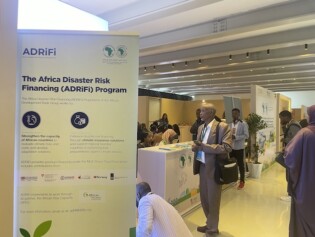
AfDB Commits 11 Billion Dollars To Support Early Warning Systems, Food Security in Rural Africa
As increasingly frequent droughts and devastating floods are affecting agricultural productivity, leaving millions of people food insecure in Africa amid a lack of climate finance, the African Development Bank (AfDB) has committed USD 11 billion to support various climate-resilient and infrastructure projects in rural areas.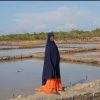
Pemba’s Woman Salt Farmers Forge Livelihoods Amid Climate Woes
As the cool morning breeze sweeps across the Indian Ocean beach in Tanzania’s Pemba archipelago, Salma Mahmoud Ali begins her day. With her brightly coloured Kikoi cinched tightly around her waist and a dark blue scarf framing her face, she walks barefoot toward her salt ponds. The humid air hangs, but Ali wades through ankle-deep water with courage.
‘Show Me the Money’—Grenada PM Calls for Climate Justice
"Though I come from a 'no worries' island, climate change is deeply worrisome for us," Grenada's Prime Minister Dickon Mitchell told IPS in an exclusive interview at COP29 currently underway in Baku, Azerbaijan. Asked how his country was recovering from Hurricane Beryl, Mitchell said the island in the last 24 hours “experienced flash flooding and landslides... So, apart from Hurricane Beryl, we are also dealing with other climate catastrophes.”
Small Island States Fostering Effective Energy Transition To Achieve a Blue Economy
Small Island Developing States (SIDS), a distinct group of 39 states and 18 associate members, are making efforts to promote the blue economy as they possess enormous potential for renewable energy relying on the sea. Experts predict that switching to renewables will help SIDS countries decarbonize power generation as an appropriate option for islands to cut their carbon dioxide (CO2) emissions, fulfill Paris Agreement pledges and contribute to the global fight against climate change.
– Indonesia’s Climate Villages Where Communities Work Together to Mitigate Climate Change –
On the occasion of World Environment Day, 5 June 2021, drawing from IPS’s bank of features and opinion editorials published this year, we are re-publishing one article a day, for the next two weeks. The original article was published on April 7 2021

Indonesia’s Climate Villages Where Communities Work Together to Mitigate Climate Change
Residents of Ngadirejo village in Sukaharjo regency, Central Java province, had often found themselves helpless when their wells dried up or water flooded through their homes. But thanks to a national campaign called Program Kampung Iklim, known by its acronym ProKlim, they now have solutions to this flooding that generally occurs because of a lack of adequate water catchments.
Kenya’s Climate Change Bill Aims to Promote Low Carbon Growth
Alexander Muyekhi, a construction worker from Ebubayi village in the heart of Vihiga County in Western Kenya, and his school-going children can now enjoy a tiny solar kit supplied by the British-based Azuri Technologies to light their house and play their small FM radio.
Silent Suffering: Men and HIV
 Lungile Thamela knows how he got infected with HIV: through his reckless choice to have unprotected sex with his partner although he knew she was living with HIV.

Renewable Energy: The Untold Story of an African Revolution
Africa is experiencing a revolution towards cleaner energy through renewable energy but the story has hardly been told to the world, says Achim Steiner, Executive Director of the United Nations Environment Programme (UNEP).
Q&A: Why Kyoto’s Clean Development Mechanism is at a Crossroads
The U.N. mechanism for supporting carbon emissions projects in developing countries – the Clean Development Mechanism (CDM) – is in crisis as a result of a dramatic slump in the prices being paid for carbon credits.
OPINION: Renewable Energies – a Double-Edged Sword
The United Nations Framework Convention on Climate Change has set a target of reducing emissions of greenhouse gases such as CO2. One way countries can meet their obligations is to switch energy production from the burning of fossil fuels to “renewables”, generally understood to include wind, wave, tidal, hydro, solar and geothermal power and biomass.
Warmer Days a Catastrophe in the Making for Kenya’s Pastoralists
Seif Hassan is a pastoralist from Garissa, Northern Kenya, some 380 kilometres outside of the capital, Nairobi. He sells his animals at the Garissa livestock market where, during a good season, pastoralists can sell up to 5,000 animals per week and “it is a cash-making business.”Human Rights and Gender Equality Vague in Post-2015 Agenda
With the United Nations’ post-2015 development agenda currently under discussion, civil society actors in Europe are calling for a firmer stance on human rights and gender equality, including control of assets by women.
If You Cut One, Plant Two
Olga Mugisa, 11-years-old, takes to the microphone in front of her peers, the Ugandan flag proudly draped behind her and green plants framing the stage. She has an important message to share with her fellow students: “If you cut one, plant two.”
El Niño Triggers Drought, Food Crisis in Nicaragua
The spectre of famine is haunting Nicaragua. The second poorest country in Latin America, and one of the 10 most vulnerable to climate change in the world, is facing a meteorological phenomenon that threatens its food security.
How Climate Legislation Can Help to Enable a Global Climate Deal in 2015
With leading politicians meeting next month for the World Summit of Legislators in Mexico City, it is clear that a new global climate deal is needed. Each year, the world is seeing signs of climate change's accelerating impacts, from longer, more intense droughts to stronger storms and rising seas.
Mexico Underlines Transformation in Global Climate Change Debate
It is now two years since Mexico passed the General Law on Climate Change, a landmark piece of national environmental legislation.
Fiji Leads Pacific Region on Climate Adaptation Efforts
Still a long way off in many parts of the world, climate displacement is already a reality in the Pacific Islands, where rising seas are contaminating fresh water and agricultural land, and rendering some coastal areas uninhabitable.
OP-ED: The Ugly Truth about Garbage and Island Biodiversity
Some of the Earth’s most delicate tropical paradises are being disfigured by the by-products of the modern age - marine debris: plastic bottles, carrier bags and discarded fishing gear.
Putting Local Climate Know-How on the Map
A new weapon in the arsenal against climate change is tapping local knowledge to bridge the policy gap and let communities make their own informed decisions about how to manage livelihoods, natural resources, culture and heritage.
Q&A: Climate Change Front and Centre in Cuban Development Model
Each of Cuba’s 168 municipalities faces the challenge of designing its own strategic development which, as well as economic and social progress, minimises the impact of extreme weather and other problems caused by global warming.Next Page »





How can climate change provide opportunities for developing countries? IPS reports from across the South on key risks, trade-offs and political challenges to coping with the changing environment.

The Week with IPS

NEXT STOP - SDGs
Tracking global progress towards a sustainable world
Tracking global progress towards a sustainable world
