Languages
Tuesday, November 10, 2026



News and Views from the Global South
Projects
Nuclear Safety Plan Has Ukrainians Worried
A 300 million euro loan to improve nuclear safety in the Ukraine has been attacked by environmental groups who say it will instead be used to keep ageing reactors working well beyond their planned lifespans – increasing the risks of a nuclear accident - while doing nothing to address serious issues with the country’s energy intensity.Iranian People Caught in Crossfire of Dueling Messages
Since Barack Obama became president of the United States, messages marking the Iranian New Year – Norouz - celebrated at the onset of spring have become yearly affairs. So have responses given by Iran’s Leader Ayatollah Ali Khamenei from the city of Mashhad where he makes a yearly pilgrimage to visit the shrine of Shi’i Islam’s eighth imam, Imam Reza.
Now Gaza’s Ark Prepares to Dare Israel
“An ark is literally a large floating vessel designed to keep its passengers and cargo safe,” say the group preparing ‘Gaza’s Ark’. But their ark, they say, is “a vessel that embodies hope that the Palestinians of the Gaza Strip can soon live in peace without the threat of the Israeli blockade.”
Group Warns of “Natural Resources Giveaway” in Latin America
Researchers have unveiled new data warning that governments in Latin America are infringing on the rights of their indigenous populations in a bid to fuel development through the extraction of natural resources.
PERU: Stepping Up Protection for Native Groups in Voluntary Isolation
In the dense Amazon rainforest of Peru, there are five reserves inhabited by indigenous groups who have chosen to remain totally or partially isolated from the rest of society. But these areas are not officially demarcated as indigenous lands, and only one is protected with a control post.
Iran’s Nuclear Activities Go On Despite Sanctions
While the U.S.-led sanctions regime on Iran has produced substantial economic hardship, analysts here are increasingly pointing out that Tehran’s controversial nuclear activities have continued unabated.
Tug-of-War Over Nuclear Future
Pushed and pulled in opposite directions, the future of Japan’s energy plans in the wake of the accident at the Fukushima Daiichi nuclear power plant two years ago is emerging as a fight between national economic advancement and what anti-nuke activists call “the lives of the people”.
Electricity for All but Those the Kariba Dam Displaced
Indigenous people who were displaced from the Zambezi Valley almost six decades ago for the construction of the Kariba Dam say they have not benefited from the development they made way for.
/UPDATE*/Boreholes, Boreholes Everywhere….And Not a Drop to Drink
Every day for the last four years, 52-year-old Tintfombi Msibi has had to walk past the borehole in her village of Ekuphakameni, one of the driest rural villages in southern Swaziland, to a dirty stream two kilometres away to collect drinking water.
Opening of Kariba Dam Floodgates Not Welcomed by All
 Almost every rainy season the floodgates of Kariba Dam have to be opened to relieve pressure on the dam wall. But despite warnings not to live or farm on the river banks of the Zambezi River downstream of the dam, some people do so
anyway and end up losing their crops.

India Playing Risky Games at Nuclear Parks
Bhagwat Singh Gohil frets for the future of his bountiful orchards in Mithi Virdi village in western Gujarat state’s coastal district Bhavnagar. “After contending with droughts, rough seas and earthquakes we are staring at the possibility of a man-made disaster in the shape of a nuclear power park.”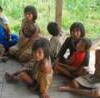
PERU: Stepping Up Protection for Indigenous Groups in Voluntary Isolation
In the dense Amazon rainforest of Peru, there are five reserves inhabited by indigenous groups who have chosen to remain totally or partially isolated from the rest of society. But these areas are not officially demarcated as indigenous lands, and only one is protected with a control post.
Net Tightens Around Fishing in Egypt
For Egypt’s commercial marine fishermen, making a living has never been more dangerous. Egyptian crews driven further afield in search of fish have faced pirate attacks, spent months in dingy foreign prisons, and come under fire from coast guard vessels. Dozens of fishermen have been held for ransom, abused by authorities, or shot and killed.
Obama Visit Settles It a Little for Israel
On his visit to Israel and the Palestinian Territories, U.S. President Barack Obama laid out his vision for a revival of the long-stalled peace talks. Yet, it was clear from his statements that a settlement freeze is no longer an immediate requirement. And, he carefully avoided mentioning the pre-1967 lines as the basis for a two-state solution, to the Israeli Prime Minister’s delight.
Obama Boosts Syria Support as Congress Pushes Military Intervention
As the Syrian uprising enters its third year, the United States and its allies are preparing to materially increase their support of the armed opposition in Syria.
Water Crisis Hitting Food, Energy – And Everything Else
How much water does it take to turn on a light? It took 10,000 litres to make your jeans. Another three big bathtubs of water was needed for your two-eggs-toast-coffee breakfast this morning.
Little Hope for the Children Abducted in Mali’s War
One of Amina Diallo’s sons, 14-year-old Salif, has been missing since August last year. She thinks Islamists kidnapped him while he was on his way to the market in their hometown of Gao, in northern Mali, and recruited him as a child soldier.OP-ED: Genuine Constitutional Monarchy Is the Only Way Out for Al Khalifa
As the Bahraini and international media continue to dissect the meaning of Crown Prince Salman’s appointment as first deputy prime minister, powerful factions within the ruling Al-Khalifa family must be pondering the future of their rule.
Torture Victims in El Salvador Speak Out
A report containing the testimonies of victims of torture during El Salvador’s 1980-1992 civil war will be published 27 years after it was written, to help Salvadorans today learn more about that chapter in the country’s history.
Q&A: Brazil’s School Meals Teach Good Eating Habits
Providing school meals for 45 million children is a remarkable achievement for Brazil. But the programme faces specific difficulties, as well as the generic problems plaguing any national plan in this vast country of more than 192 million people.
Syrian Delegates Push for Peaceful Resolution of Conflict
Amidst ongoing violence between the Syrian regime and opposition forces, and serious international discourse on arming the opposition, some Syrian civil society leaders are insisting upon a non-violent approach toward conflict resolution.« Previous Page — Next Page »





The Week with IPS

NEXT STOP - SDGs
Tracking global progress towards a sustainable world
Tracking global progress towards a sustainable world
