Languages
Friday, October 23, 2026



News and Views from the Global South
South-South
Questions Mounting over G20 Accountability
As leaders of the Group of 20 (G20) countries head into a second day of talks at the grouping's seventh summit this week in Los Cabos, Mexico, calls are strengthening for a new debate around the group's lack of accountability.
Rio Outcome Bleak With No New Funding*
Amidst recrimination, anger and charges of “strong arm tactics”, negotiators eventually endorsed a global plan of action for sustainable development following marathon sessions lasting over six weary days.
Newborn Deaths Expose India’s Low Health Budget
A year after the Indian government began paying pregnant women to deliver their babies in state-run facilities, the pressure is showing on the country’s understaffed and poorly equipped hospitals.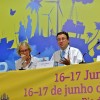
RIO+20: Ignoring Science, Negotiations Become Political Battle
The science is crystal clear: humans are threatening Earth's ability to support mankind, and a new world economy is urgently needed to prevent irreversible decline, said scientists and other experts at an event on the sidelines of the Rio+20 Earth Summit.
RIO+20: The Two Faces of BRICS Development Aid
The BRICS countries (Brazil, Russia, India, China and South Africa) face a key choice: to opt for "good" development aid, based on sustainable development, or for the "bad" old traditional model, which they criticised when they were its recipients.
RIO+20: Developing Countries Accept Green Economy*
It’s not true that developing countries conditioned the inclusion of the green economy in the final document at Rio+20 on clearly defined provisions for financing, the head of the Venezuelan delegation, Claudia Salerno, told TerraViva.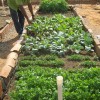
Cilantro Spices Up Coexistence with Drought in Brazil
Many grow lettuce, tomatoes, carrots, beets and other vegetables. But cilantro is ever-present in the gardens that are helping rural families weather the lengthy drought that is once again wracking Brazil’s impoverished Northeast.
Europe and Former Colonies Urge Action at Rio+20
Europe and 79 of its former colonies have sent a strong message to the U.N. Conference on Sustainable Development in Brazil next week that it should use the opportunity to both fulfill past promises and deal with "new and emerging challenges".G20 to See Showdown on IMF Reforms
The head of the International Monetary Fund (IMF), Christine Lagarde, on Wednesday urged countries to act on a suite of reform measures that would significantly increase the voices of developing countries within the agency.
Trade Pact with Europe Still a Tough Sell to Africa, Pacific Bloc
Caught between a proverbial rock and a hard place, African and Pacific countries are still unsure whether they should follow the lead of their Caribbean counterparts and sign a wide-ranging Economic Partnership Agreement (EPA) with Europe.Private Interests Infiltrate G20 Summit
Business will push for the freeing up of trade in green goods and services, at the upcoming summit of heads of state of the Group of 20 (G20) industrialised and emerging countries in Mexico.
Fair Trade Alive and Well in Spain Despite Recession
The economic and financial crisis afflicting the countries of the European Union (EU) has scarcely affected sales of fair trade products from Latin America, especially food products, in Spain.
Distribution of Laptops Expands in Latin America’s Classrooms
In Latin America, the distribution of laptops in public schools, an effort that has enjoyed success in countries like Argentina, Uruguay and Venezuela, is being studied by the governments of other nations interested in learning from their experience about the challenges that can be expected.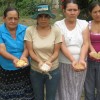
Rural Women in Peru Key to Adaptation of Seeds to Climate Change
For ages, rural women in the Peruvian highlands have been selecting and storing seeds, ensuring their preservation. But the authorities have failed to tap into this storehouse of knowledge and experience, despite the contributions it could make to the design of effective policies for adaptation to climate change, which poses a growing threat to the women’s livelihoods.Colombia and Venezuela – Joining Forces
When 12 Colombian soldiers were killed by FARC insurgents a stone's throw away from the northern border with Venezuela, the consequences included military cooperation that reinforces the political, diplomatic and trade-related links that have developed over the past two years between Colombian President Juan Manuel Santos and Venezuelan President Hugo Chávez.“Big Five” Crushes “Small Five” Over Veto Powers
At the height of the Cold War, a Peruvian diplomat, Dr. Victor Andres Belaunde, publicly expressed scepticism about the ability of small countries to survive the diplomatic might of the big powers in the world body.
China Keen to Reverse Negative Image in Africa
The reality of Indian and Chinese investment in Africa is much more complex than the good cop, bad cop image of Asia’s two emerging economic giants.Efforts to Build Caregiving Industry ‘Inadequate’
To meet the demands of a rapidly ageing population, Japan has loosened its notoriously strict immigration and nursing regulations to accept foreign caregivers. But new evidence indicates deep cracks in those piecemeal gestures.Brazil and China, Oiling the Wheels of Business
China's voracious demand for energy has prompted it to embrace Brazil as a major oil partner, fuelling the dramatic expansion of Chinese companies in this South American country. But while some see this as a boost to the Brazilian economy, others fear that it poses a risk to this country’s future self-sufficiency.Caribbean Courts Mexico as Ally in the G20
The Caribbean Community bloc (Caricom) is lobbying Mexico to use its influence as chair of the G20, which controls 90 percent of world trade, to promote the interests of the Caribbean and other small island developing states when it meets in June.
Nothing to Show for Hard Work but Burnt Fields of Maize
Gertrude Mkoloi earns a living harvesting maize on a small piece of land in rural Zimbabwe. Or at least she used to.« Previous Page — Next Page »





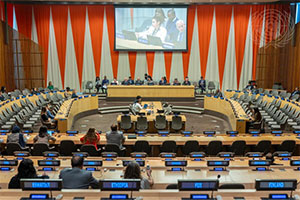 Panel Discussion on International Day for South-South Cooperation 2023. Credit: UN Photo/Cia Pak
South-South cooperation – collaboration between developing countries – is a growing and dynamic phenomenon, an important process that is vital in confronting shared challenges. Led by emerging giants, India, Brazil and South Africa (IBSA), the Global South is a tremendous source of tested solutions to development challenges, including the Millennium Development Goals (MDGs). China’s Belt and Road Initiative (BRI), launched in 2013, has further transformed South-South cooperation by enhancing infrastructure, trade, and investment linkages across Asia, Africa, and Latin America. Meanwhile, new platforms like the expansion of BRICS to include other countries such as Thailand, Nigeria, and Cuba are reshaping global economic governance and offering alternatives to traditional Western-led institutions. The Nairobi Outcome of the 2009 High-Level United Nations Conference on South-South Cooperation in Nairobi, Kenya highlights growing political and economic ties within the developing world, as countries from the Global South assume leading roles in decision-making on hot global issues ranging from economic recovery to food security, energy transitions, debt relief, and climate change. Today, the African Continental Free Trade Area and India’s “Voice of the Global South” summits have advanced frameworks for regional self-reliance, while G77 has reaffirmed commitments to resilient and inclusive economies ahead of the 16th UN Conference on Trade and Development.
Updated by Yilan Batista and Shuli Wong August 2026

The Week with IPS

NEXT STOP - SDGs
Tracking global progress towards a sustainable world
Tracking global progress towards a sustainable world
