Languages
Wednesday, September 16, 2026



News and Views from the Global South
South-South

Cameron at large: Want Not to Become a Terrorist? Speak Fluent English!
“Do you speak English fluently? No? Then you risk to become a terrorist!.” IPS posed this dilemma to some young Muslim women living in Cairo, while explaining that this appears to be UK prime minister David Cameron's formula to judge the level of Muslim women's risk to fall, passively, into the horrific trap of extremism.
United Arab Emirates Strengthens Ties with Argentina’s New Government
The new government of Argentina and the United Arab Emirates (UAE) are strengthening the relationship established by the previous administration, at a time when this South American country is seeking to bring in foreign exchange, build up its international reserves and draw investment, in what the authorities describe as a new era of openness to the world.
Women’s Rights First — African Summit
Despite the enormous challenges facing Africa now, the leaders of its 1.2 billion plus inhabitants have decided to spotlight the issue of Human Rights With a Particular Focus on the Rights of Women in their 26th summit held in Addis Ababa on 21-31 January this year. Why?
The Lesson from Davos: No Connection to Reality
The rich and the powerful, who meet every year at the World Economic Forum (WEF), were in a gloomy mood this time. Not only because the day they met close to eight trillion dollars has been wiped off global equity markets by a "correction". But because no leader could be in a buoyant mood.
Caribbean Biodiversity Overheated by Climate Change
The nearly 7,000 islands and the warm waters of the Caribbean Sea are home to thousands of endemic species and are on the migration route of many kinds of birds. Preserving this abundant fauna requires multilateral actions in today’s era of global warming.
Floods Pose Challenge for South American Integration
The flooding that has affected four South American countries has underscored the need for an integrated approach to addressing the causes and effects of climate change.
Foreign Direct Investment: Myths and realities
Foreign direct investment (FDI) is perhaps one of the most ambiguous and the least understood concepts in international economics. Common debate on FDI is confounded by several myths regarding its nature and impact on capital accumulation, technological progress, industrialization and growth in emerging and developing economies.
Mexico to Export Nixtamalisation of Grains to Africa
Every day in the wee hours of the morning Verónica Reyes’ extended family grinds corn to make the dough they use in the tacos they sell from their food truck in Mexico City.
“Paris Is Not the End of a Climate Change Process but a Beginning”
Chilean President Michelle Bachelet says the climate summit in Paris “is not the end of a process but a beginning,” and that it will produce “an agreement that, although insufficient with respect to the original goal, shows that people believe it is better to move ahead than to stand still.”
Not Yet Curtains for BRICs
With Goldman Sachs folding up its haemorrhaging BRIC fund, is it curtains for the acronym that defined the investment bankers’ fancy for emerging markets? It certainly appears so after China’s stock market crash and a fast slowing economy triggered fears that the dragon will set off the next global recession.
Cubans Seeking the American Dream, Stranded in Costa Rica
Thousands of Cubans heading for the United States have been stranded at the Costa Rican-Nicaraguan border since mid-November, waiting for the authorities in Managua to authorise their passage north.
Private Nature Reserves in Latin America Seek a Bigger Role
Private voluntary nature reserves in Latin America should be seen as allies in policies on the environment, climate change mitigation and the preservation of biological diversity in rainforests, say experts.
Latin American Legislators Find New Paths to Fight Hunger
With eight specific commitments aimed at pushing through laws and policies on food security and sovereignty, family farming and school feeding programmes, legislators from 17 countries closed the Sixth Forum of the Parliamentary Front Against Hunger in Latin America and the Caribbean.
Latin America to Push for Food Security Laws as a Bloc
Lawmakers in the Parliamentary Front Against Hunger in Latin America and the Caribbean decided at a regional meeting to work as a bloc for the passage of laws on food security – an area in which countries in the region have show uneven progress.
Opinion: China’s New South-South Funds – a Global Game Changer?
South-South cooperation is usually seen as a poor second fiddle to North-South aid in the world of development assistance. Indeed, developing countries’ policy makers themselves insist that South-South cooperation can only supplement but not replace North-South cooperation.
Leading Powers to Double Renewable Energy Supply by 2030
Eight of the world’s leading economies will double their renewable energy supply by 2030 if they live up to their pledges to contribute to curbing global warming, which will be included in the new climate treaty.Refugee Crisis May Threaten Development Aid to World’s Poor
As the spreading refugee crisis threatens to destabilize national budgets of donor nations in Western Europe, Secretary-General Ban Ki-moon Wednesday appealed to the international community not to forsake its longstanding commitment for development assistance to the world’s poorer nations.
Latin American Legislators, a Battering Ram in the Fight Against Hunger
Lawmakers in Latin America are joining forces to strengthen institutional frameworks that sustain the fight against hunger in a region that, despite being dubbed “the next global breadbasket”, still has more than 34 million undernourished people.
Opinion: Economic Slowdown Threatening Progress
Slower economic growth since 2008, and especially with the commodity price collapse since the end of last year, threatens to reverse the exceptional half-decade before the financial crash when growth in the South stayed ahead of the North. From 2002, many developing countries – including some of the poorest– had been growing much faster after a quarter century of stagnation in Africa, for example.
Central America Seeks Recognition of Its Vulnerability to Climate Change
For decades, the countries of Central America have borne the heavy impact of extreme climate phenomena like hurricanes and severe drought. Now, six of them are demanding that the entire planet recognise their climate vulnerability.
Nepal Appeals to U.N. to Help Lift Economic Blockade
A coalition of independent Nepali citizens – including diplomats, journalists, women’s rights leaders, medical doctors and former U.N. officials – is calling on the international community and the United Nations to take “effective steps” to help remove an “economic blockade” imposed on Nepal.« Previous Page — Next Page »


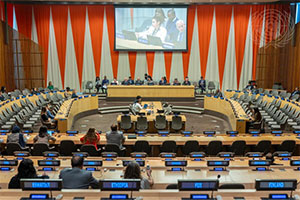 Panel Discussion on International Day for South-South Cooperation 2023. Credit: UN Photo/Cia Pak
South-South cooperation – collaboration between developing countries – is a growing and dynamic phenomenon, an important process that is vital in confronting shared challenges. Led by emerging giants, India, Brazil and South Africa (IBSA), the Global South is a tremendous source of tested solutions to development challenges, including the Millennium Development Goals (MDGs). China’s Belt and Road Initiative (BRI), launched in 2013, has further transformed South-South cooperation by enhancing infrastructure, trade, and investment linkages across Asia, Africa, and Latin America. Meanwhile, new platforms like the expansion of BRICS to include other countries such as Thailand, Nigeria, and Cuba are reshaping global economic governance and offering alternatives to traditional Western-led institutions. The Nairobi Outcome of the 2009 High-Level United Nations Conference on South-South Cooperation in Nairobi, Kenya highlights growing political and economic ties within the developing world, as countries from the Global South assume leading roles in decision-making on hot global issues ranging from economic recovery to food security, energy transitions, debt relief, and climate change. Today, the African Continental Free Trade Area and India’s “Voice of the Global South” summits have advanced frameworks for regional self-reliance, while G77 has reaffirmed commitments to resilient and inclusive economies ahead of the 16th UN Conference on Trade and Development.
Updated by Yilan Batista and Shuli Wong August 2026

The Week with IPS

NEXT STOP - SDGs
Tracking global progress towards a sustainable world
Tracking global progress towards a sustainable world
