Languages
Saturday, November 21, 2026



News and Views from the Global South
Latin America & the Caribbean

Tiny Barbuda Fears Increasingly Hostile Climate
Local scientists are warning the tiny 62-square-mile island of Barbuda is becoming one of the most vulnerable spots on earth to the consequences of climate change.
A Memorial of White Scarves Protests Calderón’s Legacy
Each scarf represents a life cut short. Each stitch, a tear. Each thread, a cry of frustration about death and impunity.
Caribbean Fed Up with U.S. Rum Subsidies
Caribbean governments have begun a quiet lobbying effort to convince Washington to rethink the subsidies it grants to the rum industry in U.S. territories, or face a formal complaint in the World Trade Organisation.
Veracruz – a Black Hole in Mexico
Something smells rotten in the state of Veracruz. In Xalapa, the capital of this eastern Mexican state, known as the “Athens of Veracruz” because of its strong cultural tradition, fear is in the air.Argentina’s Biggest Human Rights Trial Begins
The biggest trial for human rights crimes committed by Argentina’s 1976-1983 dictatorship began Wednesday in Buenos Aires, with 68 people accused of crimes involving nearly 800 victims of the Navy Mechanics School (ESMA).
Mapuche Indians Fight New Airport in Southern Chile
“This is a project that reflects the occupation…of Mapuche territory,” said Iván Reyes, an indigenous leader staunchly opposed to the construction of an international airport in the southern Chilean region of Araucanía.
Q&A: Turning Remittances into National Profits in LDCs
Remittances to the world’s poorest countries reached a record 27 billions dollars in 2011, according to a report released Monday by the United Nations Conference on Trade and Development (UNCTAD) in Geneva.
Feminists Want to Paint Cuba Purple
There are no purple billboards on city streets, and no public service announcements on television to mark the date. But many different voices in Cuba remember that this year marks the centennial of the birth of the local feminist movement, a platform for fighting for equality and against gender-based violence.
Using the Airwaves to Empower Quechua Women in Bolivia
"Atispa mana atispa ñawpajman rinanchis tiyan" ("Power without power, we have to keep moving forward”) in the Quechua language, Ruth Rojas told her listeners at the end of a series of radio programmes on political culture, broadcast to indigenous women in Bolivia.
A Green Needle in the Haystack of Cuban Small Enterprise
Oasis Nelva is a refreshing green space in the midst of the grey asphalt landscape of Old Havana. The ornamental plant shop is also one of only a handful of eco-friendly initiatives among the upsurge of private small businesses in Cuba.
Q&A: “Latin America Could Eradicate Hunger by 2025”
The hunger suffered by 49 million people in Latin America could be eradicated by 2025, according to Spanish agricultural engineer Ricardo Rapallo.
Guyana Seeks to Shield Gold Miners from Mercury Ban
As regional delegates meet to discuss a legally binding ban on the use of mercury this week, Guyanese officials are arguing that an exception should be made for the South American country's lucrative gold mining sector until an acceptable alternative is found.Building More Democratic Families in Argentina
A wide-ranging reform of Argentina's civil code is looking to replace traditional concepts of parental authority and control with one of parental responsibility, while expressly prohibiting corporal punishment for children and adolescents.
Mental Health, Another Victim of Climate Change
"The city looked as if it had been bombed. On the way to my office, I passed people who had the same shocked look on their faces as I did. We would look at each other, and even though we were strangers, we’d ask ‘How did things go for you? Did anything happen to your house?’ It was a kind of warm solidarity that did me a lot of good.”
Shrinking Ozone Hole, Growing Hopes
Argentine scientists agree that there are signs of recovery of the ozone layer that protects life on earth by filtering out the sun's harmful ultraviolet radiation, but they are cautious about saying that the problem is on its way to a solution.
Chile in the Vanguard of Monitoring AIDS Therapy
In Chile, not only do all people diagnosed with HIV/AIDS receive treatment, but the country also has advanced mechanisms for monitoring outcomes of the antiretroviral therapy.
Reconsidering Policies and Strategies in the South
There are numerous reasons to believe that the forces that have been driving growth in developing and emerging economies since 2009 cannot be sustained over the medium term. At the same time, it is impossible to return to the extremely favourable international economic conditions that prevailed before the eruption of the global crisis.
Keeping African Roots Alive in Brazil
A Nigerian diviner dances and sings next to a Brazilian priest of the Candomblé religion, brought to this South American country by African slaves, that is now being rescued from oblivion in school texts on national history and culture.
Sustainable Fashion Born in Brazil’s Favelas
A Brazilian designer has taken fashion from the exclusivity of the catwalk to the reality of the favela, to demonstrate that styles, trends and fads are also born in these poor neighborhoods of cities like Rio de Janeiro.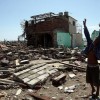
Tomorrow Is Too Late for Adaptation to Climate Change
You can still see broken plates, toys, books and some photographs among the rubble that was once the homes of Rey Antonio Acosta’s family and other families in Mar Verde, the beach community where Hurricane Sandy made landfall in this eastern Cuban city.
Directing Your Call in Guatemala
"I was surprised at how hard it was to learn more English. I had looked for work in a bank, but I would have earned only half what I make here, and I'd have had to work more hours," said Carlos de León from his cubicle in a call centre, part of a rapidly growing industry in Guatemala.« Previous Page — Next Page »


The Week with IPS

NEXT STOP - SDGs
Tracking global progress towards a sustainable world
Tracking global progress towards a sustainable world

