Languages
Wednesday, October 28, 2026



News and Views from the Global South
Agriculture
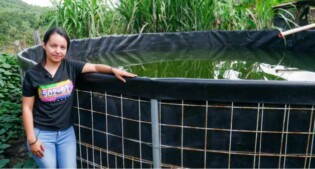
Guatemalan Peasants Overcome Drought in the Dry Corridor
Water scarcity that relentlessly hits the rural communities in eastern Guatemala, located in the so-called Central American Dry Corridor, is a constant threat due to the challenges in producing food, year after year. But it is also an incentive to strive to overcome adversities.
Food Security and Water, a Priority for Border Towns in Central America
The hope of Salvadoran Cristian Castillo to harvest tomatoes in a municipality of the Central American Dry Corridor hung by a thread when his well, which he used to irrigate his crops, dried up. However, his enthusiasm returned when a regional project taught him how to harvest rainwater for when the rains begin in May.
Solar Panels Aim to Protect Mexican Family Farming
Verónica Molina, an indigenous Comcaac woman, first came into contact with solar energy in 2016, when she travelled to India for training on communal photovoltaic facilities. This later enabled her to take part in the installation of the first solar systems and family vegetable gardens in her community, Desemboque del Seri, in northern Mexico.
A River’s Contrasts and Inequalities in the Arid Lands of Brazil
Osmir da Silva Rubez refuses to join the drip system, and is the only one among the 51 families living in the Mandacaru Public Irrigation Project in Juazeiro, a municipality in the state of Bahia, in the Northeast region of Brazil, to maintain the furrows that carry water to their crops.
Traditional, Time-Tested Methods and a Modern App Helps Beat Climate Change
Even as erratic weather and extremely high temperatures increase pest infestation and affect harvests, a combination of traditional methods, integrated pest management through intercropping and multilayering is helping farmers in Ahmednagar and Aurangabad districts of Maharashtra, India.
Agricultural Power, Waning Industry Dictate Brazil’s Future
With its accelerated growth agriculture has emerged as a key sector of Brazil's economy, but it is failing on its own to spread prosperity and reduce poverty and inequality, with industry in decline.
Southeast Asian Farmers Adapt, Insure against Growing Climate Risks
As incidents of drought and extreme rainfall increase, farmers in Southeast Asia are partnering with experts to develop targeted weather forecasts to work around the threats and, when adaptation becomes too costly, buy specially designed insurance to protect their livelihoods.
Digitisation Boosts Mechanised Farming Among Kenyan Farmers
When 33-year-old Kimani Mwaniki, an Irish potato farmer in Elburgon, Nakuru County in Kenya’s Rift Valley, heard about a farmer’s virtual school, he didn’t hesitate to enrol. He was keen to learn how the programme will enable him to get higher crop yields for his market in the capital city Nairobi and elsewhere.
Rwandan Farmers Pin Hopes on New Tech to Tackle Food Losses
Rwanda is trying to reduce post-harvest loss by relying on new technologies to increase the amount of food available for consumption and help smallholder farmers confront some challenges caused by the overproduction of staple crops.
Is India on Track to Beat the Perfect Storm?
“The Perfect Storm” was a dire prediction that by 2030 food shortages, scarce water and insufficient energy resources together with climate change would threaten to unleash public unrest, cross-border conflicts and mass migration from worst-affected regions.
Making Agriculture Cool
At every conference she has attended on the youth, Nawsheen Hosenally has been frustrated to hear that agriculture is not ‘cool’. The 29-year-old graduate in agricultural extension and information systems knew she wanted to do something to redeem the image of agriculture among young people.
Climate Change Becomes a Reality Check for the North
“This season, the month of May was particularly hot and dry,” says Leo De Jong, a commercial farmer in Zeewolde, in Flevopolder, the Netherlands. Flevopolder is in the province of Flevoland, the largest site of land reclamation in the world. Here a hectare of land costs up to 100,000 Euros. “At the moment, we are spending between 20,000 and 25,000 Euros per week on irrigation.”
After a Historic Success, Urgent Challenges Face the WTO
In 2015 the international community took some huge strides forward on a number of vital issues. There was the agreement on the United Nations new Sustainable Development Goals.
WTO: Giant Steps in the World Conference
World Trade Organization (WTO) members concluded the Tenth Ministerial Conference in Nairobi on 19 December by securing an historic agreement on a series of trade initiatives. The “Nairobi Package” pays fitting tribute to the Conference host, Kenya, by delivering commitments that will benefit in particular the organization’s poorest members.
Weak Agriculture Finance Feeds Malnutrition in Zimbabwe
Successive poor harvests have diminished Ndodana Makhalima's household food stocks and the family’s nutrition status. A subsistence farmer in Lupane, about 110 kilometres north of Zimbabwe’s second city, Bulawayo, 56 year-old Makhalima has learnt to live with hunger on his door step.
Emulating the US Opposed by the US
The US once led the post-war global effort against hunger and food insecurity, but corporate influence on government trade negotiators now seek to prevent other countries from using some of the very measures it pioneered.
Farmers to COP 21: Don’t Bite the Hand That Feeds You!
When Dr. Evelyn Nguleka says that the world’s people shouldn’t bite the hand that feeds them, she explains that she’s not only referring to protecting farmers, but also to safeguarding the environment.
India Holds Up Farmers’ Plight from Extreme Weather for COP21 Delegates
“If you look at the submitted Intended Nationally Determined Contributions (INDCs, the national commitments to cut greenhouse gas emissions by 2030) by over 150 countries, most have announced mitigation-centric targets, whereas climate change is also about adaptation. India is among the few that has given a comprehensive INDC,” Ashok Lavasa, a key official of India’s Ministry of Environment, Forest and Climate Change and part of its COP21 team at Paris, told IPS.
Farmers Urge Solutions at Climate Change Talks
Recognizing that agriculture plays a significant role in global warming, farmer associations say they want to offer solutions, and they’re urging governments to include them in negotiations during the United Nations Climate Change Conference taking place Nov. 30 to Dec. 11 in Paris.
Analysis: Are Young People the Answer to Africa’s Food Security?
Are you young, energetic, creative, ambitious and need a job? Africa's agriculture sector needs you!
OPINION: Keep Family Farms in Business with Youth Agripreneurs
Finding a way to allow youth to contribute their natural and ample energies to productive causes is increasingly the touchstone issue that will determine future prosperity.Next Page »





The Week with IPS

NEXT STOP - SDGs
Tracking global progress towards a sustainable world
Tracking global progress towards a sustainable world
