Languages
Saturday, September 5, 2026



News and Views from the Global South
Corruption
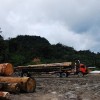
Treat Illegal Logging Like Organised Crime, Urges World Bank
With illegal loggers clearing the equivalent of a football field of the world's most valuable forests every two seconds, local and international law enforcement systems should target the criminal operations that profit most from the trade, according to a new report released here Tuesday by the World Bank.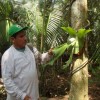
More Transparent Forest Governance in Peruvian Amazon
In Peru, where over half of the national territory is covered by forests and the logging industry is marred by corruption, transparency and good forest management are closely linked.
Angola’s Police Silence the Media
Rights groups and activists are warning of a rapidly deteriorating political climate in Angola following a police raid on a private newspaper and a violent crackdown on anti-government protests.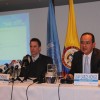
Illegal Wiretapping Continues in Colombia, U.N. Says
Illegal spying on human rights activists and journalists is still happening in Colombia, according to a new report by the Office of the United Nations High Commissioner for Human Rights.MALAYSIA: Privatisation of Healthcare Turns Election Issue
KUALA LUMPUR, Feb 26 (IPS) - A plan by the Malaysian government to privatise its public healthcare system and get consumers to pay for it through salary cuts is rapidly turning into a major election issue.
Privatisation Derailed Argentina’s Rail System
Increasingly frequent and tragic railway accidents in Argentina, like this week’s crash, show that the rail system, run by private companies that receive hundreds of millions of dollars in subsidies from the state, constantly ignores warnings from inspectors and fines, observers say.
Q&A: ‘Malaysians Must Vote Out Corruption, Racism’
Malaysia’s charismatic opposition leader Anwar Ibrahim is tapping the spirit of the Arab Spring to end the 55-year unbroken rule of the United Malay National Organsiation (UMNO) and its allies in the Southeast Asian nation.
SENEGAL: Two Women Among 14 Candidates for President
There are two women among the 14 candidates contesting the first round of Senegalese presidential elections that will be held on Feb. 26. But according to several analysts, this overwhelmingly Muslim West African country is not ready to be governed by a woman.MALAYSIA: ‘Cowgate’ Turns Opposition Fodder
With the 83-million-dollar ‘cowgate’ scam refusing to die down, a shadow hangs over Prime Minister Najib Razak’s plans to call elections ahead of April 2013, when they are due.BOOKS: In the Shadow World, Only Blood, Gold and Gunpowder
They called themselves the "cut hands commandos" because they lopped off their victims' hands with machetes; the "burn house unit", for the thousands of families who were locked into their homes and roasted alive; the "born naked squad", in reference to the hapless hundreds who were stripped naked and raped before being bludgeoned or burned to death.Senegalese Students Call for President to Step Down
The friends of slain Senegalese student protester, Mamadou Diop, say that the 32-year-old master’s student was against injustice and that is why he was protesting against President Abdoulaye Wade’s bid for a third term of office.RUSSIA: Putin Remains Leading Candidate in Presidential Elections
Election season in Russia promises to be stormy, as Prime Minister Vladimir Putin emerges as the leading candidate in the presidential race scheduled for March 4 and unresolved issues of voting fraud and voter manipulation spark massive protests amongst opposition groups.CUBA: Party Aims for Efficient, Inclusive Socialism
Cuba's communist leaders have mapped out a strategy to modernise their country's one-party socialist model and make it more efficient, which implies making it more inclusive and representative of a society that is increasingly diverse.SIERRA LEONE: Government Online Mining Database to Increase Transparency
The launch of Sierra Leone’s first online mining database in West Africa comes with a promise to increase transparency and accountability in the country’s rich natural resource sector.HONDURAS: Support for President Lobo Hits All-Time Low
Last Friday marked two years since the inauguration of Porfirio Lobo as president of Honduras, amidst accusations of corruption, an unprecedented crime wave, and his lowest approval rating yet.SPAIN: Trials of Judge Garzon Called Scandalous by Rights Groups
Another trial opened Tuesday with Spain's best-known judge, Baltasar Garzón, in the dock for attempting to investigate crimes against humanity committed during the 36-year dictatorship of Francisco Franco.PAPUA NEW GUINEA: Informal Economy Ensures Equitable Development
Although Papua New Guinea is known as a resource-rich country, 85 percent of the population depends on the informal economy for a living.KAZAKHSTAN: Dissent Stifled Amid Indifference
President Nursultan Nazarbayev, re-elected last April with an improbable yet typical 93 percent, presided last weekend over parliamentary elections that maintained his iron grip on his oil-rich country’s parliament, and further stifled dissent.NIGERIA: Corruption Fuels Public Anger
As a nationwide strike and protests against the lifting of the fuel subsidy paralysed Nigeria for the third day in a row Wednesday, analysts say the billions of dollars a year lost to corruption in the oil industry could have been used to leave the subsidy in place.KENYA: Inflation Deflates New Year Joy
Kenyans entered the New Year with less pomp and colour that has characterised previous new year celebrations. Due to the harsh economic situation and the fact that it is time for most students to go back to school, many families shied away from entertainment places to save that elusive shilling for their school-going children.INDIA: Fighting for a Less Corrupt New Year
After failing to muster support in parliament for the passage of a watered- down anti-corruption bill, Prime Minister Manmohan Singh must find ways to satisfy opposition parties, allies and civil society that his United Progressive Alliance (UPA) government is serious about curbing graft in the New Year.« Previous Page — Next Page »


The Week with IPS

NEXT STOP - SDGs
Tracking global progress towards a sustainable world
Tracking global progress towards a sustainable world
