
Friday, May 22, 2026



News and Views from the Global South
Inequality
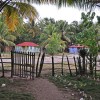
For Disenfranchised Haitian Islanders, Tourism Signals a Paradise Lost
Calm waters lap the shore beneath stately coconut palms. Mango trees display their bounty alongside mangrove forests. Goats graze peacefully on hillsides.
Child Malnutrition Doesn’t Take Vacation in Spain
It’s two in the afternoon, and María stirs tomato sauce into a huge pot of pasta. School is out for the summer in Spain, but the lunchroom in this public school in the southern city of Málaga is still open, serving meals to more than 100 children from poor families.
The Deadly Occupation Attracting Kenya’s Youth
Allan Karanja, 22, is a sand harvester. His job is a complex and arduous one that involves him working in deep pits, equipped only with a shovel, crowbar and no protective gear, as he mines sand. It’s also a deadly occupation.
Will Climate Change Lead to Conflict or Cooperation?
The headline of every article about the relationship between climate change and conflict should be “It’s complicated,” according to Clionadh Raleigh.
Ethics of ‘Mercy Killing’ Up for Debate in India
If a terminally ill patient, with scant hope of recovery, pleads for his death to be facilitated, should the doctors comply? Or, if the family of a patient who has been declared brain-dead requests that her life-support system be withdrawn, should their will be respected?
Zimbabwe’s Food Entrepreneurs Cash in on a Failing Economy
Millicent Gananda, 34, and her two children enjoy their food at a roadside restaurant in downtown Harare, Zimbabwe’s capital, before they dash into the supermarket next door.
Indigenous Leaders in Costa Rica Tell Ban Ki-moon Their Problems
Indigenous people in Costa Rica, hemmed in by violent attacks from farmers and ranchers who invade their land and burn down their homes, have found a new ally: United Nations Secretary-General Ban Ki-moon, who met with 36 native leaders during a recent visit to this country.
How Farming is Making Côte d’Ivoire’s Prisoners ‘Feel Like Being Human Again’
François Kouamé, prisoner Number 67, proudly shows off a sow and her four piglets. Dressed in his rubber boots, he passes by two new tractors as he happily makes his way to a field where pretty soon cassava and corn plants will start growing. “Look at those sprouts. It is a lot of work!”
Human Development – Latin America Less Than Halfway There
Construction worker Leobardo Gómez has been out of work for nine months since he slipped and fell to the street on a construction site in the Mexican capital in October.
Social Protection Needed to Reduce Africa’s Inequalities
For the last 13 years, Michael Ndah, 37, has worked for three road construction companies in Cameroon, but it is only in the last two years that his current employer has managed to register him with the National Social Insurance Fund (CNPS).
OPINION: Tackling Human Vulnerabilities, Changing Investment, Policies and Social Norms
As successive Human Development Reports have shown, most people in most countries are doing better in human development. Globalisation, advances in technology and higher incomes all hold promise for longer, healthier, more secure lives.
For Nepal’s Dalits, Struggle Continues Amidst Slow Progress
 With over 41 percent of Nepal's three million Dalits living below the poverty line, and over 90 percent classified as 'landless', the country must reassess its progress on the Millennium Development Goals (MDGs) vis-a-vis its most vulnerable populations.

North’s Policies Affecting South’s Economies
Since the onset of the crisis, the South Centre has argued that policy responses to the crisis by the European Union and the United States has suffered from serious shortcomings that would delay recovery and entail unnecessary losses of income and jobs, and also endanger future growth and stability.
U.N.’s New Development Goals Must Also Be Measurable for Rich
The United Nations is on the verge of releasing a new set of Sustainable Development Goals (SDGs) - perhaps 17 or more - to replace the eight Millennium Development Goals (MDGs) which will run out by the end of 2015.
From Tigers to Barbers: Tales of Sri Lanka’s Ex-Combatants
People are willing to wait a long time for a few minutes in the hands of Aloysius Patrickeil, a 32-year-old barber who is part-owner of a small shop close to the northern town of Kilinochchi, 320 km from Sri Lanka’s capital, Colombo.
Europe and the United States, Allies in Crisis
A few decades ago, even before the end of the Cold War and before and after Ronald Reagan’s election to the White House, analyses regularly referred to U.S. decadence. At other times, it was Europe’s turn for pessimistic descriptions, especially when it could not overcome its ambivalence over deepening integration, and above all because of the failure of its constitutional project.
Ever Wondered Why the World is a Mess?
While the Third World War has not been formally declared, conflicts throughout the world are reaching levels unseen since 1944.
Young Latin Americans Face Spiral of Unemployment, Poverty
In Latin America, young people are the main link in the chain of poverty leading from one generation to the next. Civil society groups, academics and young people themselves say it is imperative to strengthen the connection between education today and decent employment tomorrow.
The Slum Dwellers of the Pacific
 While the United Nations claims to have met the Millennium Development Goal target of improving the lives of 100 million slum dwellers well ahead of the 2020 deadline, the fact remains that millions around the world continue to live in informal, overcrowded and unsanitary housing conditions.

U.S. Moves to Address Chronic “Teacher Equity” Problem
The U.S. government has moved to tackle longstanding patterns of inequitable teacher quality, specifically in terms of how low quality teachers tend to be assigned to poor and marginalised communities across the country.
Amid Scepticism, U.N. Trumpets Successes in Cutting Poverty
With 17 months before the Millennium Development Goals (MDGs) reach their targets by the December 2015 deadline, the United Nations is trumpeting its limited successes - but with guarded optimism.« Previous Page — Next Page »


As the international community takes stock of the progress over a decade and a half of Millennium Development Goals, rising inequality is the black cloud that hovers over achievements worth celebrating, when the world debates a development agenda beyond 2015. While inequality between countries has declined, many nations have seen a rise in the rift between rich and poor within their borders. Not infrequently, inequality is compounded by a lack of sound governance that allows for corruption, tax evasion and illicit money flows. A handful of countries, however, have managed to combine growth with a historic decline in inequality. IPS tracks the achievements of development, while closely examining obstacles to equal growth and forces driving progressive change.

This page includes independent IPS news coverage supported by the Norwegian Ministry of Foreign Affairs, to put the issue of inequality higher up the news agenda during the run-up to the 2015 MDG deadline and the process to forge a new development consensus
