Languages
Friday, October 2, 2026



News and Views from the Global South
International Cooperation - More than Just Aid

Q&A: Busan Beckons With New Promise
For a start, stop calling it "aid", Brian Atwood, chair of the Development Assistance Committee at the OECD, tells IPS.
MALAWI: Painkillers Prescribed for Malaria Amid Drug Shortage
Malawi is experiencing a drug shortage as the country's international donors remain reluctant to release aid meant for the health sector.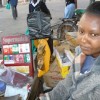
DEVELOPMENT: Showcasing Solidarity
How does a freezer purchased with a microloan change the life of a poor woman in Senegal? What are the Study Solidarity Olympics? How many lives can an ambulance equipped to attend births save in Ethiopia?
Brazil Takes the Fight Against Hunger Abroad
The Brazilian government is extending its fight against hunger to the world stage, by inaugurating a Centre of Excellence Against Hunger to transmit its positive experiences to other developing countries with the help of United Nations agencies.Global Crisis Makes U.N. Reform Imperative
Reinventing the United Nations is crucial to protect the poorest inhabitants of the planet, at a time when the global economic crisis, the effects of climate change, and food insecurity are undermining development efforts.
G20: Final Push for Financial Transactions Tax
While the Greek bailout and stimulus package dominated discussion among the Group of 20 (G20) major industrialised and emerging market economies at the high-level summit in Cannes, France, this week, the proposed financial transactions tax (FTT) received meagre attention.
Antigua Partners with EU for Emergency Docking Port
The scars on the pilings adjacent to the new Emergency Ferry Docking Facility here are still visible, graphic evidence of the devastation caused by Hurricane Luis when it hit Antigua and Barbuda in 1995.
OP-ED: Better Aid Means Better Development
Oxfam and major aid donors of the OECD’s Development Assistance Committee (the DAC) are often on opposite sides of the fence. Today though, we are on the same side —making sure that effective aid lifts people out of poverty.
EUROPE: ‘Agenda for Change’ Leaves Middle-Income Countries Out in the Cold
Last week the European Commission unveiled its ‘Agenda for Change’, a new policy framework outlining priorities for the European Union’s development aid and detailing the Commission’s renewed focus on economic growth as a means of poverty reduction, particularly in the world’s poorest countries.
Q&A: ‘Soil is Key to Global Warming, Food Security’
Luc Gnacadja, in his second three-year term as executive secretary, United Nations Convention to Combat Desertification (UNCCD), is widely seen as delivering on his commitment to manage the world's drylands.BRAZIL-AFRICA: Teaching Diplomacy
African countries are increasingly taking up Brazil's offer of training in the art of diplomacy, seeing it as a partner that could help them set up or improve their own foreign service institutes.
“Identities Do Not Have Borders”
Sep. 11, 2001 deeply affected the relations between the United States and Europe on one hand and North Africa and the Middle East on the other.
Namibia Wants to Conclude Talks and Sign EPAs
European Trade Commissioner Karel de Gucht made a pit-stop in Windhoek to appease concerns over a troublesome economic partnership agreement (EPA) ahead of the Africa-European Union summit in South Africa.China Increasingly Central to Caribbean Development
By the time Wang Qishan, China's vice premier, arrived in Trinidad for the Third China-Caribbean Economic and Trade Cooperation Forum earlier this week, Beijing had already ramped up its involvement with most countries in the 15-member Caribbean Community (CARICOM) grouping.US-LATAM: Human Trafficking Scourge Needs More Than Policing
South American experts and officials met in Washington this week to discuss current policy initiatives to combat human trafficking in their respective countries, part of a broader U.S.-wide tour to share information and strategies to deal with the issue.DEVELOPMENT: ‘Boomerang Aid Enriches Donors’
Development aid is ineffective mostly because it is tied to contracts worth billions of dollars awarded to firms in developed countries in a phenomenon called boomerang aid, a new study says.
SOMALIA: Food Aid Stolen From Famine Victims
Masses of food meant for famine victims in Somalia are being stolen, an investigation has revealed.
CLIMATE CHANGE: Brazilian Women Rise Above the Waters
Almost a year and a half after floods wreaked havoc in a large part of the state of Rio de Janeiro, a group of women are struggling to rebuild their lives. They lost everything except their will to pick themselves up again and make the best of the aid they receive, to become self-sufficient again.China, India Score With Untied Aid
Armed with a smile, Don Marut exposes the pitfalls of Western aid to developing countries. At a conference here, the Indonesian recalled the story of how 40 electric-train carriages were sent from Germany to his country for a journey to nowhere.Brazil Revs Up South-South Cooperation
As one of the world's emerging economic powerhouses, Brazil is vigourously pursuing one of the key economic objectives on the U.N.'s development agenda: South-South Cooperation.
CUBA: Dreams and Progress in a Rural Community
The day that electricity arrived in the Cuban village of Jova, there were shouts, laughter and tears of joy, even among the most incredulous, who had doubted it was possible. "I didn’t know what to do; it actually made me nervous," Carmen Carvallosa confessed.« Previous Page — Next Page »


The Week with IPS

NEXT STOP - SDGs
Tracking global progress towards a sustainable world
Tracking global progress towards a sustainable world
