Languages
Sunday, October 4, 2026



News and Views from the Global South
Poverty & MDGs

WTO Urged Not to Treat Water Like Widgets
As government representatives gather Tuesday in Indonesia for what could be final negotiations towards a global trade agreement under the World Trade Organisation (WTO), environmentalists and social justice campaigners are urging them to specify that water resources cannot be treated as commodities.
U.S. Vows Support for Colombia Peace Talks
Despite looming differences over Colombia's drug policy, President Barack Obama renewed his support for a peaceful settlement to the civil war that has plagued the country for over half a century in a meeting with Colombian President Juan Manuel Santos Tuesday.
Stability Still Elusive in Post-Election Honduras
The recent elections which were expected to strengthen the fabric of governance in Honduras failed to do so. Now the country has a president-elect with just 38.7 percent support who is facing accusations of electoral fraud, along with a fragmented parliament where the governing party will be in the minority.
Wage Hike in Haiti Doesn’t Address Factory Abuses
Haiti’s minimum wage will nudge up 12 percent on Jan. 1, from 4.65 to 5.23 dollars (or 200 to 225 gourdes) per day. Calculated hourly, it will go from 58 to 65 cents, before taxes.
Health Gaps Between Most Countries Could Close by 2035
The gap in health standards between the world’s poorest countries and the more advanced middle-income nations could close by the year 2035, according to a major new report published Tuesday by Britain’s The Lancet medical journal.
Argentine Protesters vs Monsanto: “The Monster is Right on Top of Us”
The people of this working-class suburb of Córdoba in Argentina’s central farming belt stoically put up with the spraying of the weed-killer glyphosate on the fields surrounding their neighbourhood. But the last straw was when U.S. biotech giant Monsanto showed up to build a seed plant.
Saving Children From Loggers
Logging is the largest industry in the Solomon Islands, an archipelago located northwest of Fiji, where 80 percent of the islands are covered in tropical rainforest. But, although timber accounts for 60 percent of this South Pacific nation’s export earnings, most local communities have experienced no beneficial development.
Egypt Begs Gulf for Rescue
“Subsidies from the Arab world are large and reflect Arabs’ love towards the Egyptian people, but we cannot depend on that to build an economy that can compete with other countries,” said economist Dr Alia el Mahdi.
Ending AIDS in the City Where It Began
Four hundred Eighth Avenue, home to the largest welfare centre for people with AIDS in New York, is the kind of grey, drab city building that seems like it was dragged, scowling, into the 21st Century.
Skateboarding Can Be Empowering
An array of colourful quarter pipes, bank ramps and a fun box come to life as a clutch of Cambodian youngsters do balancing tricks, kick-flips and kick turns. The all-girl session at a skating facility near the Russian Market here is facilitated by 20-year-old Kov Chansangva, popularly known as Tin.
In Haiti, Planting Trees Is No Simple Matter
Reforestation and soil conservation programmes costing many thousands of dollars in this rural community have resulted in hundreds of small ledges built of straw or sacks of earth. In certain areas, the earthworks seem to be lasting, but in others, they are disintegrating.
Global Trade Winds Leave the Poor Gasping
For years, it was the power chamber at the headquarters of the World Trade Organisation (WTO) in Geneva - the Director General’s Conference Room, more popularly known as the Green Room, where a handful of delegates would gather for important discussions and meetings.
Uganda’s First Female Funeral Director – From Taboo to Mainstream
Uganda may have the third-highest fertility rate in the world but where there is life, death is inevitable. And it is a certainty that Regina Mukiibi Mugongo made the most of when she became this East African nation’s first ever funeral director almost two decades ago.Haitian Migrant Boat Capsizes, Dozens Feared Dead
A sailboat passing through the southern Bahamas islands with about 150 Haitian migrants on board capsized after running aground, killing up to 30 people and leaving the rest clinging to the vessel for hours, authorities said Tuesday.
CARICOM Chastises Dominican Republic over Deportations
Outraged at a court ruling that would potentially render stateless thousands of Dominican people of Haitian descent, the Caribbean Community on Tuesday suspended the Dominican Republic's bid to join the 15-member regional grouping.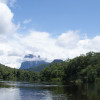
The Other Rearguard of Colombia’s FARC Rebels
The presence of the Revolutionary Armed Forces of Colombia (FARC) is evident in Venezuela’s Amazon region, where the guerrillas can be seen on speed boats, in camps, or interacting with local indigenous communities.
Jobless Growth, the 21st Century Condition
The world’s poorest countries are rethinking economic policies that - even during periods of breakneck growth - have failed to provide quality employment capable of matching a demographic boom.
Taking Efforts to Fight Prejudice in Cuba to the Barrios
From a very young age, Irma Castañeda has braided her curly hair and cared for it with natural recipes inherited from her mother, ignoring the widespread conception that black women’s hair is “ugly” or “bad”.
For Better or For Worse – Fracking in the Rustic Karoo
To the casual passer-by, Petrus Kabaliso and his wife Cynthia present a disarmingly rustic sight, seated as they are under the shade of a date palm at a truck stop in the scorching Karoo desert, in South Africa's Northern Cape province, a battered umbrella held jauntily over their heads.Creating a New Norm in Non-Circumcising Ethiopian Province
Chiang Both from Gambella, a remote and a traditionally non-circumcising province in Ethiopia that borders Sudan, volunteered to undergo the procedure despite his community’s initial mistrust.
A Google for India’s Poor
Deep in the forests of central India live the Gond tribals, an almost forgotten lot, neglected as much by the state as by mainstream media. Many cannot read or write. But thanks to a new technology, and the rapid spread of mobile phones through India, they are now picking up their cell phone and making their voice heard.« Previous Page — Next Page »


