Languages
Thursday, July 2, 2026



News and Views from the Global South
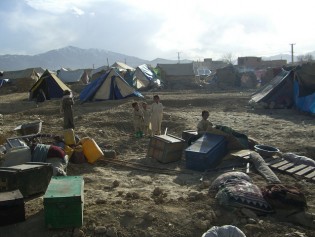
The Mindlessness of War in Afghanistan
One night in 1979, bombs dropped from the sky, killing 16 members of Ismail’s family. “The war took some people to Europe and America, but it destroyed my family,” Ismail, who is universally addressed as “uncle”, says.
Between Drought and Floods – A Year of Extremes in Sri Lanka
Wild elephants are usually the primary attraction in the remote shrub jungles of Udawalawe, about 180 kilometres southeast of Sri Lanka’s capital Colombo. But this Christmas season, the massive Udawalawe dam stole the limelight from the lumbering beasts.
Bicycles No Longer Mere Recreation in Argentine Capital
A programme launched in Buenos Aires three years ago to encourage the use of bicycles has already brought results: the use of this environment-friendly means of transport has increased fivefold in the Argentine capital.Thai-EU FTA Raises Alarm for People With AIDS
Days before leaders of the European Union (EU) arrived in Norway to collect this year’s Nobel Peace prize, Thai public health activists sent a letter to the northern powerhouse, warning that the EU’s 2012 accolades face a credibility test in this Southeast Asian country.Bolivia Takes the Leap into the Big Pond of Mercosur*
To go down fighting in the Andean Community (CAN), with a combined market of 92 million consumers, or move up to the big leagues of Mercosur, with 275 million? This was the dilemma faced by Bolivia’s foreign trade strategists when it came to pursuing full membership in the bloc formed by its neighbours to the south.
Renovating an Embattled City
Every day, Anas Maraka sees his family’s home, but can’t go inside. “It’s hardest for my grandfather,” said Maraka, referring to the house overlooking Shuhada Street, once the central marketplace in Hebron’s old city.
Reviving Family Farming in Angola, Carrot by Carrot
"We never used to eat carrots, but now we like them," said Rebeca Soba, admiring her vegetable garden, an island of diversity in the midst of a vast sugarcane plantation. Vegetable gardening has been introduced at the Capanda Agroindustrial Pole (PAC) as a source of income for local small farmers.
Women Demand Equality in Papua New Guinea
 Papua New Guinea, the most populous nation in the Pacific Islands, is ranked 153 out of 187 countries worldwide for gender equality, which is evident in education, employment, health and political representation.
Prisons in Mexico on Verge of Collapse
Edgar Torres Castillo, 21, has spent two years in the prison of Gómez Palacio, in the Lagunera district between the northern Mexican states of Durango and Coahuila – an arid zone known as one of the most dangerous parts of the country.
International Aid Helps Cuba Adapt to Climate Change
"Adaptation to climate change is urgent and must be part of development," said Bárbara Pesce-Monteiro, the United Nations resident coordinator in Cuba, assessing the damage done by hurricane Sandy in the eastern region of the country.
Patchy Progress on Maternal and Child Health in Pakistan
As the 2015 deadline for achieving the Millennium Development Goals (MDGs) approaches, Pakistan must reckon with its patchy progress on maternal and child health.

Africa’s Economic Growth Not Matched by Poverty Reduction
Despite the rapid economic growth in sub-Saharan Africa, the continent has shown a poor capacity to commensurately boost jobs and reduce poverty, according to a report by the African Development Bank titled “Assessing Progress in Africa towards the Millennium Development Goals.”

Africa Can Develop Faster than Developed World
Africa presently only contributes about three percent of global GDP, with South Africa contributing around one percent.

Q&A: Depending on Democracy to Deliver Sustainable Development
"Accelerating environmental pressures and growing economic inequality are triggering huge social changes around the world, putting existing democracies to the test,” Halina Ward, director of the London-based Foundation for Democracy and Sustainable Development, tells IPS.
Grandmothers Taking the Lead Against Female Genital Mutilation
In the southern Senegal village of Kael Bessel, female genital mutilation is no longer a taboo subject. Sexagenarian Fatoumata Sabaly speaks freely about female circumcision and girls' rights with her friends.
Fear of Rape Stalks Indian Women
While a 23-year-old woman battles for life in a New Delhi hospital after she was gang raped and brutalised on a moving bus in India's prosperous national capital earlier this month, women across the nation say they live in constant fear of sexual assault.
Banned Kazakh Opposition Press Vows to Continue Online
Kazakhstan, an oil-rich ex-Soviet nation in Central Asia best known for voluntarily forsaking the world’s fourth-largest nuclear arsenal, is carrying out an unprecedented media crackdown that will leave it virtually without any opposition newspapers for the first time in its 21-year history as an independent nation.
Power in Bolivia’s Gas-Rich Chaco Region Thrust into Indigenous Hands
Due to the intense political polarisation in the Chaco region, home to Bolivia’s oil and natural gas wealth, three indigenous lawmakers who entered the legislative assembly of the southern department of Tarija as representatives of their people have quickly come to wield decisive power.
U.N.’s Last Stand on Arms Trade Treaty
Amidst a politically divisive debate on gun control in the United States following a rash of mass shootings, the United Nations will meet in March to finalise an Arms Trade Treaty (ATT) after nearly two decades of negotiations.
Indigenous Chileans Still Fighting Pinochet-Era Highway Project
For more than two decades, Mapuche indigenous people in the Chilean region of Araucanía have been fighting the construction of the Ruta Costera (Coastal Highway), a megaproject initially conceived during the Augusto Pinochet dictatorship (1973-1990) which has already caused significant archeological and cultural losses and damages.
Amazon Regional Alliance to Confront the Climate Emergency
“When someone in Peru sneezes, someone in Brazil catches a cold. When a barrel of oil is produced in Ecuador, a neighbouring country ends up buying it,” says prominent environmentalist Yolanda Kakabadse.Next Page »


The Week with IPS

NEXT STOP - SDGs
Tracking global progress towards a sustainable world
Tracking global progress towards a sustainable world
