Languages
Sunday, November 8, 2026



News and Views from the Global South
Active Citizens

U.S. Fights G77 on Most Counts at Climate Meet, Leaked Doc Shows
The U.S. delegation negotiating at the U.N. international climate change conference in Poland is pushing an agenda of minimising the role of “Loss and Damage” in the UNFCCC framework, prioritising private finance in the Green Climate Fund, and delaying the deadline for post-2020 emission reduction commitments, according to a State Department negotiating strategy which IPS has seen.
Cairo Women Bring Men Back on the Rails
Nihal Saad Zaghloul is an Egyptian woman in her late twenties. Like other young women, she faces the daily risk of sexual harassment on the streets of Cairo. But Egypt’s revolution made her realise that people can unite and that she can make a difference.
Idyllic Island Confronts Bloody Past
Anguish over the whereabouts of loved ones who went missing during a five-year civil conflict that ended a decade ago continues for countless families in the Solomon Islands. Searching for the remains of those who disappeared is vital to enduring peace in this culturally diverse south-west Pacific island nation of 550,000.
For Poland the Right Way Is Coal
These are busy days in the Polish capital Warsaw, even if it doesn’t show. The United Nations Climate Change Conference COP 19 has opened at the National Stadium, while on the other side of the river Wisla the Polish far right gathered for their annual march on Independence Day on Monday.
Visibility from High-Profile Human Rights Inquiries Trickles Down in Chile
Ongoing efforts to determine the causes of the deaths of high-profile Chileans - singer-songwriter Víctor Jara, former presidents Eduardo Frei Montalva and Salvador Allende, and Nobel Literate Prize-winner Pablo Neruda – indirectly bring visibility to thousands of other victims of Chile’s 1973-1990 dictatorship.
Foul Play Ahead of Russian Olympics
Despite an endorsement from the International Olympic Committee (IOC) for their adherence to environmental standards in preparations for next year’s Winter Olympics in Sochi, Russian authorities are cracking down harder and harder on people trying to expose the environmental cost of projects related to the Games.
World Headed for a High-Speed Carbon Crash
If global carbon emissions continue to rise at their current rate, humanity will eventually be left with no other option than a costly, world war-like mobilisation, scientists warned this week.
Breaking New Ground for Trans Children
Gabi was born six years ago biologically male, but dressed up as a princess and wore necklaces and long hair so that everyone saw a little girl instead.
New Law Threatens to Choke Freedom in Egypt
Demonstrations have been at the heart of historic upheavals in Egypt since January 2011. But a newly proposed law that seeks to regulate protests could imperil one of the biggest gains of the Arab Spring revolution here: freedom of expression.
Mayor Who Let Them Eat Cake Now Eating Crow
When Michael Bloomberg was elected mayor of this city only weeks after the Sept. 11, 2001 terrorist attacks, few imagined that by the time he left office a new building would have risen in the shadow of the Twin Towers.
Corruption Smothering Pacific Students
External interference in the awarding of tertiary scholarships in Pacific Island nations such as the Solomon Islands is denying some of the highest achievers among the young an opportunity to contribute to the future of their country and the region.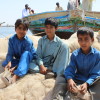
These ‘Ghost’ Schools Are Not for Children
Rahmatullah Balal has spent ten years counting the schools that aren’t. The particular kind of Pakistani schools that are called “ghost” schools.
‘I Sold My Sister for 300 Dollars’
Amani has just turned 22. Two months ago she fled from the civil war in Syria and left her house in capital Damascus. After a dangerous nightlong trip she arrived at Zaatari, the refugee camp just over the border in Jordan, where her parents and two sisters had already lived for over a year.
Jordan’s Farmers Struggle to Weather Climate Change
Abu Waleed isn't quite sure where to begin his litany of grievances. Bugs that chomp their way through the mint he grows, or the dry well that forces him to pump water from a half kilometre away? Or perhaps the 160 dinars he spent on spinach seeds only to see scant growth after planting.
Women Find a Green Midas Touch
On a hot and humid day in northwestern Bangladesh, Anisa Begum sits with a group of 25 homemakers, explaining how to use natural fertilisers to increase grain yield.
Over 2,500 Deaths During Indian Clinical Trials
More than 2,500 Indians have died in the course of clinical trials in recent years, government figures reveal.
Nuclear Called a Lesser Evil than Fossil Fuels
Four prominent climate and energy scientists are calling on environmentalists to rethink their longstanding opposition to nuclear energy, warning that there is no “credible path to climate stabilization that does not include a substantial role for nuclear power”.
Abyei Pressures Two Sudans for Resolution
The non-binding referendum in Abyei – where people voted overwhelmingly to join South Sudan – and the ensuing celebration, has brought little immediate resolution to the long-festering Abyei problem.HIV ‘Wave’ Feared in Central Asia
Healthcare systems in Eastern Europe and Central Asia remain woefully unable to cope with HIV/AIDS as the region’s raging epidemic – the fastest growing in the world – takes on a new dimension, a senior UN official has told IPS.
For Kurdish Women, It’s a Double Revolution
"I got married when I was 14 and I already had four children at 20," recalls Nafia Brahim. In her fifties now, she is working hard so that no other woman loses control of her life.
A ‘Green Intifadah’ Takes Root
“O green Battir, mother of the air,” Mariam Ma’mmar sings in praise of her village. As the hot season draws to a close, the land – her people’s strength – dries up. Not here in her Battir, where a peaceful form of resistance against the Israeli occupation is taking root.« Previous Page — Next Page »





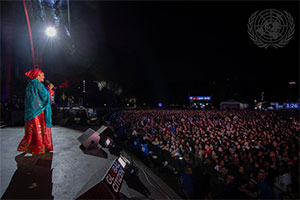 Global Citizen Festival in New York. Credit: UN Photo/Eskinder Debebe
Active citizens are committed to social change because they know that it is achievable. However, major political challenges face active citizens across the world. For example, in authoritarian regimes in Latin America where the hegemonic party has been in power for decades on end, protestors and human rights activists face enormous repression and struggle to materialize their advocacy into concrete results. The same can be said for Africans, where a shift towards elected government in recent decades has yet to translate into an effective voice in decision-making. Now, the Strengthening Citizen Demand for Good Governance, which uses evidence-based approaches – funded by DFID's Governance and Transparency Fund – seeks to raise their voices.
In 2025, the CIVICUS Monitor’s People Power Under Attack report revealed that civic freedoms are severely limited in 122 of 198 countries and territories, and only 7.2% of the global population now lives in countries where civic space is open. Through partnership with the Overseas Development Institute (ODI) and CIVICUS, IPS reporters across the continent will seek to define the extent and limits of state capability, government accountability and the responsiveness of leaders to the needs of citizens.

The Week with IPS

NEXT STOP - SDGs
Tracking global progress towards a sustainable world
Tracking global progress towards a sustainable world
