Languages
Monday, November 16, 2026



News and Views from the Global South
Food and Agriculture
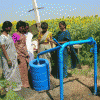
Groundwater Governance in Andhra Pradesh
India is the largest user of ground water in the world. But reliance of this overexploited resource has reached its limits in many parts of the country. Nowhere is this more evident than in the drought-prone districts of Rayalseema, uplands of Prakasam, Krishna, East-West Godavari, parts of Nellore, Vizianagaram and Srikakulam in the state of Andhra Pradesh (AP). Forty per cent of the state’s irrigation needs are met through groundwater. In the drought-prone Rayalseema region – which comprises Chittoor, Anantapur, Kurnool, Prakasam and Kadapa districts -- dependence on groundwater for irrigation is particularly high. The water crisis is also most severe in this region.
Mexico’s Chinampas – Wetlands Turned into Gardens – Fight Extinction
David Jiménez grows two kinds of lettuce and other fresh produce on his “chinampa” or artificial island just under one hectare in size in San Gregorio Atlapulco, on the south side of Mexico City.UNDP Pledges to Help Eradicate Poverty, Hunger By 2030
The UN Development Programme (UNDP) celebrated its 50th anniversary this week with a pledge to help implement the UN’s post-2015 development agenda aimed at eliminating extreme poverty and hunger by 2030. When the agency was founded in 1966, one in every three people was living in poverty. But that number has changed to one in eight, according to UNDP figures.
Fall in Commodity Prices Rings Alarm Bells in Papua New Guinea
Resource-rich Papua New Guinea (PNG) is seen as an economic powerhouse in the Pacific Islands with a state-led focus on resource extraction initially expected to drive one of the world’s highest growth rates of 15 per cent last year. But in the wake of falling commodity prices, GDP growth has plummeted from 8.5 per cent in 2014 to a forecasted 3 per cent this year. As the government faces a growing deficit between revenue and expenditure, exacerbated by high public debt, experts in the country believe greater efforts to diversify the economy are essential.
Groundwater Crisis Worsens Food Insecurity
Sijabuliso Nleya has been kept busy in the past few weeks digging up sand. He is not a sand poacher like scores of people who local district councils across the country say are digging along dry river beds for sand used in the construction of houses. "The situation is terrible," said Nleya, who owns a plot in Douglasdale, a small farming community on the outskirts of Bulawayo.
UNDP at 50 Seeks Broad Coalition Targeting Sustainable Development
Fifty years ago, one in every three people around the world was living in poverty. It was against that backdrop that the United Nations Development Programme, UNDP, was founded in 1966. Ever since, UNDP has been a leader in working for a more fair and prosperous world for all. We have worked with governments, civil society, the private sector, and philanthropy to empower people and build resilient nations.
Uneducated Women Entrepreneurs Defeat Poverty
Maryam Yousuf, 50, gently washes her hands under a common tap outside her house in Saida Kadal, a grassy middle-class locale encircled by the famous Dal Lake in Srinagar, Kashmir’s capital. She puts on a Pheran, the traditional long loose gown, and holding a large steel bucket walks towards a dimly-lit cowshed, made up of wooden shingles, in a corner of her home backyard. Nearby, children are playing cricket, flaunting wooden sticks as bats, and a flock of chicken cluck and nibble at left-over vegetables.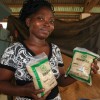
Rice: Africa’s Ticket Out of Poverty
Africa is eating more rice than other food staples, though it produces less than it needs. This is good news for the cereal's potential to help Sub Saharan Africa out of poverty according to researchers. Rice is the second most important source of calories in Sub-Saharan Africa, according to the Africa Rice Center (AfricaRice), a research organisation working to contribute to poverty alleviation and food security.
TPP’s Threat To Multilateralism
2015 proved challenging for multilateralism, especially in relation to development concerns. July’s Addis Ababa third Financing for Development (FfD) conference delivered little real progress. Nevertheless, the September Sustainable Development Goals summit redeemed hopes with an ambitious and universal Agenda 2030.
Radio rage in India
It is 8 am in Anugondanahalli village about 70 kms from India's IT hub of Bengaluru, capital of the southern Indian state of Karnataka. A group of farmers are huddled around a radio set sipping hot tea and tuned in to Sarathi Jhalak, a local community radio station (CRS) broadcasting on FM 90.4. On air is a programme about climate change that has everybody hooked. Experts are sharing simple tips on how farmers can pro-actively minimise the impact of erratic weather on their crops.
Rural Youth Can Be Tomorrow’s Entrepreneurs
Bolstering widespread prosperity in Africa is a key necessity if the world is to achieve its commitments to eradicate poverty and hunger by 2030.
Small-scale Fishing Is About Much More than Just Subsistence in Chile
“Fishing isn’t just for making a living, it’s also enjoyable,” said Pedro Pascual, a 70-year-old fisherman who has been taking his small boat out to sea off Chile’s Pacific coast in the early hours of the morning almost every day for the past 50 years, to support his family.
Rabbit Farming Now a Big Hit in Zimbabwe
Tichaona Muzariri, 44, a villager based at Range in Chivhu, a town 143 kilometers south of Harare, the Zimbabwean capital, quit his job as a teacher in 2009 to start a rabbit farm on a small scale with three does (female rabbits) and one buck (male). With around US$30 as capital, Muzariri waded into rabbit farming back then. Today, his rabbit farm breeds nearly 3,000 rabbits every year and slaughters up to 120 every week for sale to grocery stores, restaurants and hotels.
TPP: Lessons from New Zealand
A new paper* on the implications of the Trans-Pacific Partnership (TPP) Agreement for New Zealand examines key economic issues likely to be impacted by this trade agreement. It is remarkable how little TPP brings to the table. NZ’s gross domestic product will grow by 47 per cent by 2030 without the TPP, or by 47.9 per cent with the TPP. Even that small benefit is an exaggeration, as the modelling makes dubious assumptions, and the real benefits will be even smaller. If the full costs are included, net economic benefits to the NZ economy are doubtful. The gains from tariff reductions are less than a quarter of the projected benefits according to official NZ government modelling. Although most of the projected benefits result from reducing non-tariff barriers (NTBs), the projections rely on inadequate and dubious information that does not even identify the NTBs that would be reduced by the TPP!
Response to Ethiopia’s Drought: A Story of Success or Anguish?
 Inside a health clinic run by the Catholic Daughters of Saint Anne, a nurse wraps a special tape measure around the upper arm of 2-year-old Rodas cradled in her mother’s arms. The tape reads yellow, meaning “moderately” malnourished, according to the attending nurse.

WFP’s Chief Calls for Support for Those Most Vulnerable to Climate Change
With El Nino affecting countries in southern Africa, threatening agricultural production due to a massive heat wave, the World Food Programme has urged the international community to support the upscaling of climate smart agricultural technology for resilience.Zero Hunger? UN Leads With Landfill Salad and Recycled Food
When the United Nations hosted a high-level lunch for visiting world leaders at the UN dining room during the General Assembly sessions last September, they were in for an unexpected surprise.
After a Historic Success, Urgent Challenges Face the WTO
In 2015 the international community took some huge strides forward on a number of vital issues. There was the agreement on the United Nations new Sustainable Development Goals.
A Commercial Village Brings Business to Poor Kenyan Farmers
High incidents of poverty coupled with decreasing land acreage amid a changing climate pouring havoc on weather patterns has compelled farmers in the Tangakona area of Busia County in western Kenya to embrace an innovative initiative to improve livelihoods.The Role of SDGs in Achieving Zero Hunger
It is a well-known fact that 795 million or one in nine are undernourished in our world today. This figure only goes up to more than one in eight for the developing world. Hunger kills more people every year than malaria, AIDS and tuberculosis combined. At the same time, the food industry is a major source of jobs and livelihoods.
Jamaica’s Drought Tool Could Turn the Table on Climate Change
On a very dry November 2013, Jamaica’s Meteorological Service made its first official drought forecast when the newly developed Climate Predictability Tool (CPT) was used to predict a high probability of below average rainfall in the coming three months.« Previous Page — Next Page »


 Farming on the Outskirts of Juba. Credit: UN Photo/JC McIlwaine
Promoting human and planetary health is a central focus of the United Nations, as laid out in the 2030 Sustainable Development Goals (SDGs). World hunger and unsustainable farming practices continue to be pressing concerns for the world. According to the 2025 State of Food Security and Nutrition in the World report by the Food and Agriculture Organization (FAO), 673 million people faced hunger in 2024. There are stark regional disparities, with the FAO projecting that 60% of the world population facing hunger will reside in Africa by 2030. Globally, the prevalence of food insecurity has remained consistently higher for women than men.
Sustainable and efficient national food systems are essential in preserving health, education, environmental well-being, peace, economy, and security. However, creating sustainable food systems can be a challenging endeavor, as food production takes a heavy toll on the environment. The agricultural sector accounts for a significant portion of greenhouse gases. Finding safe, sustainable, and ethical strategies to feed the world is crucial in ensuring planetary longevity. A recent initiative from 2023, the EU Regulation on Deforestation-free Products (EUDR), seeks to advocate for sustainable food systems. The main driver of deforestation is the expansion of agricultural land used to produce commodities like cattle, wood, cocoa, coffee, etc. The EUDR is part of the 2020 European Green New Deal and the EU Biodiversity Strategy for 2030 and aims to limit Europe’s consumption of products linked with deforestation by requiring that companies prove that their products are deforestation-free. Despite aiming to achieve major strides in sustainability, policies such as EUDR also raise socioeconomic concerns for targeted countries. Many emerging Latin American economies are impacted by the policy, and have raised the question of how developing countries can grapple with the tensions between economic development and advancing sustainability.
IPS has been at the forefront of providing compelling and insightful stories on communities facing hunger as well as the cost of food production. IPS uses statistics from FAO, the World Food Programme (WFP) and the International Fund for Agricultural Development (IFAD) to bring relevant and hard-hitting facts to readers. This gathering of information and data from such organizations helps bring the best stories from IPS journalists working in the different regions in consultation with experts on the ground.

The Week with IPS

NEXT STOP - SDGs
Tracking global progress towards a sustainable world
Tracking global progress towards a sustainable world

