Languages
Wednesday, September 2, 2026



News and Views from the Global South
Health

Vietnam and Cambodia: Leveraging Support to Enhance Climate Ambition
The COVID-19 pandemic has disrupted nearly every facet of our lives and delayed what was slated to be a landmark Conference of the Parties (COP26). This pivotal year marks the first due date for countries to submit revised national climate plans per the five-year cycle required by the Paris Agreement. Remarkably, countries are still moving forward with renewed urgency. And many countries are integrating green recovery into their COVID-19 responses, further contributing to climate action. While many countries have positive stories to tell, both of our nations, Vietnam and Cambodia, are sterling examples of nations taking strong, decisive action, particularly with support through the NDC Partnership. Just last month, the people of Vietnam submitted their updated national climate plan and, in short order, the people of Cambodia will do likewise.
Mexican’s Labor Rights Closely Watched… by the US
As many have observed worldwide, the outcome of the US presidential elections has been, as expected - full of hope and fear. Many people had the bad feeling that if Trump were to be re-elected, the uncertainty, already enormous due to the pandemic and its effects, would jeopardize the economic recovery worldwide. The triumph of Democrat Biden does not guarantee great solutions, but at the least offers a little more of transparency, certainty, and stability.
Bringing Clean Water On Tap To Rural Villages In Polynesian Island Nation Of Tuvalu
Rural communities on one of the nine islands that make up the Polynesian nation of Tuvalu are anticipating how life will change when they are connected to piped clean water for the first time.

COVID-19 Compounding Inequalities
The United Nations’ renamed World Social Report 2020 (WSR 2020) argued that income inequality is rising in most developed countries, and some middle-income countries, including China, the world’s fastest growing economy in recent decades. Inequality dimensions While overall inter-country inequalities may have declined owing to the rapid growth of economies like China, India and East Asia, national inequalities have been growing for much of the world’s population, generating resentment.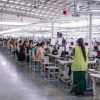
Working Class Bears Disproportionate Burden of COVID-19 Economic Fallout
Back in May 2019, we were visiting a large garment factory in Arsikere, Karnataka, when we asked some of the workers, “What would you do if you got Saturdays off?” Their responses to this simple question summed up their priorities. A majority said they would spend time with family or friends and take care of their children. Many said they would use this time to relax or do household chores. Only a few said they’d look for additional pay.
Secretive Mega-Trade Deal Rules Could Harm Asia’s Covid-19 Recovery
Fifteen countries will sign a mega-trade deal at the ASEAN conference this weekend imposing secretive restrictions on how governments help workers through the pandemic, trade union leaders and parliamentarians have warned.What does the second wave of Covid-19 mean for the apparel industry?
During the past few months, I had worked on a documentary for the BBC which looks at the impact of the coronavirus pandemic on the apparel industry of Bangladesh. That documentary caught me at an exceptionally low ebb. I was struggling amid the cancellation of orders and some brands being unwilling to pay for orders which had already been shipped.
In India, Ending FGM Demands Truth and Transparency
“My daughter is eight years old. In May 2017, I had her ‘Khatna,’ her circumcision, done. I had taken her to a traditional cutter. Once back home I made her sleep on the bed. After some time, around 4:00 p.m. I took her to the bathroom, she was bleeding as if she had started her menses. It seemed like she was urinating blood. By 6:00 p.m. my daughter had been bleeding so heavily, the blood had soaked three bed sheets and I was very worried. And my daughter was quiet and she also kept asking me if she will be fine.” Excerpt from: How I got her from the hands of death: WeSpeakOut study 2018
Despite Conflict and COVID-19, Children Still Dream to Continue Their Education in Afghanistan
As if four decades of war were not enough, then came the pandemic. For each of the past five years, Afghanistan has been identified by the United Nations as the world’s deadliest country for children and, despite progress made in peace talks between the government and the Taliban, child and youth casualties from the ongoing conflict continue to mount in 2020.
The Covid Pandemic: Broadening the Discourse
SARS-CoV-2, the corona virus that causes COVID-19, has been spreading exponentially across the world over the last ten or so months. As of November 6th, according to the Center for Systems Science at Johns Hopkins University, there have been 49,195,581 cases of COVID-19, including 1,241,031 deaths.
Pandemic Induced Drop in Remittance Flows to South Asia
Remittances are an essential part of economic activity in low and middle-income countries (LMIC), including those in South Asia. Because of the pandemic remittances to LMIC are expected to drop from $548 billion on 2019 to $508 billion in 2020 and $470 billion in 2021. The implied growth rates for 2020 and 2021 are -7.2% and -7.5%. For South Asia the drop will be from $140 billion in 2019 to $135 billion in 2020 and $ 120 billion in 2021 with implied growth rates of -3.6% and -10.9%. https://www.knomad.org/publication/migration-and-development-brief-33
India: How Did Young People Access Care During the Lockdown?
COVID-19 has developed into an unprecedented public health crisis, the impact of which has been seen across global health systems and services. As the crisis continues to evolve in India, there is a need to examine the impact of the pandemic and ensuing nation-wide shutdown on young people’s lives, particularly, their experience of mental ill health.
UN Takes Preventive Measures Following 5,660 Lab-Confirmed COVID-19 Cases System-Wide
As we navigate the COVID-19 pandemic response, I would like to assure you once again that the health and safety of personnel and delegates continues to be our number one priority.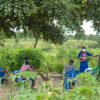
Africa Must not Assume a ‘Business as Usual’ Approach to COVID-19 Recovery
The corona virus pandemic is impacting Africa’s population in quite differentiated ways and is significantly entrenching inequality. At the greatest risk are lives and livelihoods of the poor.
Economic Trends and What’s Important in Life
US third quarter GDP numbers released two weeks ago delighted stock markets and President Trump. Output had picked up by 7.4%, annualised as 33.1%, the largest quarterly economic growth on record, almost double the old record of 3.9% (annualised as 16.7%) in the first quarter of 1950, seven decades ago.
COVID-19: A Global Survey Shows Worrying Signs of Vaccine Hesitancy
It has been nine months since the World Health Organisation (WHO) declared the outbreak of COVID-19, caused by the SARS-CoV-2 virus, a “public health emergency of international concern”. Since then, more than 44 million cases have been recorded and over one million lives lost. Economic costs measure in trillions of dollars. Global recovery will take years.
Q&A: COVID-19 has Pushed Women Peacebuilders from Key Leadership Roles
Women need to be given roles as negotiators, not just offered representation through advisory groups, Agnieszka Fal-Dutra Santos from the Global Network of Women Peacebuilders (GNWP) told IPS.
The rise in plastic pollution during Covid-19 crisis
Ever since the pandemic began this year, countries across the globe have been striving to protect their people from the virus through various preventive measures where protective gear also known as PPE are in high demand. On the contrary, this has dramatically increased the unsustainable use of plastic posing significant risk for the environment. Personal Protective Equipment (PPE) which includes masks, gloves and goggles have become indispensable plastic products for everyone currently witnessing the coronavirus pandemic. The global health crisis has given rise to the consumption of PPE at a staggering rate, which is considered a shield for combatting the virus. PPE is playing a key role in protecting people, especially the frontline workers, who are fighting day and night to cure millions of patients ever since the outbreak started. This has led to some tough questions for those of us who are continually advocating for environmental protection and sustainability— how are we going to manage the devastating impact of plastic waste generated due to Covid-19?
Escaping the ‘Era of Pandemics’: experts warn worse crises to come; offer options to reduce risk
Future pandemics will emerge more often, spread more rapidly, do more damage to the world economy and kill more people than COVID-19 unless there is a transformative change in the global approach to dealing with infectious diseases, warns a major new report on biodiversity and pandemics by 22 leading experts from around the world.
Global Data Community’s Response to COVID-19
The world is currently counting more than 42 million confirmed cases of the COVID-19 and over 1 million deaths since the start of the pandemic.1
The Mental Health Consequences of the Lekki Toll Gate Attack
On October 20, 2020, young Nigerians who were protesting against police brutality were shot by men in Nigerian military uniforms. Unarmed, peaceful citizens were massacred at the Lekki Toll Gate in Lagos, southwest Nigeria.« Previous Page — Next Page »


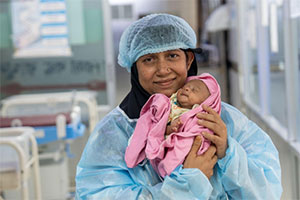 Bangladesh: Sarid, born one month early, receives specialized newborn care and grows stronger every day. Credit: UNICEF/UNI944397/Mojumder
Since the onset of the 2000s, global life expectancy has seen an overall rise, attributed to significant technological and scientific innovations in healthcare. Due to an increased understanding of different conditions as well as a rise in cooperation among healthcare experts around the world, there have been major strides made in ensuring that as few people die from chronic illnesses as possible. Despite the belief that healthcare is a fundamental human right, people from low- or middle-class backgrounds, marginalized groups, and underdeveloped countries have far more limited access to basic healthcare services.
The COVID-19 pandemic showed how marginalized communities are disproportionately affected by health crises, proving that we have much work to do in ensuring that no one dies of terminal conditions. While the global response to the coronavirus saw significant strides in immunization and vaccine development, the global outbreak of mpox in 2022 and its upsurge in parts of Africa in 2024 must remind us to remain vigilant.
Other major disease outbreaks in recent years have been linked to the destruction of infrastructure during warfare. Notably, in 2024, the Gaza Strip witnessed a return of the poliovirus since its eradication in the region 25 years ago. Israel’s blockade on Gaza has resulted in the collapse of the region’s sewage plants and desalination plants, and also destroyed healthcare capacities. The UN stated that this lack of clean water and sanitation would lead to an outbreak of cholera and other deadly infectious diseases. The 2026 OCHA Humanitarian Situation Report confirmed that the over two years of conflict in Gaza has produced a catastrophic health emergency, with millions remaining dependent on relief aid amid tight restrictions and no functioning public health system.
IPS is committed to providing full and comprehensive coverage on healthcare challenges around the world. IPS seeks to address the multifaceted causes of such challenges, including unprecedented pandemics, conflict-driven disease outbreaks, as well as socioeconomic barriers to equal healthcare access. IPS is also dedicated to reporting on innovations in the healthcare industry.

The Week with IPS

NEXT STOP - SDGs
Tracking global progress towards a sustainable world
Tracking global progress towards a sustainable world
