Languages
Tuesday, November 24, 2026



News and Views from the Global South
Development & Aid

A “Year of Eye-Catching Steps Forward” for Renewable Energy
Driven by solar and wind, world investments in renewable energy reversed a two-year dip last year, brushing aside the challenge from sharply lower oil prices and registering a 17 percent leap over the previous year to stand at 270 billion dollars.
Nicaragua’s Future Canal a Threat to the Environment
The new interoceanic canal being built in Nicaragua has brought good and bad news for the scientific community: new species and archeological sites have been found and knowledge of the local ecosystems has grown, but the project poses a huge threat to the environment.
U.N. Staffers Caught in Deadly Crossfire in Ongoing Conflicts
The deadly Syrian military conflict - now entering its fifth year - which has claimed the lives of over 200,000 mostly civilians, including women, children and aid workers, has not spared the United Nations either.
There’s No Such Thing as Equality in India’s Labour Force
It calls itself the ‘world’s largest democracy’ but the 380 million working-aged women in India might disagree with that assessment.
Opinion: A Major Push Forward for Gender and Environment
Experts from around the world gathered in New York recently to launch work on the Global Gender Environment Outlook (GGEO), the first comprehensive, integrated and global assessment of gender issues in relation to the environment and sustainability.
Why So Many Palestinian Civilians Were Killed During Gaza War
The U.N. investigation into Israel’s devastating military campaign against Gaza, from July to August 2014, has been delayed until June and in the interim Israel and the Palestinians are waging a media war to win the moral narrative as to why so many Palestinian civilians were killed during the bloody conflict.
The U.N. at 70: U.N. Reform Must Benefit All Countries
U.N. anniversaries are occasions for stocktaking - not all of it positive. But there is a lot of good that the U.N. has done and is doing and there are many good, dedicated people working silently but effectively within the U.N. system where I have also worked for a part of my long diplomatic career.
Activists Protest Denial of Condoms to Africa’s High-Risk Groups
Tatenda Chivata, a 16-year old from Zimbabwe’s Mutoko rural district, was suspended from school for an entire three-month academic term after he was found with a used condom stashed in his schoolbag.
Cash-Strapped U.N. to Seek Funds for Syria at Pledging Conference in Kuwait
A cash-strapped United Nations, which is struggling to reach out to millions of Syrian refugees with food, medicine and shelter, is desperately in need of funds.Palestine Crisis at Its Worst Since 1967, Says United Nations
In 2014, the ongoing humanitarian crisis in the occupied Palestinian territories (oPt) saw the worst escalation of hostilities since 1967, said a report by the United Nations Office of Coordination and Humanitarian Affairs (UNOCHA), released on March 26.
Impunity Fuels Abuse in Immigrant Detention Centres in Spain
“They mistreat you, they don’t respect you. I’ve seen beatings, suffering, and you can’t defend yourself. When you’re locked in there it’s as if you were in another world,” Salif Sy, a Senegalese man who in 2011 spent eight days in an immigrant detention centre (CIE) in Madrid, told IPS.
Israel Using Live Ammunition for Palestinian Crowd Control
A Palestinian youth lost his fight for life this week after lying critically injured in Ramallah Hospital for days after Israeli soldiers used live ammunition as a method of crowd control against stone-throwing Palestinians near a Palestinian refugee camp.
“My Number Was Six”
 Outwardly, Feras Fayyad is stoic in face of the immense turmoil both he and his country are going through. All of 30 years old, Fayyad, who runs Sout Raya, a radio station in Turkey, exudes calm. His voice is almost soothing.
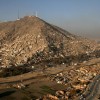
Afghanistan’s Economic Recovery: A New Horizon for South-South Partnerships?
First the centre of the silk route, then the epicenter of bloody conflicts, Afghanistan’s history can be charted through many diverse chapters, the most recent of which opened with the election of President Ashraf Ghani in September 2014.Turkey Investing in Coal Despite Cheaper Renewable Energy
In response to rising demand for electricity, pressure to keep prices affordable and a need to maintain energy security, the Turkish government plans to increase electricity generation from coal.
Decent Employment Opportunities for Young People in Rural Africa
Over half of the African continent’s population is below the age of 25 and approximately 11 million young Africans are expected to enter the labour market every year for the next decade, say experts.
Kenya Struggles with Rising Alcoholism
Despite legislative attempts to curb drinking, Kenya is still facing its greatest threat from alcohol abuse. Calamities associated with excessive intoxication – dementia, seizures, liver disease and early death – have done little to deter users.
Q&A: “Protect Your Biodiversity”
Richard Huber is chief of the Sustainable Communities, Hazard Risk, and Climate Change Section of the Department of Sustainable Development of the Organisation of American States (OAS). Its objective? Foster resilient, more sustainable cities – reducing, for example, consumption of water and energy – while simultaneously improving the quality of life and the participation of the community.
Pollution a Key but Underrated Factor in New Development Goals
Pollution is likely to be the most pressing global health issue in the coming years without effective prevention and clean-up efforts, experts say.U.N. Security Council Focuses on Children as Victims of Armed Groups
24 hours after the shocking kidnap of more than 400 women and children in Nigeria by Boko Haram, the United Nations Security Council discussed the safety of children as victims of non-state armed groups.
Opinion: Education as a Cornerstone for Women’s Empowerment
Earlier this month, the Barack Obama administration announced a new initiative designed to improve girls’ education around the world. Dubbed “Let Girls Learn,” the programme builds on current progress made, such as ensuring girls are enrolled in primary school at the same rates as boys, and is looking to expand opportunities for girls to complete their education.« Previous Page — Next Page »


 2026 High-level Political Forum on Sustainable Development. Credit: UN Photo/Eskinder Debebe
In 2015, the United Nations and its Member States adopted the Sustainable Development Goals (SDGs) in an effort to make the world a more sustainable and peaceful place for future generations. Progress on the 17 SDGs has been uneven, and inequality persists across the globe. 10 years after adoption, the 2025 UN SDGs Report revealed that only 35% of the SDG targets are on track, with more than half moving too slowly, and 18% moving backwards from the 2015 baseline. Poverty remains one of the world’s most pressing issues, with hunger, violence, and inequality impeding the opportunities for all people to achieve success. In September 2024, the United Nations Summit of the Future introduced a new goal: to eradicate global poverty by 2030, ensure universal rights to basic services, and increase the overall standard of living in terms of industrialization, economic well-being, citizen health, and literacy. Furthermore, recent shifts in United States foreign aid policy – notably, major budget cuts to USAID and the termination of thousands of development programmes– have severely threatened vital lifelines of financial aid to impoverished communities around the world. Additionally, the United States’ withdrawal from the Paris Climate Agreement has undercut international efforts at sustainable development. With the upcoming 2030 deadline, the UN Secretary-General has called for urgent multilateralism across six priority areas: food systems, energy, digital connectivity, education, jobs and social protection, and climate and biodiversity. IPS sheds light on marginalized communities that struggle on a daily basis to survive and have their stories heard and respected.
Updated by Yilan Batista and Shuli Wong August 2026

The Week with IPS

NEXT STOP - SDGs
Tracking global progress towards a sustainable world
