Languages
Tuesday, October 20, 2026



News and Views from the Global South
Population

Comprehensive Sex Education: A Pending Task in Latin America
In most Latin American countries schools now provide sex education, but with a focus that is generally restricted to the prevention of sexually transmitted diseases – an approach that has not brought about significant modifications in the behaviour of adolescents, especially among the poor.OPINION: Delivering on the Promises of the Global Partnership for Development
Persistent gaps between the promises made, and actually delivered, by developed countries to developing countries, hold back efforts to improve people’s lives and end poverty.
The Changing Face of Caribbean Migration
Ruth Osman is attractive and well-groomed in tailored slacks and a patterned blouse, topped by a soft jacket worn open. Her demeanour and polished accent belie the stereotypical view that most Caribbean nationals have of Guyanese migrants.
‘Therapeutic Abortion’ Could Soon Be Legal in Chile
Chile, one of the most conservative countries in Latin America, is getting ready for an unprecedented debate on the legalisation of therapeutic abortion, which is expected to be approved this year.
The Time Has Come for Agroecology
"It is time for a new agricultural model that ensures that enough quality food is produced where it is most needed, that preserves nature and that delivers ecosystem services of local and global relevance" – in a word, it is time for agroecology.
OPINION: The Fight Against the Long-Term Effects of Child Hunger Reaches Fever Pitch
Eric Turyasingura chases after a ball made from plastic bags outside his mud-brick home in the mountains of southern Uganda. Yelling in his tribal tongue, Nkore, “Arsenal with the ball! Arsenal with the ball!” he jostles with his younger brothers for possession.
Mission Midwife: The Case for Trained Birth Attendants in Senegal
Diouma Tine is a 50-year-old vegetable seller and a mother of six boys. In her native Senegal, she tells IPS, motherhood isn’t a choice. “If you’re married, then you must have children. If you don’t, then you don’t get to stay in your husband’s house, and no one will respect you.”
Water: A Defining Issue for Post-2015
A gift of nature, or a valuable commodity? A human right, or a luxury for the privileged few? Will the agricultural sector or industrial sector be the main consumer of this precious resource? Whatever the answers to these and many more questions, one thing is clear: that water will be one of the defining issues of the coming decade.
Urban Population to Reach 3.9 Billion by Year End
People living in cities already outnumber those in rural areas and the trend does not appear to be reversing, according to UN-Habitat, the Nairobi-based agency for human settlements, which has warned that planning is crucial to achieve sustainable urban growth.
On Sri Lanka’s Tea Estates, Maternal Health Leaves a Lot to Be Desired
A mud path winds its up way uphill, offering views on either side of row after row of dense bushes and eventually giving way to a cluster of humble homes, surrounded by ragged, playful children.
Saving the Lives of Cameroonian Mothers and their Babies with an SMS
“You can’t measure the joy in my heart,” Marceline Duba, from Lagdo in Cameroon’s Far North Region, tells IPS as she holds her grandson in her arms.
Experts Warn of Dire Consequences as Lake Victoria’s Water Levels Drop Further
Over the years, Cassius Ntege, a fisherman from Kasenyi landing site on the Ugandan side of Lake Victoria, has observed the waters of the lake receding. And as one of the many who depend on the lake for their livelihoods, he has had to endure the disastrous consequences of the depleting lake.
U.N. High-Level Summits Ignore World’s Political Crises
As the 69th session of the General Assembly took off with the usual political pageantry, the United Nations will be hosting as many as seven "high-level meetings", "summits" and "special sessions" compressed into a single week - the largest number in living memory.
Kenya’s Ogiek Women Conquer Cultural Barriers to Support their Families
Just two years ago, Mary Ondolo, a 50-year-old mother of nine from Kenya’s marginalised, hunter-gatherer community, the Ogiek, used to live in a grass thatched, mud house. She'd been living there for decades.OPINION: Invest in Young People to Harness Africa’s Demographic Dividend
Different issues will be competing for the attention of different African leaders attending the 69th United Nations General Assembly Special Session on International Conference on Population and Development (ICPD) Beyond 2014 in New York on Sep 22.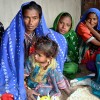
U.N. Urged to Reaffirm Reproductive Rights in Post-2015 Agenda
The U.N.'s post-2015 development agenda has been described as the most far-reaching and comprehensive development-related endeavour ever undertaken by the world body.
OPINION: Step Up Efforts Against Hunger
At the 1996 World Food Summit (WFS), heads of government and the international community committed themselves to reducing the number of hungry people in the world by half. Five years later, the Millennium Development Goals (MDGs) lowered this level of ambition by only seeking to halve the proportion of the hungry.
Geographical Divide in Maternal Health for Syrian Refugees
At the largest refugee camp in Iraqi Kurdistan, young Syrian mothers and pregnant women are considered relatively lucky.
Rare Zambian Tree Faces Exploitation Because of Legal Loophole
Steven Nyambose used to sell charcoal for a living until he discovered that the trees could be more lucrative in another way - through cutting them down and selling the logs to international buyers.

Can ‘Womenomics’ Stem the Feminisation of Poverty in Japan?
Fifty-four-year-old Marlyn Maeda, an unmarried freelance writer living in Tokyo who never held a permanent job, is now watching her dream of aging independently go up in smoke.
Honduran Mothers and Grandmothers Search Far and Wide for Missing Migrants
United by grief and anxiety, the grandmothers, mothers and other relatives of people who disappeared on the migration route to the United States formed a committee in this city in northern Honduras to search for their missing loved ones.« Previous Page — Next Page »





 One Thousand Internally Displaced Persons (IDPs) Relocated from Tomping Camp in South Sudan. Credit: UN Photo/Isaac Billy
It took hundreds of thousands of years for the world’s human population to cross one billion in 1804. Approximately 200 years later, the population has multiplied sevenfold. In 2023, the global population crossed 8 billion, and is expected to reach 9 billion before 2050. With the planet more crowded than ever, it is essential to keep track of population trends, urbanization, migration, and reproduction across the world.
Life expectancy has seen significant strides in the past century, largely due to economic development and increased standards of living. On the contrary, trends in global fertility are shifting, with certain regions in Africa and Asia reporting higher rates, while parts of Europe and North America report stagnant or lower rates. This is in part due to differences in sexual and reproductive healthcare, as well as societal and economic conditions around the world. For example, child marriage is prevalent in certain societies, where childbearing is also considered a familial duty. Meanwhile, stagnating economies frequently experience lower marriage and childbearing rates.
The increase in migration and urban development around the world is also linked to global population trends. By 2050, it is expected that approximately 66 percent of all people will live in cities. Furthermore, global crises such as warfare and natural disasters also prompt transnational migration. Transnational migration is linked to a variety of socioeconomic issues in both host and receiving countries: migrants often leave developing countries with less access to educational and economic opportunities and arrive in developed countries where they are frequently the targets of ethnic, racial, and cultural discrimination, and economic exploitation. Recent crises in Europe and the United States demonstrate the importance of advocating for migrants worldwide. As migrants from the Global South are increasingly stripped of their legal and civic rights in unlawful deportations, or targeted in acts of identity-based violence, it is essential to keep track of population trends and protect the human rights of migrant populations. Climate-related disasters are now a major driver of displacement, with nearly half of all new internal displacements in 2025 being disaster-related.
IPS is devoted to covering issues surrounding population trends, migration, and reproduction through its compelling articles, which use both statistics and human stories to provide readers with robust and informative viewpoints.

The Week with IPS

NEXT STOP - SDGs
Tracking global progress towards a sustainable world
Tracking global progress towards a sustainable world
