Languages
Sunday, November 15, 2026



News and Views from the Global South
Poverty & SDGs

Parallel Economy Keeps Indians Poor
As India grapples with rising prices and a rapidly sinking rupee, attention has turned to the country's massive parallel economy that siphons wealth away from development programmes and into the pockets of a corrupt ruling elite.
Somalia Takes Teaching to the Extreme
Mukhatar Jama has been teaching at a secondary school in Mogadishu for the past decade. Religious education is part and parcel of the curriculum of all schools in Somalia, but he says most parents are unaware of exactly what their children are being taught – a radical form of Islam.The Dark Side of International Migration
The number of international migrants continues its inexorable climb even as reports of slave-like conditions continue to proliferate.
Q&A: The Eleventh Hour for Climate Justice
Climate justice – the nexus between human rights and climate change – must be a pillar of the post-2015 development agenda, says former Irish president Mary Robinson.
For the Disabled, Progress Unearths More Questions
When U.N. Secretary-General Ban Ki-moon opened a recent high-level meeting on disability and development that promised a place for the issue in the post-2015 agenda, he cited three examples of incapacity.Less Hunger, But Not Good Enough
Every year, we take a snapshot of world progress in the fight against chronic hunger. This year, the picture is looking better, but it’s still not good enough.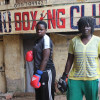
Ugandan Women Put On Their Boxing Gloves
Helen Baleke took up boxing at 16, after she was attacked by a man in Kampala’s Katanga slum. But the beating turned her into what she is today – one of only several female Ugandan amateur boxers.
Relief Brings Its Own Disasters
In Uttarakhand, the small Indian state in the Himalayan foothills that was a victim of flash floods that killed at least a thousand people in June this year and uprooted thousands of families, the story is told of a child who went every day to the helipad, believing his father will return when, in fact, the father died in the floods.
Hunger Decreases, but Unevenly, U.N. Reports
Some 842 million people still suffer from chronic hunger, according to the State of Food Insecurity in the World (SOFI 2013), published Tuesday by the three Rome-based U.N. food agencies.U.S. Government Shutdown Could Hit Foreign Aid
A deadlocked U.S. Congress proved unable to settle budgetary differences late Monday evening, leading to a federal government shutdown that could soon be felt by foreign aid programmes and their recipients.
U.S.-Africa Trade Mostly Benefits Oil, Textiles
With a key U.S.-Africa trade agreement up for renewal in 2015, advocates on all sides of the issue say current policies are rife with shortcomings that leave many African businesses out in the cold.
WTO: Stingy with the Poor, Generous with the Rich
A fight taking place in the World Trade Organisation (WTO) negotiations towards the Bali Ministerial Conference shows how the rules on agriculture allow developed countries to continue to shell out huge subsidies while penalising farmers in developing countries.
Disabled Make Do with Scraps from the Aid Table
Amidst the incomprehensible suffering that followed the 2010 earthquake in Haiti, international aid agencies rushed to provide services to the displaced and injured.People Pressure Piles up to Cleanse the Philippines
Under the reformist leadership of President Benigno Aquino III who has placed “good governance” initiatives at the heart of his administration’s agenda, the Philippines has enjoyed an unprecedented period of economic revival and political stability.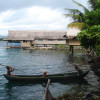
The Medicines Are Fake, the Illnesses Real
Reports of fraudulent medicines in the south-west Pacific island states of Solomon Islands and Papua New Guinea have drawn attention to the need for more public awareness of the lethal trade and its tragic consequences.
/CORRECTED REPEAT/Healthcare Loses Support in Somalia
Maryan Yusuf, 39, is weak and barely able to speak because of her excruciating pain. A few hours earlier she delivered a baby at Somalia’s Afgooye Hospital, where essential drugs are dwindling at an alarming rate.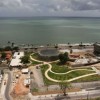
Climate Change Report “Gives No Reason for Optimism”
Amidst rumours that global warming has slowed over the past 15 years, the new report by the Intergovernmental Panel on Climate Change (IPCC) states that each of the last three decades has been warmer than any preceding decade since 1850.
Haitian Government Applies Make-up to Misery
Pink, green, blue, red. From a distance, the thousands of brightly coloured houses look like a painting. The observer can’t see the suffering and dangers threatening the residents of the Jalousie neighbourhood – problems that are being ignored by the government, which is spending six million dollars on a massive make-up job.Bloody Days in Sudan
Activists claim that more than one hundred people have been killed and thousands injured during demonstrations in Sudan following the removal of fuel subsidies.
Survivors Question U.N. Focus on Legalising Sex Work
The age-old debate over how to regulate sex work has led to a rift between the United Nations and anti-trafficking organisations, which are pressuring the world body to rethink its position following two reports that advocate decriminalising all aspects of prostitution.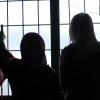
Mideast and Africa Still Holdouts on Women’s Rights
Gender equality around the world has increased dramatically over the past half-century even though the vast majority of countries continue to restrict women’s economic development in at least one way, the World Bank reports this week.« Previous Page — Next Page »


 Romani people in Cairo, Egypt, forage through trash. Credit: UN Photo/Armineh Johannes
In 2015, the United Nations adopted the Sustainable Development Goals (SDGs) in an effort to promote “peace and prosperity for people and the planet.” To achieve that goal, it is essential to provide equal opportunities and access to basic services to all people. The 2025 UN SDG Report found that 35% of the 169 SDG targets are on track or making moderate progress, while 18% have reversed compared to the 2025 baseline. One in ten people still live in extreme poverty, one in eleven experience food insecurity, and over 1.1 billion people live in slums without access to clean water and sanitation. It is imperative to acknowledge the societal, technological, economic, and political issues that sustain poverty in countries around the world. Eradicating poverty will require significant frameworks in policy and governance on a national and international scale to ensure that all people will have equal access to basic services and economic opportunities by 2030. Furthermore, a dramatic reduction of United States foreign aid in 2025, including the termination of 83% of USAID programmes, threatens to erode years of fragile development gains.
Throughout the world, violent conflict and natural disasters also contribute to extreme poverty. The complete destruction of infrastructure and blockage of aid has significantly impoverished Palestine since October 7th. The destructive impact of Hurricane Maria in Puerto Rico left $91 billion in damage. An inadequate US government response also revealed significant and enduring questions within the issue of mitigating poverty: how do we rebuild infrastructure after its destruction? How do we restimulate economic development and bring in financial aid after disasters? Similar questions have been raised in the realm of regional cooperation, as devastating floods have wrecked hundreds of thousands of homes across multiple Southeast Asian nations in the past few years. Furthermore, the COVID-19 pandemic has greatly exacerbated the global poverty crisis, particularly in developing countries, setting back the United Nations goal of eradicating poverty by 2030.
IPS is committed to providing comprehensive features that focus on the persisting environmental, sociopolitical, and systemic issues that sustain poverty, and the steps taken worldwide towards poverty eradication.

The Week with IPS

NEXT STOP - SDGs
Tracking global progress towards a sustainable world
Tracking global progress towards a sustainable world

