Languages
Wednesday, November 18, 2026



News and Views from the Global South
Natural Resources

Pacific Island Wakes Up to Threat of Oil Spills
Coral reefs and marine ecosystems in the Milne Bay Province of the Pacific Island nation of Papua New Guinea are at serious risk of long-term environmental damage. The reason: an oil spill from a ship that ran aground on a reef on Kwaiawata Island on Christmas Eve, and authorities’ long delay in mobilising an appropriate response to the accident.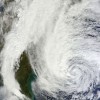
OP-ED: Climate Inaction Is a Clear Failure of Democracy
Around the world, 2012 was the year of extreme weather, when we unequivocally learned that the fossil fuel energy that powers our societies is destroying them. Accepting this reality is the biggest challenge of the brand new year.What is China’s Policy Driver in Central Asia?
China is increasingly active in Central Asia, building pipelines and infrastructure projects, as well as expanding its diplomatic and cultural presence in the region.CAR Rebels Halt Advance on Capital
Rebels in Central African Republic have said they have halted their advance on the capital, Bangui, and would participate in dialogue, as head of regional African forces warned them against making further moves.Bolivia Takes the Leap into the Big Pond of Mercosur*
To go down fighting in the Andean Community (CAN), with a combined market of 92 million consumers, or move up to the big leagues of Mercosur, with 275 million? This was the dilemma faced by Bolivia’s foreign trade strategists when it came to pursuing full membership in the bloc formed by its neighbours to the south.
Renewable Energy Alliance Stretches From Germany to Central America
A recent agreement between El Salvador and Germany, with the latter supporting two renewable energy projects that would increase installed capacity in the Central American country by 94.2 megawatts by 2013, points to a promising alliance for carbon-free energy.
BRICS Seeks New Dialogue with Africa
South Africa plans to boost links between Africa and its partners in the Brazil, Russia, India and China alliance at a landmark summit, which will be held in this country in March, Xavier Carim, deputy director general at the Department of Trade and Industry, told IPS.
Guyana Hits Paydirt on Low Carbon Development Path
Imagine Guyana and Dominica without forests and rivers, or Antigua, Barbados and St. Lucia without beaches.
Africa Cashes in on Mineral Wealth
Many of the fastest-growing countries in the world are in Africa, the poorest continent on the planet, but the potential for recently-discovered resources to generate broad-based inclusive development opportunities is massive and remains under-exploited.

Forests, Fruit and Fish Could Save Coastal Communities
Scientists predict that in the coming years, Bangladesh will be battered by even more climate disasters than it has already endured. Global warming has caused devastating damage in this lower Himalayan delta country of 150 million people, where seawater intrusion, increasingly intense cyclones, dried up rivers and extreme weather events have become the norm.
Colombian Landowners, Peasants Listen to Each Other
Colombia's large-scale agricultural producers and peasant farmers managed to listen to each other for the first time about the core cause of the decades-long armed conflict: the concentration of rural land ownership and the social and economic development of the countryside.
Obama’s Victory a Boon for Clean Air, Water Acts
With Barack Obama’s re-election last month as U.S. president, key environmental protections escaped a likely Republican chopping block, and new regulations are expected when his second term begins in January.
In Dominica, Diminished Rivers Among Climate Change’s Effects
Eighty-year-old Rupert Lawrence has been living in the Dominica capital, Roseau, for nearly 60 years. Like visitors to the island, he too is fascinated by the fact that the town square has a river running right through its centre.
Big Landowners Block Rural Development Law in Guatemala
An “integral rural development law” to promote access to land, employment and other rights for small farmers is bogged down in the Guatemalan Congress due to opposition from large landowners, who see it as an attempt at land reform.
Environmental Uncertainties Halt Deep Sea Mining
The world’s first deep sea mineral (DSM) mining venture in the Bismarck Sea off the northern coast of Papua New Guinea in the southwest Pacific has come to a halt after two years of development.
At the Edge of the Carbon Cliff
The most important number in history is now the annual measure of carbon emissions. That number reveals humanity's steady billion-tonne by billion-tonne march to the edge of the carbon cliff, beyond which scientists warn lies a fateful fall to catastrophic climate change.
Ceasefire Means ‘Nothing’ to Gaza Fishers
Shortly after Israel and Hamas signed a ceasefire agreement on Nov. 21, the Israeli navy abducted 30 Palestinian fishers from Gaza's waters, destroyed and sank a Palestinian fishing vessel, and confiscated nine fishing boats in the space of four days.
OP-ED: A Universal Climate Change Agreement Is Necessary and Possible
The results of the United Nations climate change conference that closed in Doha, Qatar on Dec. 8 show once again that the international negotiations are moving steadily in the right direction, but alarmingly slow.
Cambodian Activists Challenge ASEAN Policies
For a brief moment last month, mainstream international media turned the spotlight on Cambodia, one of the world’s 48 least developed countries (LDCs), as a high-level visit from U.S. President Barack Obama and the annual summit of the Association of Southeast Asian Nations (ASEAN) gave this country of 14.3 million people a glamorous edge.
Caribbean Islands Find Economic Advantages in Sustainable Energy
With the exception of oil rich Trinidad and Tobago, most, if not all, other Caribbean islands are extremely vulnerable when it comes to the high costs of imported fuels that are easily disrupted by natural disasters and other phenomena.
Native Communities in Peru Take Charge of Environmental Monitoring
At the end of every month, with the skill of an environmental engineer, Wilson Sandi prepares a work plan that will be used by Achuar indigenous people, like him, to document the scars left by 40 years of oil drilling in the Peruvian Amazon region of Loreto.« Previous Page — Next Page »


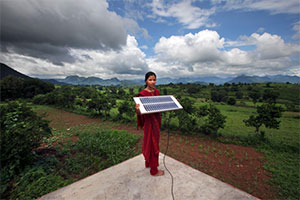 Bringing clean energy to rural India. Credit: Abbie Trayler-Smith / Panos Pictures / Department for International Development
Large reserves of oil, gas and minerals in developing countries generate opulent revenues. They could be used to stimulate economic growth and reduce poverty, but often result in environmental destruction and conflict, benefiting large companies and corrupt governments. Furthermore, competition over natural resources often manifests through geopolitical conflict. For example, before the US-Iraq war, Iraq’s domestic oil industry was nationalized. With US aggression came weakened Iraqi institutions and foreign intervention, thus eventually leading to the privatization of Iraqi oil, leaving the industry now largely dominated by Western companies. As another example, China’s rising investments within the lithium sector in South America are increasing the US-China rivalry across the Western Hemisphere. Notably, Bolivia has the largest reserves of lithium in the world, and the nation’s state-owned lithium extraction firm recently signed a contract with China’s CBC Consortium, while rejecting the entry of Western firms into the nation. In Bolivia’s case, rising Chinese investment in the nation’s lithium sector also raises concerns about environmental sustainability and the sociopolitical rights of Indigenous communities. More broadly, Sub-Saharan Africa holds nearly 30% of global reserves of critical minerals required for low-carbon technologies. Despite this, the region attracts less than 10% of global exploration investment, depicting a critical barrier to both the clean energy transitions and Sub-Saharan Africa’s economic development. Furthermore, resource wealth continues to fuel conflict like Sudan’s civil war, which has led to 9.1 million internally displaced people and is intensely connected to competition over gold, water, and agricultural land. IPS covers news about major oil, gas, and mining projects, their effects on the environment and local communities, and the ideas and actions of the interest groups involved.

The Week with IPS

NEXT STOP - SDGs
Tracking global progress towards a sustainable world
Tracking global progress towards a sustainable world
