Languages
Sunday, November 22, 2026



News and Views from the Global South
Economy & Trade

Obama’s Free Trade Strategy Falters in Asia
Amid simmering territorial conflicts across the Western Pacific, specifically between China and its neighbours in the South and East China Seas, coupled with China rising to the rank of top trading partner with Japan, South Korea, Australia and the Association of Southeast Asian Nations (ASEAN), the Obama administration has been hard-pressed to re-assert its strategic footprint in the region.
FIFA World Cup – Where the Spectacle Is the Champion
The seven-year-old got bored after running here and there for five minutes, amidst a group of a dozen classmates. He eventually stomped off the field because he hadn’t managed to kick the ball even once.
Q&A: “Some Individuals Are Now as Wealthy as Entire Countries”
As it turns 50, the United Nations Conference on Trade and Development (UNCTAD) finds itself engaged in an ongoing struggle to reduce economic and social inequalities in the world.
Op-Ed: Not Only Hunger, but Malnutrition Too
Continued growth in developing countries, along with poverty-reduction policies, have helped to improve both income and food security globally.
Renewable Energy for “Cold” Areas
Although most of Iceland already uses renewable energy for its heating and electricity, a handful of places are still reliant on oil. But, at least on Grimsey island in the north, this could change in the future.
Deadline Looms for Due Diligence Reporting on U.S. Investments in Myanmar
U.S. companies newly operating in Myanmar have until the end of the month to file official reports detailing the actions they’ve taken to ensure that their investments comply with safeguards around land, human rights and other concerns.Despite Crisis, Europe Continues to Protect Its Banksters
More than six years after the global financial crisis broke out, European Union (EU) countries continue to protect banks and investments funds from tougher rules, despite abundant evidence of recurrent criminal or reckless activities in the sector, and new accumulation of enormous financial risks.
Cameroon, Where Poor Infrastructure Doesn’t Dim Love for Football
It is almost 6pm. A group of kids are plying their craft in a dusty, dirty courtyard in a poor neighbourhood in Yaounde, Cameroon’s capital. That craft is football. They kick the once-white-but-now-brown, aged football around. One child is barefoot, the other wears worn shoes and is dressed in the kit of the national team.
Chile’s Patagonia Celebrates Decision Against Wilderness Dams
The Chilean government rejected Tuesday the controversial HidroAysén project for the construction of five hydroelectric dams on rivers in the south of the country. The decision came after years of struggle by environmental groups and local communities, who warned the world of the destruction the dams would wreak on the Patagonian wilderness.
U.N.’s Energy Funding Falls Short of Target by Billions
When the United Nations inaugurated the first-ever global forum on renewable energy last week, it provided a laundry list of financial pledges aimed at achieving one of the world body's most ambitious goals: sustainable energy for all (SE4ALL) by 2030.
Mothers Light Up Homes in Rural Tanzania
“My mother used to just stay at home, now she has come back and is an engineer and a leader. She is on the Village Energy Committee,” said a 10-year-old girl from the village of Chekeleni, in Tanzania’s southeastern Mtwara district.
Housing Crisis Worsens Urban Inequality in Pacific Islands
Rapid migration to cities and towns, driven by scarce public services and jobs in rural areas, is producing a profound social shift in Pacific Island countries, where agrarian life has dominated for generations. But the urban dream remains elusive as a severe lack of housing forces many into sprawling, poorly-serviced informal settlements.
Mauritian Sugar Farmers Squeezed by Low Prices as Bagasse and Ethanol Become Popular By-products
While Mauritius has been forced to transform its sugar industry because of low prices for the commodity, the country’s small-scale sugarcane farmers who contribute to it say they are barely earning a living.Donors to Assist Developing Countries Negotiate Extractives Contracts
Major donor countries will unveil next week a new initiative aimed at strengthening the ability of developing countries’ governments to negotiate complex contracts, particularly around the extractives sector.
Op-Ed: First Decolonisation, Now ‘Depatriarchilisation’
At the end of this week leaders of the Group of 77 and China will meet in Bolivia to commemorate the 50th anniversary of the group.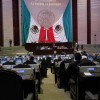
Latin America’s Forests Need Laws – and Much More
Latin America’s parliaments have failed to protect the forests and to guarantee their sustainable use, despite the fact that a number of countries have laws on forests, legislators from the region said at a global summit in the Mexican capital.
Wall Street Sets Its Sights on Renters
Six years after the financial crisis, Wall Street’s housing alchemy engine is revving up again - only this time it’s coming for your rental.
Sri Lankan Monsoon Comes for the Poor
 By now, the tale has become almost mundane: first the rains remain elusive, refusing to quench the parched earth. Then, without warning, they fall in such torrents that they leave scores dead, hundreds injured, and thousands homeless, plus a heavy bill in accrued damages.
Quest for Self-Determination Continues in New Caledonia
Since the French overseas territory of New Caledonia in the South Pacific was reinstated on the United Nations Decolonisation List in 1986, the indigenous Kanak people have struggled not only against socio-economic disadvantages, but also for the right to determine their political future after more than a century of colonialism.
When Nature Gets a Price Tag
How much does a forest cost? What’s the true economic value of an ocean? Can you pay for an alpine forest or a glacial meadow? And – more importantly – will such calculus save the planet, or subordinate a rapidly collapsing natural world to market forces?
Kiribati President Purchases ‘Worthless’ Resettlement Land as Precaution Against Rising Sea
You can count the inhabitants of this isolated, tidy village of multi-coloured houses and flower bushes among global warming’s first victims – but not in the usual sense.« Previous Page — Next Page »


 UN Commission on International Trade Law Holds Colloquium on Harmonizing Law in Age of Digital Trade and Finance. Credit: UN Photo/Manuel Elías
Trade has historically been a geopolitical tool that can both be used to propel development as well as entrench inequalities. In various nations in East Asia and Latin America, increased trade, as often seen in export booms, has allowed them to achieve influential standings within the global economy. On the other hand, many low-income countries in Sub-Saharan Africa, Asia, and Latin America struggle to maintain a robust trade performance, and oftentimes are subjugated to exploitative trade dynamics through intense extraction of their natural resources. In recent decades, international trade has reached a new era as emerging economies across the world are rising in economic preeminence. Stable international trade is crucial to world peace as global interconnectedness facilitates reliable diplomacy. Nevertheless, significant challenges are on the rise. Notably, a major wave of United States tariff escalations in January 2025 lifted US import taxes to their highest level since the 1930s, changing market dynamics and forcing renegotiations with global trading partners.These articles are aimed at informing readers about the complexities of trade and its varying effects on development, with a special focus on the consequences of the global economic crisis, the potential of fair trade and the gender implications of trade policies.
Updated by Yilan Batista and Shuli Wong August 2026

The Week with IPS

NEXT STOP - SDGs
Tracking global progress towards a sustainable world
Tracking global progress towards a sustainable world
