Languages
Saturday, November 14, 2026



News and Views from the Global South
Editors' Choice
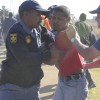
Governments Crushing Their Own
The global spectre of state violence against political dissent, with paramilitary law enforcement units advancing against citizens they are employed to protect in cities such as Cairo, Bangkok and Kiev is daily news. But in some developing countries, the police are being used to put down indigenous opposition to the alliance of state and corporate power over resource extraction.
Morocco Divided Over Equality
Morocco stands divided over a proposal for equal inheritance rights for men and women: modernists see this as application of equality arising from the new constitution, and Islamists see in this a violation of Sharia law.
Egyptian Quacks Mutilate Millions
Saber Abd El-Mawgoud began his career castrating sheep and goats before moving on to humans. His first human experiment was a young boy he attempted to circumcise back in 1999 at the insistence of the boy’s father.
Russia ‘Liquidating’ Civil Society
NGOs working in Russia are facing more repression in the form of even tighter legislation on foreign funding as part of what some rights activists say is a concerted campaign to “liquidate” civil society in the country.
India Finds Fishy Ways to Fight Malaria
Thirteen-year-old Sampreeth Monteiro’s neighbours are suddenly taking his advice seriously. “Buy a Guppy fish, it will eat all the mosquito eggs in your house. You will not get malaria again.”
Zimbabwe’s Struggle to Formalise the Informal
Zimbabwe’s extensive informal sector could help boost government revenue if regularised, but this won’t happen unless the government creates incentives for the informal sector to register, economists say.
U.S. Apache Delivery Highlights Mixed Messaging on Egypt
Last October, the Barack Obama administration suspended the delivery of attack helicopters to Egypt’s interim government following the Jul. 2 military ouster of Egypt’s democratically elected president, Mohamed Morsi.
Argentina’s Informal Economy Shrinks, But Not Fast Enough
At the age of 22, Franco finally landed his first job, although he is not on any payroll and receives no labour benefits. He is part of Argentina’s informal economy, where one out of three workers are employed – a proportion the government aims to reduce by means of a new law.
Japan Seeks Foreign Workers, Uneasily
Desperate for more workers to support a construction boom, Japan has proposed to expand its controversial foreign trainee programme to permit more unskilled labour from Asia to work in Japanese companies for five years from the current three years.
Culture Increasingly Unaffordable for Cubans
Standing in line for a concert at the Centro Cultural Fábrica de Arte, a cultural centre in the Cuban capital, Alexis Cruz anxiously checks his billfold, where he has the price of the ticket – 50 Cuban pesos (two dollars) - and three CUCs (equivalent to one dollar each) to buy something to drink.
Bringing the Bridges Home
As foreign forces withdraw slowly from Afghanistan, they leave behind a vulnerable band of people who were their ears and guides on the ground. These people who served as interpreters, face a life of threats and uncertainties. Many have been killed.
U.S.-Russia Sabre Rattling May Undermine Nuke Meeting
The growing tension between the United States and Russia over Ukraine has threatened to unravel one of the primary peace initiatives of the United Nations: nuclear disarmament.
Cuba’s Burgeoning Private Sector Hungry for Flora and Fauna
The lack of markets to supply raw materials for Cuba’s new private sector, along with the poverty in isolated rural communities, is fuelling the poaching of endangered species of flora and fauna.
Imprisoning Themselves to Stay Safe
"I don’t dare tell you who the murderers are but their target is just us, Turkmens," says Ahmed Abdulla Muhtaroglu, sitting by the portrait of his brother who was killed last year.
India’s Women Lose the Election
“Men just do not want to give up their seats, it’s as simple as that,” says 67-year-old candidate in the Indian election Subhhasini Ali, voicing a gloomy view across women’s groups in India.
Poland Uses Ukraine to Push Coal
A European ‘energy union’ plan proposed by Polish Prime Minister Donald Tusk as an EU response to the crisis in Ukraine could be a Trojan horse for fossil fuels.
When Not To Go To School
In large parts of rural India, the absence of separate toilets for growing girls is taking a toll on their education. Many are unable to attend school during their menstrual cycle.
South Sudan Dictates Media Coverage of Conflict
As rebel forces loyal to South Sudan’s former vice president Riek Machar declared on Tuesday Apr. 15 that they had captured the key oil town of Bentiu, the government has been accused of clamping down on local media in an attempt to influence the reporting on the conflict.
Gabriel García Márquez, the Story-Teller of the Country of the War Without End
The first time I read Gabriel García Márquez (1927-2014) was when I was proofreading the galleys of “The Story of a Shipwrecked Sailor”, which the Editorial Sudamericana was getting ready to reprint in Argentina.
Sweet Dreams are Made of Rwandan Ice Cream
From all across Rwanda, and even from parts of neighbouring Burundi, people flock to the southern town of Butare to a little shop called Inzozi Nziza or Sweet Dreams. They come here for a taste of something of the unknown, something most have never tasted in their lives — the sweet, cold, velvety embrace of ice cream.
Biofortified Tortillas to Provide Micronutrients in Latin America
Latin America is one of the regions in the world suffering from “hidden hunger” - a chronic lack of the micronutrients needed to ward off problems like anaemia, blindness, impaired immune systems, and stunted growth.« Previous Page — Next Page »


The Week with IPS

NEXT STOP - SDGs
Tracking global progress towards a sustainable world
Tracking global progress towards a sustainable world
