
Wednesday, November 18, 2026



News and Views from the Global South
Climate Change

South Outdoing North in Fight against Global Warming
The claims of some industrialised nations, which accuse the developing countries of not doing their share to curb emissions that contribute to climate change, are proven false in studies conducted by respected academic institutions.
Latin American Integration Does Not Extend to Climate Change**
The foreseeable absence of binding agreements to stabilise the global climate could give rise to increased regional cooperation to help Latin American countries adapt to the severe effects of climate change.
Brazil Cannot Swim Against the Climate Current
With no meaningful proposals, and in the face of internal setbacks and an adverse international context, Brazil is largely unprepared to assume the leadership role expected of an environmental power at the Durban climate change conference.
MALAWI: Changing Climate Compounds Environmental Degradation
As Daniel Chakunkha and Mussa Abu talk on the side of a dirt path in Makunje village, Malawi, a steady stream of bicycles loaded with charcoal passes by. The men stand at the halfway mark between Mwanza, a small city in the country’s southwest, and Blantyre, Malawi’s commercial hub.
U.S.: Nation’s Tallest Solar Tower Set for Arizona
In the western desert state of Arizona, a company called EnviroMission is planning to build a new solar tower, the first of its kind, an ambitious new way to produce energy with heat from the sun.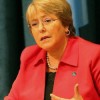
Q&A: Climate Talks Must Ensure That “Words Become Reality”
Involving women in decision-making and resource management is a basic necessity for any effective plan to address the multi- layered and life-threatening consequences of climate change, says the head of UN Women.
KENYA: Like a Fish Belongs to Water, the Ogiek Belong to the Mau Forest
The resettlement of evictees from Kenya’s Mau Forest remains a humanitarian and environmental concern for the country as more than 25,000 people continue to live in camps around the forest.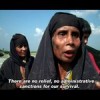
Climate Change – A silent killer in coastal Bangladesh
 Bangladesh, a deltaic country that drains major Asian rivers like the Ganges and the Brahamputra, is highly vulnerable to climate change and the effects are already being felt in the coastal regions in the shape of salinity, frequent floods and land erosion. Farmers and fisherman are already turning into climate refugees and, in a buiness as usual scenario, the next decades could see millions of people displaced according to projections by the United Nations Framework Convention for Climate Change.

Radical Change Needed at Durban Conference, Experts Say
Global leaders will gather next week in Durban, South Africa to determine how to cap global warming at two degrees Celsius. This limit would entail de facto agreement to a global carbon budget of no more than 660 billion tonnes of carbon dioxide emissions between now and 2050, climate science says.
CLIMATE CHANGE: Making a Hot Cup of Rooibos Tea Unaffordable
South Africa’s Rooibos tea has become a popular drink all around the globe. But prices of the herbal brew could shoot up within the next decade, as the Rooibos plant can only grow in one small region in the world – which is severely affected by climate change.CLIMATE CHANGE: Shale Gas Emerges as a Burning Issue
The issue seems rather similar to that of unconventional oil and has already sparked a major controversy in the West. But its implications for the debate on climate change are hardly known in countries of the Global South.
Coffee growers feel climate change
 Women coffee growers speak to Martha Nyambura about the impact of climate change on their production.

OP-ED: The Future of Carbon Markets: Taking Politics Seriously
Carbon markets are under attack on all sides, despite ongoing faith in their ability to deliver meaningful reductions in greenhouse gases (GHGs).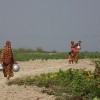
Bangladesh Demands Climate Justice
Mosammet Monwara walks more than three km every alternate day to fetch water for her family of five in a heavy earthen pitcher.
SOUTH AFRICA: Acid Mine Drainage Water Can Be Put to Use
Toxic water from derelict gold and uranium mines has reportedly destroyed Elize Strydom's dream to be a farmer in her retirement.
NEPAL: Community Forestry Unfazed by Political Turmoil
Nepal’s joint forest management system has taken such deep roots that the country’s prolonged political instability has had little effect on it.
UGANDA: Single Mothers Left Behind in Flooded Swampland
Life in Bwaise – a slum on the outskirts of the capital of Uganda – has never been easy. But increasingly erratic rains over the last three years have brought constant floods to the former swampland. Residents who can afford to are moving out, leaving the poorest – often single mothers and grandmothers – behind.
Oil discoveries hold back agriculture
Zuki Zimela reports from Libreville, Gabon: Farmers organisation say oil discoveries in Africa are holding back agricultural development. CLIMATE CHANGE: Himalayan Nations Yet to Break the Ice
Chungda Sherpa, a former herder from eastern Nepal, has a warning tale ahead of the United Nations climate change conference in Durban.
AFRICA: Wanted: Greener Cities
In Africa, where urbanisation will be one of the major developments over the next few decades, it will be key for cities to figure out how to handle rapid urban expansion and much-needed economic growth, while creating more environmentally-friendly cities and reducing their carbon footprint at the same time.
CLIMATE CHANGE: Himalayan Task Ahead
Prime ministers of Bhutan, Nepal, Bangladesh and India gather here on Saturday (Nov. 19) for the 'Climate Summit for a Living Himalayas', aiming to adopt an ambitious ten-year roadmap for regional adaptation strategies.« Previous Page — Next Page »


As unsustainable human consumption and production systems are driving changes in average temperatures and weather patterns, "abnormal" is increasingly becoming the norm. So far, a lack of financing has been standing in the way of a comprehensive global plan for climate adaptation, and a global financial crisis has contributed to an increasing reliance on public-private partnerships. Our Climate Change page provides you with the latest news about international and local efforts to address what's frequently been called "the challenge of our time", the forces behind the climate change and the impact it has on the world's most vulnerable populations. Along the way, we bring you stories on growing citizen awareness, new scientific data, and emerging climate policies towards sustainable development.

The Week with IPS

Tracking global progress towards a sustainable world

