
Monday, November 9, 2026



News and Views from the Global South
Environment

Dire Warnings But Also Hope as IUCN Environmental Congress Opens
A congress billed as the world’s largest ever to focus on the environment has opened to warnings that our planet is at a “tipping point” but also with expressions of hope that governments, civil society and big business are learning to work together.
Honduras Still a Death Trap for Environmental Activists Six Months after Berta Cáceres’ Slaying
Chills ran down Tomás Gómez Membreño’s spine when he first heard about the brutal murder of his renowned friend and ally, the Honduran Indigenous leader Berta Cáceres, six months ago this week.
Obama Stresses Climate Change Urgency Ahead of IUCN Congress
U.S. President Barack Obama has stressed the urgency of tackling climate change in a speech to Pacific leaders in his home state of Hawaii.
Indigenous People Demand Shared Benefits from Forest Conservation
"Why don’t the authorities put themselves in our shoes?” asked Cándido Mezúa, an indigenous man from Panama, with respect to native peoples’ participation in conservation policies and the sharing of benefits from the protection of forests.
UN Negotiations Focus on What Lies Beneath the High Seas
The high seas - oceans which fall beyond the jurisdiction of any country - make up about two thirds of the world’s ocean and half of the total surface of planet earth.
Drought Deals Harsh Blow to Cameroon’s Cocoa Farmers
Tanchenow Daniel fears he will lose more than half a tonne of his cocoa yield during the next harvest at the end of this month.
Asia, Looking Beyond the Green Revolution
 More than 2.2 billion people in Asia rely on agriculture for their livelihoods, but the Asian Development Bank warns that stagnant and declining yields of major crops such as rice and wheat can be ultimately linked to declining investments in agriculture. Public investments in agriculture in India, for instance, have been roughly the same since 2004.

Nurturing African Agriculture
While agriculture could be the driving force to lift millions of Africans out of poverty and alleviate hunger, its full potential remains untapped. For example, only between five and seven percent of the continent’s cultivated land is irrigated, leaving farmers vulnerable to climate shocks like the devastating El Nino-driven drought in southern Africa. That's why international agencies like the U.N. Food and Agriculture Organization (FAO) are forging key partnerships to enhance agricultural production, sustainable natural resource management and increased market access. 
Ships Bring Your Coffee, Snack and TV Set, But Also Pests and Diseases
“Every evening, millions of people all over the world will settle into their armchairs to watch some TV after a hard day at work. Many will have a snack or something to drink…
Smart Technologies Key to Youth Involvement in Agriculture
She is only 24 and already running her father’s farm with 110 milking cows. Cornelia Flatten sees herself as a farmer for the rest of her life.
Concern over Profit-Oriented Approach to Biodiversity in Latin America
In July 2015, the Mexican government granted a U.S. corporation permission for the use of genetic material obtained in Mexican territory for commercial and non-commercial purposes, in one of the cases that has fuelled concern in Latin America about the profit-oriented approach to biodiversity.
Literature Professor Probes Novels of the Anthropocene Age
A literature professor at Cornell University in upstate New York, Nick Admussen, has recently published an online literary essay about writing novels in the Anthropocene Age.
The Time is Ripe to Act against Drought
Let us start with some good news. Sort of. The strongest El Niño in 35 years is coming to an end. [1]
Dhaka Could Be Underwater in a Decade
Like many other fast-growing megacities, the Bangladeshi capital of Dhaka faces severe water and sanitation problems, chiefly the annual flooding during monsoon season due to unplanned urbanisation, destruction of wetlands and poor city governance.
Arable Lands Lost at Unprecedented Rate: 33,000 Hectares… a Day!
Humankind is a witness every single day to a new, unprecedented challenge. One of them is the very fact that the world's arable lands are being lost at 30 to 35 times the historical rate. Each year, 12 million hectares are lost. That means 33,000 hectares a day!
Ethiopian Food Aid Jammed Up in Djibouti Port
Bags of wheat speed down multiple conveyor belts to be heaved onto trucks lined up during the middle of a blisteringly hot afternoon beside the busy docks of Djibouti Port.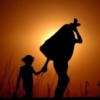
Adaptation to Climate Change: Need for a Human Rights Approach
The memories of Cyclone Sidr and Aila are fresh in the mind of Razia Begum, a victim of climate change, of Dacope Upazila, Khulna. The standing field crops and houses of her community were destroyed, and they suffered the loss of cattle as well as people who perished in these natural disasters. She says mournfully that Saturkhali, Kamarkhola, Koilashganj and Baniashanta are the most vulnerable unions where access to necessary human rights is disrupted. Furthermore, salinity, flood, river erosion, heavy rain, cyclone, water logging and seasonal variations etc. are the most devastating impacts of climate change in those areas.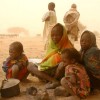
War on Climate Terror (II): Fleeing Disasters, Escaping Drought, Migrating
"No one can deny the terrible similarities between those running from the threat of guns and those fleeing creeping desertification, water shortages, floods and hurricanes.”
False Promises: Avoid ‘Miracle’ Rice and Just Eat a Carrot
Norman Borlaug, father of the Green Revolution, died on September 9, 2009. Alfred G. Gilman died on December 23, 2015. Both were Nobel laureates and now both dead. Gilman was a signatory to a recent letter condemning Greenpeace and its opposition to genetic engineering.
Native Plants Boost Local Diets in El Salvador
Juana Morales is cooking one of the most popular dishes in El Salvador: pupusas, corn tortillas with different fillings. But hers are unique: they are not made with the traditional corn tortillas, but use Maya nuts, a highly nutritional seed that has fallen out of use but whose consumption is being encouraged in rural communities.
War on Climate Terror (I): Deserts Bury Two Thirds of African Lands
Two-thirds of the African continent is already desert or dry-lands. But while this vast extension of the second largest continent on Earth after Asia is “vital” for agriculture and food production, nearly three-fourths of it is estimated to be degraded to varying degrees.« Previous Page — Next Page »





Through our global network of local writers, we are continuing our award-winning coverage of global and local environmental challenges, with a focus on the people for whom the ecosphere matters in a direct way: rural dwellers who have little means to protect themselves against adverse conditions; communities that need to switch to sustainable development in order to survive; poor women and children, who are the most vulnerable in natural disasters. Sponsored by the United Nations Environment Program (UNEP), the United Nations Development Program (UNDP) and The World Bank (WB), IPS also maintains the award-winning Tierramérica, a specialised information service on environment and development.

The Week with IPS

Tracking global progress towards a sustainable world


