
Monday, November 16, 2026



News and Views from the Global South
Environment
INDIA: Indigenous Rights Versus Wildlife Rights? – Part 1
Tucked away in a dense and ecologically diverse tiger reserve in Southern India, tribes-people and wildlife defenders are locked in a battle of indigenous peoples’ rights versus wildlife rights.NIGERIA: Corruption Fuels Public Anger
As a nationwide strike and protests against the lifting of the fuel subsidy paralysed Nigeria for the third day in a row Wednesday, analysts say the billions of dollars a year lost to corruption in the oil industry could have been used to leave the subsidy in place.Rio+20: The Moment When Everything Changed?
Humanity is driving Earth's climate and ecosystems towards dangerous tipping points, requiring radical new forms of international cooperation and governance, experts say.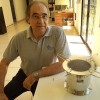
CLIMATE CHANGE: Clean, Efficient Wood Stoves Good for People and the Planet
In his quest to make the most efficient possible use of energy generated through wood combustion, Salvadoran René Núñez developed a simple but highly efficient wood stove that produces no smoke and reduces greenhouse gas emissions by 95 percent.SOUTH AMERICA: Responsible Tourism at the “End of the World”
An innovative responsible tourism initiative in the Beagle Channel - a narrow strait linking the Atlantic and Pacific near the southernmost tip of South America - ensures the compatibility of the observation and conservation of unique bird and mammal species.KAZAKHSTAN: Riot Town Has Its Say
Kazakhstan this week canceled, then re-authorised elections in a remote oil town where recent riots stemming from an oil workers strike left at least 16 dead and more than 40 buildings burned.Brown Revolution Brings New Hope
Picking spots for cattle to graze could reverse desertification and even do its bit to retard climate change, new experiments in Zimbabwe have shown. It’s what is coming to be called the Brown Revolution.
Responsible Tourism at the “End of the World”
Tour guides were the first to notice that the birds on the Beagle Channel islands, home to many unique species, were frightened away by the arrival of noisy boats full of visitors.Ecobreves – HONDURAS: Solar Power for Coffee Drying
Small-scale coffee growers in the northern Honduran region of Subirana are promoting the use of solar power to dry coffee beans in order to mitigate the pollution caused by other processes. Similar initiatives are also underway in Costa Rica and Nicaragua.Ecobreves – VENEZUELA: First Wind Power Project to Debut in Indigenous Region
Twelve wind power turbines are really to be installed in Alta Guajira, a region in northwestern Venezuela bordering on Colombia, in what will be the first phase of a wind park that will supply electricity to some 10,000 families. Most of the project beneficiaries belong to the Wayúu indigenous ethnic group, whose members live on both sides of the border.Ecobreves – BRAZIL: Cyanobacteria Could Be Used for Biofuel Production
The use of cyanobacteria as an alternative source of biofuel production is being studied by a team of researchers at the Center for Nuclear Energy in Agriculture (CENA) at the University of São Paulo.TAIWAN: Poll Will Decide Nuclear Plant’s Fate
Voters in Taiwan’s upcoming presidential and national legislative elections will also decide the fate of a bitterly controversial 9.3 billion dollar nuclear power plant.KYRGYZSTAN: China Expanding Influence, One Student at a Time
Among its Central Asian neighbours, China these days is more often feared than loved. This attitude is perhaps most apparent in Kyrgyzstan, where despite an overwhelming dependence on Chinese imports, Chinese-owned malls and mining pits have been the subject of attacks in recent years; nationalist editorials in the local press play on fears of the Middle Kingdom.No One Wants Mexico City’s Garbage
The closure of Mexico's biggest garbage dump has highlighted the absence of a comprehensive policy for urban waste collection, disposal and processing, a failure that has serious consequences for health and the environment.CAMEROON: Stepping Naturally Away from Plastic
Maya Stella, a restaurant manager in the capital of Cameroon, no longer uses plastic to wrap the corn-fufu that she sells to her customers. She now uses banana or plantain leaves instead, because these are "natural and it is our African culture to use leaves in wrapping food."NIGERIA: Police Crack Down on Fuel Protests
Police fired tear gas and beat protesters to force them out of a square they had occupied in an overnight sit-in in Nigeria's northern city of Kano as part of demonstrations over soaring fuel prices, an organiser said.BOLIVIA: Artificial ‘Islands’ to Protect Cattle from Annual Floods
Small-scale dairy farmers in this remote area of Bolivia's northeastern Amazon region of Beni have a new hope for protecting their livestock from the fierce annual floods that start in December.BANGLADESH: Farmers Bet on Climate-Proof Crops
With floods, droughts and other calamities battering deltaic Bangladesh regularly, farmers need little prompting in switching to climate-resistant varieties of rice, wheat, pulses and other staples.US-IRAN: War of Words Calculated to Avoid Actual Conflict
The recent escalation in Iranian threats to blockade oil shipments and attack U.S. Navy vessels are meant to push up the price of oil and divert domestic opinion from an economic crisis but are not likely to lead to a war in the Persian Gulf, in the view of Iran experts.Shale Gas Turns the Tables on Petroleum Powers
Countries that have always depended on imported oil and gas, like Chile, Paraguay, Poland or Ukraine, and especially heavy consumers such as the United States and China, could become self-sufficient in natural gas in the near future and even start exporting it.SUDAN: No Clear Studies on Impacts of Merowe Dam
The multi-billion dollar Merowe Dam on the Nile River more than doubled Sudan's electricity supply, but its environmental impacts are still unknown to the public, and communities whose villages were flooded have not yet received compensation.« Previous Page — Next Page »


Through our global network of local writers, we are continuing our award-winning coverage of global and local environmental challenges, with a focus on the people for whom the ecosphere matters in a direct way: rural dwellers who have little means to protect themselves against adverse conditions; communities that need to switch to sustainable development in order to survive; poor women and children, who are the most vulnerable in natural disasters. Sponsored by the United Nations Environment Program (UNEP), the United Nations Development Program (UNDP) and The World Bank (WB), IPS also maintains the award-winning Tierramérica, a specialised information service on environment and development.

The Week with IPS

Tracking global progress towards a sustainable world


