Languages
Tuesday, November 17, 2026



News and Views from the Global South
Featured

Poverty Eradication Greatest Global Challenge, Say G77 Ministers
The 133-member Group of 77 (G77), joined by China, unanimously endorsed a Ministerial Declaration strongly reiterating its support to the UN’s post-2015 development agenda, including the 17 Sustainable Development Goals and the Climate Change agreement.
South Sudan and Uganda’s Intertwined History of Violence
Uganda has and continues to play a major role in fueling the conflict in South Sudan. The recent events in South Sudan have brought that moral challenge into a very sharp focus.A Historic Day in Colombia
Betsaida and her family abandoned their home and a small business in the port of Tumaco, in the Pacific of Colombia, and were forced to follow the road that more than 7 million displaced Colombians have as a result of the armed conflict. Their story, and that of millions of victims of the war, is at the heart of what the United Nations Organization is and does. Seventy-one years after its creation, the universal aspiration to end war, reaffirm the fundamental human rights and promote social progress is latent and more crucial than ever.
What Does Leaving No One Behind Really Mean?
One year after UN member states adopted the ambitious 2030 Sustainable Development Agenda their repeated vow to “leave no one behind” seems almost as idealistic and impractical as ever.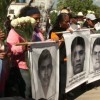
Two years on, Peña Nieto cannot brush off Ayotzinapa stain
There are certain events that mark a turning point in a country. The way a government decides to handle them defines the way they will go down in the history books.
Global South Address Sustainable Development Challenges
On Friday, a group of 134 developing nations, known as the Group of 77 (G77), came together for a meeting to address challenges and solutions in achieving sustainable development. In attendance were G-77 Foreign Ministers, the President of the General Assembly, the UN Secretary-General and other UN senior officials.
Governments Band Together to Address Antibiotic Resistance
The looming threat of a world where even minor infections are deadly has led governments to commit to collective action against antibiotic resistance at the UN General Assembly earlier this week.The Right to Development at 30 Years
It’s had a very useful if sometimes controversial past and it will have great relevance for many more years ahead. That’s the sense one has about the Declaration on the Right to Development as it is commemorated 30 years after its adoption by the United Nations General Assembly in 1986.
Mexico City’s Expansion Creates Tension between Residents and Authorities
People living in neighborhoods affected by the expansion of urban construction suffer a “double displacement”, with changes in their habitat and the driving up of prices in the area, in a process in which “we are not taken into account,” said Natalia Lara, a member of an assembly of local residents in the south of Mexico City.
The Lost Kids at Rome’s Termini Station: Child Migrants Exploited
Rome ..... Termini station, 2:00 pm on a Tuesday afternoon. Five young boys are standing next to the escalators, constantly shifting, dispersing, meeting up again. They are laughing, typing on their phones, chatting, smoking. They seem like average teenagers with fancy hairstyles and smart clothes. But every once in a while, they nervously glance over to the security personnel circling Termini station. Or carefully examine older men walking by.
Population Growth Extremes: Doublers and Decliners
While the world’s population of 7.4 billion is growing at 1.1 percent per year – about half the peak level of the late 1960s – enormous differences in demographic growth among countries are increasingly evident and of mounting concern to countries and the international community.
Starting Line Draws Nearer for Global Climate Agreement
The Paris Climate Agreement is on the verge of coming into force after 31 nations officially deposited their instruments of ratification here Wednesday, more than doubling the number of countries which have joined so far to reach 60.
UN Refugee Summits Fall Short for Children
As Olympic swimmer Yusra Mardini opened the floor for US President Barack Obama’s leaders’ summit on refugees, she embodied a hope unavailable to most child refugees.
Jobs Are Crucial for Peace, Stem Radicalization and Violent Extremism in Kenya
Today 21 September 2016 is the International Day of Peace. Kenya has the largest number of jobless youth in East Africa, putting a strain on the economy’s growth and also threatening peace and security when hopeless youth gravitate towards violent extremist groups.
Argentina at Risk of an Educational System Serving the Market
In Argentina, teachers, students and trade unionists are protesting against mass redundancies in education, which they say are part of a process of undermining public education and a move towards a new model based on market needs.
Towards Safe Migration and Decent Work for Women in Nepal
In August it’s blazing hot in Kathmandu. Dawa Dolma Tamang, 32, sits on a chair at Pourakhi’s office—an organization that works with migrant women workers—staring out of the window. “I want to send my children to a better school and support my husband to make a decent living. I want to make my family whole again," she says.
UN Refugee Summit: “No Cause for Comfort”
With record numbers of forcibly displaced persons around the world, many were left disappointed by the outcome of a high level UN summit designed to address the issue by bringing together world leaders on the sidelines of the UN's annual General Assembly.
No One Is Indispensable in a Democracy
I have put a great deal of thought into whether or not to return to politics. Groups from different political parties, and without party affiliation, have expressed their concern over the current situation in the country and have offered me their support. And the opinion polls indicate that I would have a chance at a third presidential term.
Muslims in Europe: Can There Be Social Harmony ?
Although 20 million Muslims reside in Western Europe, establishing social harmony between the Muslim community and their European counterparts has proved exceedingly challenging.Much to the dismay of international humanitarian agencies and anti-racism activists,the language of exclusion and prejudice persists.
Microsensor-Fitted Locust Swarms? Sci-fi Meets Conservation
Every November, India’s Gahirmatha beach in the Indian Ocean region develops a brownish-grey rash for 60 to 80 days. Half-a-million female Olive Ridley turtles emerge out of the waves to lay their eggs, over a hundred each. For the sheer numbers, this arrival is hard to miss.
From Where I Stand: Nahimana Fainesi
“This is my second time living in communal camps, second time running away from civil war to protect myself. What made me leave [Burundi] was the problem of random people invading others’ homes, attacking those without husbands. They would enter with knives. Before they kill you, they would first rape you. When I saw those attacks, and people dying, I left with my one-year-old son. I didn’t have the chance to get all my children because it was a case of everyone for themselves, running for their lives.« Previous Page — Next Page »


The Week with IPS

NEXT STOP - SDGs
Tracking global progress towards a sustainable world
Tracking global progress towards a sustainable world
