Languages
Sunday, November 22, 2026



News and Views from the Global South
Featured

Uganda’s First Female Funeral Director – From Taboo to Mainstream
Uganda may have the third-highest fertility rate in the world but where there is life, death is inevitable. And it is a certainty that Regina Mukiibi Mugongo made the most of when she became this East African nation’s first ever funeral director almost two decades ago.
Femicides in Brazil Hit Civil War Proportions
The number of femicides – gender-related murders – in Brazil has reached civil war-like proportions. In just 10 years 40,000 women were killed in this country merely for being women.
The Very Future of Third World Agriculture Is at Stake
The battle lines are clearly drawn. At a time when food security in the developing countries is snowballing into a major trade conflict between the developed and developing countries, what in reality is at stake is the livelihood security of an estimated 1.5 billion small farmers in the majority world.
Green-Friendly Enterprise Helps Save Biggest Caribbean Wetlands
The 18 communities in Cuba’s Ciénaga de Zapata, the largest wetlands in the Caribbean, have long survived on the abundant local hunting and fishing and by producing charcoal. But that is no longer possible, due to climate change.
GM Crop Could Migrate Dangerously
Food security activists who secured a moratorium on introducing genetically modified brinjal (aubergine) into India fear that their efforts are being undermined by the release of GM brinjal in neighbouring Bangladesh.
U.S. Seeks to Stem Flood of Political “Dark Money”
The U.S. government has proposed strengthening an obscure tax-status designation that supporters say could significantly impact upon the massive amounts of anonymous money that have come to define U.S. politics over the past two campaign cycles.
LGBT Immigrants Face Rampant Assault in U.S. Jails
Gay and transsexual immigrants who enter the U.S. detention system face high levels of sexual abuse, new research warns, at times leading them to decide to return to their home countries rather than stay to fight a legal battle.
An Embittered Riyadh May Weigh Nuclear Option
Saudi Arabia's unyielding opposition to last week's interim nuclear agreement with Iran has triggered speculation about its own projection of military power in the Middle East.
Pros and Cons of Uganda’s New ARV Therapy for Pregnant Women
Uganda has gotten plenty of kudos and some criticism over its roll out of the new antiretroviral therapy for pregnant women and their babies, known as Option B +.
Peru’s New Cybercrime Law Undermines Transparency Legislation
A new law against cybercrime that restricts the use of data and freedom of information in Peru clashes with earlier legislation, on transparency, which represented a major stride forward in citizen rights.
‘Business Is Business, Moses Is Moses’
As civil war paralyses Syria’s transit routes and political flux in Egypt may affect security at the Suez Canal, Israel is busy repositioning itself as a transhipment hub and trade gateway to the Middle East.
Mental Illness Plus Police Often Equals Tragedy
Just before midnight on Feb. 12, Kayla Xavier Moore’s roommate dialed 911. Moore, 41, a paranoid schizophrenic, was off her prescription meds and highly agitated. The roommate thought he knew the drill – Moore would be taken to a psychiatric hospital, stabilised with medication and allowed to go home in 72 hours.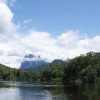
The Other Rearguard of Colombia’s FARC Rebels
The presence of the Revolutionary Armed Forces of Colombia (FARC) is evident in Venezuela’s Amazon region, where the guerrillas can be seen on speed boats, in camps, or interacting with local indigenous communities.
Spring Bursts Among the Toubou in Libya’s Desert
"Can there possibly be anything more satisfying than teaching your own language to your own people?" Abdel Salam Wahali remarked to IPS. He is a teacher of Tebu, an ancient language which is experiencing a boom in post-Gaddafi Libya.
Almost 20 Years On – International Justice Still Fails Rwandans
"There is a saying that all Rwandans believe in. You can't forgive if you forget, but when you remember, you know what harmed you and you can forgive and move forward," Honore Gatera tells IPS as he walks through the grounds of the Kigali Memorial Centre in Rwanda’s capital.
Today’s Forecast Is for Climate-Proof Farming
Even as weather extremes bedevil Caribbean farmers, Ramgopaul Roop has turned his three-acre fruit farm into a showcase for how to beat climate change.
Jobless Growth, the 21st Century Condition
The world’s poorest countries are rethinking economic policies that - even during periods of breakneck growth - have failed to provide quality employment capable of matching a demographic boom.
Taking Efforts to Fight Prejudice in Cuba to the Barrios
From a very young age, Irma Castañeda has braided her curly hair and cared for it with natural recipes inherited from her mother, ignoring the widespread conception that black women’s hair is “ugly” or “bad”.Philippines Warms Up to China
After months of rising tensions over disputed territories in the South China Sea, there are growing signs that the Philippine government is seeking to revive strained relations with Beijing. And no less than the Philippine President Benigno Aquino is spearheading the ongoing efforts to diplomatically resolve territorial disputes and prevent a disastrous conflict in the region.
For Better or For Worse – Fracking in the Rustic Karoo
To the casual passer-by, Petrus Kabaliso and his wife Cynthia present a disarmingly rustic sight, seated as they are under the shade of a date palm at a truck stop in the scorching Karoo desert, in South Africa's Northern Cape province, a battered umbrella held jauntily over their heads.Creating a New Norm in Non-Circumcising Ethiopian Province
Chiang Both from Gambella, a remote and a traditionally non-circumcising province in Ethiopia that borders Sudan, volunteered to undergo the procedure despite his community’s initial mistrust.« Previous Page — Next Page »


The Week with IPS

NEXT STOP - SDGs
Tracking global progress towards a sustainable world
Tracking global progress towards a sustainable world
