Languages
Monday, November 23, 2026



News and Views from the Global South
Featured

Q&A: “Neoliberalism Negates Human Rights”
Thousands of people marched through the streets of cities across Portugal "against exploitation and impoverishment" caused by the government's austerity cuts, in a protest organised by the General Confederation of Portuguese Workers (CGTP), the country's largest trade union.
The Struggle to Keep Swaziland’s Primary Schools Free
As the Swazi government struggles to guarantee a no-cost nationwide primary school system, it finds itself sparring against school principals over the question if it is a lack of funds or an abundance of corruption that is standing in the way of its success.India Tightening Child Labour Laws
After one of the six males under trial for the rape and subsequent death of a 23-year-old woman was deemed an adolescent and therefore entitled to leniency, juvenile rights activists have found themselves pitted against irate members of the public demanding death sentences for all the perpetrators.
Switzerland Checks Mercenaries, Partially
The Swiss government has presented a draft law regulating the private military industry but critics argue the law is toothless.
Gangnam Style Finds a Tragic Touch in Gaza
“We wanted to do something to bring focus to the plight of Palestinian political prisoners, of which there are around 5,000 in Israeli jails, including hunger strikers, children, women,” says Mohannad Barakat, 30, one of seven Palestinians who have made a Palestinian version of the Gangnam style.
Political Violence Grips Egypt From All Sides
Since the second anniversary of the uprising that ended the Mubarak regime, Egypt has witnessed a spate of political violence. Egypt's opposition led by the high-profile National Salvation Front (NSF) blames President Mohamed Morsi for the bloodshed, but many blame the NSF and its leaders.
Climate Rally Draws “Line in the Sand” on Canadian Pipeline
The largest climate rally in U.S. history is expected Sunday in Washington DC with the aim of pressuring President Barack Obama to reject the Keystone XL tar sands pipeline.
Yemen’s Youth Denied the Revolutionary Change
This week in Sana’a thousands of Yemenis – mostly youth - crowded the highway near the landmark ‘Change Square’ to celebrate the second anniversary of the revolution. Adjacent to the university, this was the site of a tented encampment that drew tens of thousands of demonstrators throughout 2011.
Climate Change Added to U.S. Government “High Risk” List
For the first time, a U.S. government auditor has added climate change to a list of issues that pose the greatest financial risk to the government and country. It is also warning that Washington is markedly unprepared to deal with the scope of the problem.
Brazilian Ethanol in the Slow Lane to Global Market
Following a promising start, Brazil's dream of positioning ethanol in the global market on an equal standing with petroleum-based fuels is hindered by new and old challenges.
Virtually At Sea in the Pacific
The Pacific Islands have some of the lowest rates of Internet penetration in the world, yet tech-savvy urbanites are behind the emergence of a number of social media sites dedicated to generating public debate and demanding government accountability. However, without real action, online forums speaking truth to power are constrained in impacting political and social reforms in the region.
BRICS Summit Means Business
African nations and other emerging countries are expected to soon outperform the developed world, and South Africa wants to take advantage.
Obama Pushes Universal Preschool Coverage for U.S.
Following on a surprise announcement supporting a universal preschool guarantee during his annual State of the Union address earlier this week, President Barack Obama spent much of Thursday pushing a suite of new policy initiatives aimed at vastly increasing access to high-quality education and development programmes for a child’s first few years of life.Water, Water Everywhere – and No Early Warning in Sight
Muzeka Muyeyekwa from Mapfekera Village in Zimbabwe’s Manicaland Province wonders what he will feed his three children for lunch.
Female Journalists Walk on Eggshells in Sri Lanka
The year was 1998 and porters at the wholesale vegetable market in the Sri Lankan capital Colombo had gone on strike, virtually suspending vegetable distribution in the city and its suburbs.
Land Is Life, and It’s Slipping Away
Nean Narin, a humble man and father of three children, says his family is going hungry. Narin lives in the village of Boeung Kak, situated on the edge of Cambodia’s capital, Phnom Penh. For years, he and other villagers relied on the Boeung Kak Lake for fish and plants, which they would eat and sell.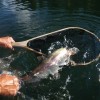
Trout Trump the Taliban
The rivers in northern Pakistan’s Khyber Pakhtunkhwa (KP) province were once thick with trout. Spanning hundreds of kilometres, these water bodies played host to the exotic fish, first introduced by the British in the early 1900s, which eventually became a staple in the diets and livelihoods of the province’s 20 million residents.
‘No Blue Skies Opportunities’ in South African Mining
A calamitous year in mining has left many wondering whether it should still have a part in South Africa’s future. Illegal strikes, including one that left 47 people dead near Marikana in the northwest of the country, soaring costs and depressed world commodity markets have left the industry in its worst crisis in years.
Spain’s Crisis Pits Fair Trade Against Empty Wallets
The Spanish public is well aware of the widespread exploitation of workers in the globalised garment industry. But low prices, shrinking buying power and the lure of brand names act as strong disincentives to responsible clothes shopping.
Energy, Economy Key in Major Obama Address
In a major annual address Tuesday night, President Barack Obama offered further details on a broad and ambitious range of policy priorities, taking advantage of perhaps his single most significant opportunity to guide the public conversation on his second-term agenda.
Brazilian President Stumbles on Energy
Brazilian President Dilma Rousseff, whose political career was fuelled by her stellar performance in the energy sector, is now faced with an ironic challenge: how to bring down the unusually high price of electricity predominantly generated by hydropower – the cheapest source – in this South American country of 196.6 million people.« Previous Page — Next Page »


The Week with IPS

NEXT STOP - SDGs
Tracking global progress towards a sustainable world
