
Monday, October 26, 2026



News and Views from the Global South
Women & Economy

For Development, Jobs May Outweigh Growth, World Bank Says
The World Bank warned Monday that over the next decade and a half, the world will need to create 600 million new jobs, particularly in Asia and Sub-Saharan Africa, just to maintain current employment rates.
U.N. Chief Fires Up Private Investment for Global Energy Solutions
Following a lukewarm outcome of the Rio+20 sustainable development negotiations in June, U.N. Secretary-General Ban Ki-moon is moving full-steam ahead on a new initiative aimed at leveraging public-private partnerships to bring modern energy to over one billion people by 2030.
Giving Women Farmers the Tools to Prevent Food Insecurity
If women had equal access to productive farming resources, they could increase their yields by 20 to 30 percent and potentially raise total agricultural output in developing countries by 2.5 to four percent.
Côte d’Ivoire – New Cassava Varieties Bring Women Autonomy
Women farmers in Côte d'Ivoire are achieving greater autonomy and economic independence thanks to new varieties of cassava.Women Redefine Japan’s Work Culture
Unhappy with her employer of five years, Chikako Harada, 34, quit three months ago and has just started on a new job with a large Internet sales company.
OP-ED: Women and Girls at Heart of the Blue Revolution
World Water Week recently concluded in Stockholm with a special emphasis on the linkages between water and food security.
How to Get People to Make More Babies in Singapore
How to get Singaporeans to have more babies has become a major part of the debate about this country’s future, and the government is encouraging people to speak out on the issue.
Cuban Women Face Challenges of Self-Employment
Beatriz Lemes took her time deciding, and finally agreed “apprehensively” to take the job of heading a state-run company that is making the transition to financial autonomy, a system that is spreading throughout Cuba and is testing women’s capacities, among other things.Pacific Nations Women Promised a Better Deal
Leaders of 15 Pacific Island nations have pledged to remove barriers to women’s economic empowerment, end violence against women and pave the way for their increased political representation, at the conclusion of the 43rd Pacific Islands Forum in Rarotonga in the Cook Islands, last week. The meeting was also attended by the Executive Director of UN Women, Michelle Bachelet.
Women Take up Care of Tohoku Elders
Yumiko Yonekura, who survived last year’s massive earthquake and tsunami that devastated Tohoku in northeast Japan, has just launched ‘Hot Care Kesenuma’, a welfare company that provides special care for feeble elders in the affected region.
Women Spend 40 Billion Hours Collecting Water
As the weeklong international conference on water concluded Friday, it was left to one of the keynote speakers from the United Nations to focus on a much neglected perspective on water and food security: the role of women.
Bangladesh ‘Fixes’ Grameen Microcredit
Laboni Vhoumik’s lingerie manufacturing unit in the Gopai village of Noakhali district, about 180 km outside the capital, is a forceful argument in favour of the Grameen Bank microcredit model that fosters female entrepreneurship and also relies on it.
Q&A: Microcredit Bank “Incorporates Women in the Benefits of Development”
“Our raison d’etre is incorporating women in development, and especially in the benefits of development,” says Nora Castañeda, an economist who has headed the Banmujer bank in Venezuela since it was founded in 2001.
Rescuing an Art to Save a People
Sitting on the floor, deep in concentration, Marta Llampa interlaces red and black threads that converge in sinuous shapes, gradually forming khurus or mythical creatures through a unique, age-old technique rescued from extinction by the Jalq'a people.Many Chilean Women Keep Mum About Unequal Wages
"I know that my male colleagues earn more than I do and work the same amount or even less. And my employers keep me in a non-managerial post, even though I do tasks at that level,” said Pamela, a Chilean professional who holds a doctorate in economics.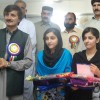
Schoolgirls Beat Taliban
Far from fears that female education is on the decline after the Taliban campaign against girls’ schools, female students outclassed their male counterparts in the secondary school examination for 2012.
Deck Stacked Against Women’s Land Rights in Asia
Women across Asia are being shut out from prosperous forestland because of a paradigm geared towards male ownership, according to a new report by the Rights and Resources Initiative (RRI), an environmental non-governmental organisation.
Officials Decry “Appalling Gaps” in Global Data on Women
The World Bank and U.S. government on Thursday each announced major new initiatives aimed at expanding knowledge on the experience of women around the world, while acknowledging that much remains to be done on filling the global “data gap” on women.
Family Planning Essential for Development
Improving family planning to avoid unwanted pregnancies in developing countries, as well as assuring girls’ access to education, and women’s participation in the economy, are essential components of a sound development policy, according to Western experts and African activists.
Vietnamese Girls Grapple With Changing Sexual Climate
Conservative attitudes toward women die hard in Vietnam, as seen in the country’s worsening sex ratio at birth (SRB). Yet, social mores have relaxed sufficiently for women to tune in to late night TV talk shows to learn about the acceptability of one-night stands.
Green Bricks Pave Future for Female Workers
At first glance the smart young women in white overcoats, black rubber boots and protective face masks seem out of place in impoverished Bangladesh’s dirtiest industry – brick making.« Previous Page — Next Page »





Around the world, women make great contributions to different economies. From the field of business, to carrying the bulk of unpaid care, women are essential to economic growth. However, due to gender inequality, women face economic discrimination. Taking many forms, including disproportionate wages, greater exposure to vulnerable employment, and reduced economic opportunity, this inequality continues to curtail economic development. Yet women continue to work past these obstacles and reduce this disparity, furthering economic empowerment. These stories help to identify women’s economic struggles, and those that are working towards empowerment.

The Week with IPS

Tracking global progress towards a sustainable world
