Languages
Friday, August 14, 2026



News and Views from the Global South
Peace
Asia: The Ghosts of 1914
On the 100th anniversary of the outbreak of World War I, Europe is at peace. There are no major border disputes. The countries form a unified economic bloc instead of a patchwork of jostling alliances.
Rouhani Reaches Out at Davos
Last week at the World Economic Forum in Davos, Switzerland, President Hassan Rouhani tried to persuade world business leaders to invest in Iran, especially in its hydrocarbon and automobile sectors.
CELAC Summit Targets Inequality
Heads of state and government at the Second Summit of the Community of Latin American and Caribbean States (CELAC) made a joint commitment to reduce poverty, hunger and inequality, and declared their region a “zone of peace”.
Nowhere to Come In From the Cold
As the temperature dips to zero degrees Celsius, a chill has set into the lives of people like 44-year-old Rasool Khan at the Jalozai camp for internally displaced persons (IDPs) in Pakistan. Huddled in tiny tents, with just a plastic sheet over their heads and no heat, they pass sleepless nights in the bitter cold.
New Writing on a School Wall
Welcome to Bridge Over the Wadi primary school, one of five bi-national schools under the "Hand-in-Hand" initiative of the Centre of Jewish-Arab Education in Israel. The centre strives to bring children from both communities to learn together in Hebrew and Arabic in the hope that they’ll bridge the divide between the two peoples.
South Sudan’s Ceasefire Far from Conclusive
When representatives of the warring factions of South Sudan signed an agreement to end hostilities at a luxury hotel in Addis Ababa, Ethiopia on Thursday, Jan, 23, fervent applause and some high-pitched ululations erupted from the audience.
When the Suicide Pilots Said Goodbye
They were known as the Kamikaze who swooped down on enemy ships with their bomb-laden planes – with the pilots inside. A museum here is now planning to register the last letters of Japan’s famed World War II suicide bombers as a Unesco Memory of the World document. The museum is calling these records “symbolic” of the country’s commitment to peace.
Swiss Spring for Syrian Refugees Passes
Switzerland facilitated family reunification for Syrians in September. So far, more than 1,100 Syrian refugees have benefited from the programme, while thousands are waiting at Swiss embassies in the region, hoping for a similar chance. Surprised by these numbers, Switzerland put an end to the programme.
OP-ED: The Arab World Has Changed, So Should Washington
As the Egyptian revolution against Hosni Mubarak celebrates its third anniversary, the military junta under General Abdel Fattah al-Sisi is resurrecting dictatorship under the veneer of “constitutional” legitimacy and on the pretense of fighting “terrorism.”
South Sudan’s Ceasefire Brings Hope For Half a Million Displaced
The overwhelming job of providing relief to the more than half a million displaced and wounded in South Sudan may have gotten a little easier with the signing of a ceasefire agreement last night in Addis Ababa, which is set to go into effect today.
Digital Age Demands Educational Transformation, World Forum Says
The challenges of the digital age call for schools to develop an alternative model of education, with teachers who incorporate new technology and employ a more critical pedagogy, participants said at the Fórum Mundial de Educaçao (World Education Forum) in this southern Brazilian city.
New Leader in CAR, Same Human Rights Crisis?
The appointment of a new transitional president, Catherine Samba-Panza, in the Central African Republic (CAR) is generating optimism in some quarters that the country’s first female leader will manage to quell mounting ethnic strife.
Syrian Spillover Deepens Lebanese Divide
In northern Lebanon’s largest city, Tripoli, Syria Street cuts through neighbourhoods that back opposite sides of the war raging in Syria, 30 km away. Clashes between them resumed this weekend after a cross-border rocket attack.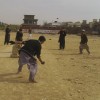
Playing Cricket, Praying for Peace
Afghanistan is rediscovering the joy of cricket. It is seen as a tool of progress, a means of entertainment, and a way to wean youth away from violence in a country that has been ravaged by conflict for more than 30 years.Japan Cuts Some Distance From Its Military Days
In a move that promises to further raise geopolitical tensions in the region, Japanese Prime Minister Shinzo Abe made a high-profile visit to the Yasukuni Shrine associated with 14 Class-A war criminals and dedicated to 2.5 million soldiers from the Japanese Imperial era.
Thorny Path Toward Syrian Peace Process
The future of the complex armed conflict in Syria, which involves religious and ethnic factors as well as pressures from neighbouring countries and the strategic interests of global powers, will begin to take shape next week at a conference known as “Geneva 2.”
Syrian Crisis Threatens Development in Arab World
The widespread sectarian violence and ongoing military conflicts in several political hotspots, including Syria, Iraq and Lebanon, have not only claimed thousands of human lives and devastated fragile economies but also undermined the U.N.’s longstanding plans to eradicate hunger and extreme poverty worldwide.Israel Lobby Thwarted in Iran Sanctions Bid For Now
In what looks to be a clear victory - at least for now - for President Barack Obama, a major effort by the Israel lobby and its most powerful constituent, the American Israel Public Affairs Committee (AIPAC), to pass a new sanctions bill against Iran has stalled in the U.S. Senate.
Kuwait Tops Humanitarian Aid to Syria at Pledging Conference
As Secretary-General Ban Ki-moon grimly predicted a worsening of the monumental humanitarian disaster in war-torn Syria, the international community Wednesday pledged over 2.4 billion dollars in new funds to help the displaced and devastated in the politically-troubled Arab nation.
2014: Solutions to Ten Conflicts
There are conflicts old and new crying for solution and reconciliation, not violence, with reasonable, realistic ways out.
Peacekeeping 20 Years after Rwanda
On Jan. 11, 1994, Romeo Dallaire, force commander of the United Nations Mission in Rwanda, sent a fax to U.N. Headquarters in New York, telling officials there a source close to the government had confided to him that Tutsis were being forced to register themselves in Kigali.« Previous Page — Next Page »


The Week with IPS

NEXT STOP - SDGs
Tracking global progress towards a sustainable world
Tracking global progress towards a sustainable world
