Languages
Saturday, November 14, 2026



News and Views from the Global South
Headlines

Is High Tech a Danger to Humanity?
My friends all drive Porsches, I must make amends.
Worked hard all my lifetime, no help from my friends.
So, oh Lord, won't you buy me a Mercedes Benz.
Janis Joplin, 1970
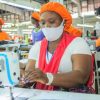
Making African Continental Free Trade Area Work for Women in a Post-COVID-19 World
On 1st January 2021, trading under the African Continental Free Trade Area (AfCFTA) Agreement commenced after months of delays caused by the COVID-19 pandemic.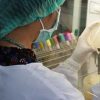
ANTICOV Treatment Clinical Trial Crucial for Africa
The ANTICOV COVID-19 clinical trial, aimed at identifying treatments that prevent mild cases from progressing to severe forms of the disease, is crucial to Africa, researchers say. The trial will investigate home-based treatments to help prevent local health systems from being overwhelmed.
Stand Tall, UN Humanitarians
Most people around the world were glad to see the back of 2020: From the devastating bushfires in Australia to the plagues of locusts through East Africa stretching across Arabia to Pakistan, extreme weather, melting ice sheets at the poles, and Covid-19 that still engulfs the globe.
Sir Brian Urquhart: Embodiment of the UN
Sir Brian Urquhart, who died on January 2 at the age of 101, served the United Nations in high posts for four decades, beginning in the organization’s earliest days.
2021: Year of Living Dangerously?
Goodbye 2020, but unfortunately, not good riddance, as we all have to live with its legacy. It has been a disastrous year for much of the world for various reasons, Elizabeth II’s annus horribilis. The crisis has exposed previously unacknowledged realities, including frailties and vulnerabilities.
This Is Not a Goodbye, Kenya – Asante na Kwaheri ya Kuonana
Happy New Year, Kenya. Several milestones in my personal and professional life have made Kenya a cherished place for me. I started my UNICEF career in Rumbek, South Sudan in June 2000, and my rest and recuperation breaks were in Nairobi. In fact Kenya was the first African country I had ever visited and, frankly, it was love at first sight.

How Women-centred Digital Platforms can Enhance Empowerment
A cherished snapshot of a happy mother and a smiling grandmother is universally associated with a good childhood. In the movies, TV, or media, a broken or depressed mother’s face is hardly seen. But the reality is somewhat different. The measures communities and society take to ensure that women and girls are protected and supported are often questioned.
Mining giant Rio Tinto Face Environmental, Human Rights Complaint in Papua New Guinea
Local communities in the vicinity of the abandoned Panguna copper mine, have taken decisive action to hold the global mining multinational, Rio Tinto, accountable for alleged environmental and human rights violations during the mine’s operations between 1972 and 1989.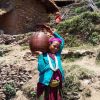
Wanted: Affirmative Legislation in the Job Market in Nepal
In Nepal, a dominating culture traditionally representing the elites, the so-called higher castes of the society according to the Hindu culture, still endures and prevails.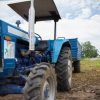
Tractors Can Change Farming in Good Ways and Bad: Lessons from Four African Countries
Agricultural mechanisation is on the rise in Africa, replacing hand hoes and animal traction across the continent. While around 80-90% of all farmers still rely on manual labour or draught animals, this is changing, driven by falling machinery prices and rising rural wages. During the last couple of years, tractor sales grew by around 10% annually.
Women Need Support and Understanding after Miscarriage
Recently, Meghan Markle, the Duchess of Sussex, wrote a piece sharing about her miscarriage. I knew, as I clutched my firstborn child, that I was losing my second, she wrote. She is part of a growing list of celebrities who have publicly shared their experiences with miscarriages.
Belo Monte Dam: Electricity or Life in Brazil’s Amazon Rainforest
"We are no longer familiar with the Xingú River," whose waters govern "our way of life, our income, our food and our navigation," lamented Bel Juruna, a young indigenous leader from Brazil´s Amazon rainforest.
Reflecting Back and Imagining Forward
What a challenging year 2020 has been! A year of living dangerously – “Tahun vivere pericoloso”- perhaps these words of late President Soekarno of Indonesia are the best description. Fortunately, I managed to remain sane, reading and writing op-eds (mostly about the pandemic, here, here).
Ten Defining Moments for Women in 2020
While 2020 will be remembered most for the way COVID-19 changed our lives in nearly every way and in every part of the world, we made some strides for women’s rights and gender equality.
Food Culture in Spotlight on UNESCO Heritage List
Cuisine formed a notable portion of the latest inscriptions on UNESCO’s Representative List of the Intangible Cultural Heritage of Humanity, with hawker food in Singapore and couscous traditions in North Africa being celebrated.
2020: A Yet More Devastating Year Closes With At Least Some Signs Of Hope
Despite its grim record of multiple natural disasters and a deepening climate crisis, one could be forgiven for looking back on 2019 with a degree of nostalgia. There is no disguising the extent of the calamity wrought this year by COVID-19, yet as we approach the end of 2020 we may also draw strength from positive developments emerging.
‘We Might Have a Covid-21 or Covid-22 Coming Our Way’
Cristián Samper is working for the Wildlife Conservation Society, an organization that concerns itself with the health of wildlife all over the globe. And he warned --even before the Covid-19 pandemic – about the dangers of a viral pandemic.
Indigenous Leaders want Traditional Knowledge to be Centrepiece of New Global Biodiversity Framework
The picturesque Mahuat River in Dominica is one of 8 communities that make up the Kalinago Territory – a 3,700-acre area on the Caribbean island’s east coast that is home to the Kalinago people, the largest indigenous group in the Eastern Caribbean. It is where 19-year-old Whitney Melinard calls home. Melinard is among a rising group of Dominica’s Kalinago youth, using their voices and platforms to speak out on issues affecting their people.
The World in 2021
The year 2020 is ending with the world caught up in an unprecedented human and economic crisis. The pandemic has contaminated 75 million people and killed 1.7 million. With the lockdowns, the global economy has suffered the worst recession in 75 years, causing the loss of income for millions of people. In such a bleak environment, what will the new year bring? Whilst uncertainty is the only certainty, eight points are likely to be key in the year ahead:
Why Transforming Our Food Systems Is a Feminist Issue
In countries where women are most marginalized, discriminated under the law and where gendered norms prevent women from owning property and resources, people are also the hungriest. This is because gender equality and food systems are intertwined.« Previous Page — Next Page »


