Languages
Sunday, November 22, 2026



News and Views from the Global South
Headlines
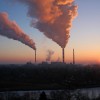
World to Cut Gas Emissions by 25 Percent More Than Paris Agreement
On the eve of the entry into force of the Paris Agreement today Nov. 4, the United Nations sounded new climate alarm, urging the world to ‘dramatically’ step up its efforts to cut greenhouse gas emissions by some 25 per cent more.
Hungarian Revolts
Early last month, there was a glimmer of hope in Hungary. Implored to vote in a referendum intended to effectively sanctify the nation’s brutal hostility to refugees from the Middle East, a majority of the eligible electorate opted to disengage from the process, rendering it invalid.
Nicaragua’s Elections Marked by Apathy and Mistrust
In the midst of unusual political tension and apathy, Nicaraguans will go to the polls on Sunday Nov. 6 to vote in elections marked by the absence of the main opposition force and international election observers.
Data Innovation Powering Sustainable Development Goals
The world is awash with data. Today, more data than ever in human history is produced on a daily basis. Every time a person carries a cell phone from one place to another, tops up her mobile airtime or posts on social media, new data is created.
Privatization Cure Often Worse Than Malady
Privatization of SOEs has been a cornerstone of the neo-liberal counterrevolution that swept the world from the 1980s following the economic crisis brought about by US Fed’s sharp hike in interest rates. Developing countries, seeking aid from the International Monetary Fund (IMF) and the World Bank, often had to commit to privatization as a condition for credit support.UAE Has Enabled Religious Minorities to Meet, Teach, Worship and Express Themselves: Archbishop of Canterbury
The UAE has taken practical steps to enable religious minorities to meet, teach, worship and express themselves, the Archbishop of Canterbury said in his opening keynote address on Wednesday at a dialogue on integration, religious freedom and flourishing societies organised by the Muslim Council of Elders and with Christian leaders from the Anglican Communion.
Wonder Woman: Not the Hero the UN Needs
For those of us who ever feel conflicted about the United Nations, the past month has been an exercise in managing absurd cognitive dissonance. First, on October 21 2016, the United Nations announced that the 1940s comic book heroine, Wonder Woman would be its new mascot for promoting the empowerment of women and girls.
Festival Spotlights African Women Filmmakers
At the Bioscope Independent Cinema in Johannesburg’s trendy, gentrifying Maboneng neighbourhood last week, the two-day HER Africa Film Festival showcased films and web series from across the globe, including Mali, the U.S., Burkina Faso and elsewhere.
Journalist Murders: The Ultimate Form of Censorship
The UN Educational, Scientific and Cultural Organization (UNESCO) has condemned the killing of more than 800 journalists globally since 2006. A measly seven percent of these murders have been solved.
The Key Role Women Played in Culture of Peace
In the fifteen years since the adoption of UN Security Council Resolution 1325, we have seen a tremendous enthusiasm among civil society at all levels in raising awareness, engaging in advocacy and building capacity for its meaningful implementation. It is my pleasure to write the foreword to this publication which is a meaningful endeavour to move the agenda forward on the occasion of the 15th anniversary of the adoption of this groundbreaking resolution.
President of UNGA Disillusioned by Unsustainable Development
Development should be about more than building roads or buying air conditioners, the President of the UN General Assembly, Peter Thomson told IPS in a recent interview.
International Women’s Boat to Gaza
A few weeks ago, the US government agreed to give Israel $38 billion dollars, the largest military funding package the U.S. has given any nation. This $38 billion in military and other type of Aid will be used to imprison the Palestinians of Gaza, and continue Israel’s military occupation, and imposition of an apartheid state, upon the Palestinian people.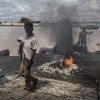
Toxic Air – The ‘Invisible Killer’ that Stifles 300 Million Children
About 300 million children in the world are living in areas with outdoor air so toxic – six or more times higher than international pollution guidelines – that it can cause serious health damage, including harming their brain development.
Rural Malawians About to Go Online
This month, many Malawians, especially those in rural areas, will be able to start accessing the internet as easily as opening a tap to get water.
Int’l Effort to Help Ethiopia Shoulder Its Refugee Burden
A concerned-looking group of refugees gather around a young woman grimacing and holding her stomach, squatting with her back against a tree. But this is no refugee camp, rather the Jesuit Refugee Service (JRS) compound just off a busy main road leading to Sidist Kilo roundabout in the Ethiopian capital.
Acknowledging the Ugly Truth
This happens every month, every week, everyday. Again and again and again. Brutality in the form of torture, sexual abuse, rape and murder has become epidemic in our society. Some cases get coverage in the media and spark reaction among citizens for a while, but most remain unreported and unknown. The ones which hit the headline in the media indicate the scale and depth of the dark side of our society.
Fiscal Reforms Imperative for Sustained Growth— Lankan Economists’ Consensus
Economists who addressed the 30th Annual Sessions of the Sri Lanka Economic Association on October 21st and 22nd on the theme “Fiscal Reforms: An Imperative for Sustained Economic Growth” agreed that the country could not go forward without fiscal reforms and fiscal consolidation. Fiscal reforms were imperative to enhance government revenue, reduce the fiscal deficit and provide the fiscal space for developmental expenditure for sustained high economic growth.
Longer, But Less Meaningful Lives?
The last one hundred years life expectancy has increased by about 25 per cent-from near 80 to near 100-in some countries. But, instead of increasing playful childhood, education, work and retirement by 25 per cent, the age of retirement has moved much less than the age at death.
Q&A: Bangladesh’s ‘Higher Trajectory of Development’ Not Easy but Achievable
Bangladesh, a country of 160 million people, has made significant progress in its efforts to accelerate economic growth, reduce poverty and promote social development, but it now faces certain challenges in consolidating these achievements and marching forward on the higher trajectory of development, says one of its leading economists.
Reparations owed for “Racial Terrorism” says UN Committee
Stressing the enduring relationship between injuries inflicted by slavery and contemporary injustices, a UN committee has recently issued a strongly-worded call for reparations for black U.S. Americans.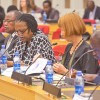
Africa and the Paris Agreement: Which Way Forward?
The Paris Agreement on climate change is set to enter into force on Nov. 4, after it passed the required threshold of at least 55 Parties, accounting for an estimated 55 per cent of the total global greenhouse gas emissions, ratifying the agreement.« Previous Page — Next Page »


