
Tuesday, November 17, 2026



News and Views from the Global South
Climate Change
Saving Beira
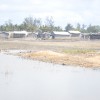
Mozambique’s second largest city, Beira, is heading for climate change-induced disaster. Cyclones, floods, storm surges and the rising sea level are threatening to annihilate this important Indian Ocean coastal city; a city which is strategic for landlocked countries like Zimbabwe and Zambia.
OPINION: Why South Africa Must Not Lose Plot on Civil Society
South Africa celebrated human rights month this March with President Zuma recalling the “heroism of our people who stood up for their rights.” However, this same month which commemorates the sacrifices of those who took part in the struggle against apartheid and those who died in the Sharpeville Massacre of 21 March 1960 was not a happy one for today’s civil society activists and organisations engaged in defending human rights. Two shocking incidents raise troubling questions for the future of civil society in the country.
Leading the Climate Change Resistance
Climate change is the harsh reality of today, and its impacts are undeniable for nations such as ours. Global warming is leading to unprecedented rise in sea level, and for a low lying nation like Bangladesh, that means widespread inundation. Changing weather patterns are also wreaking havoc on agricultural production which is dependent on regular patterns of rainfall, heat and cold. Frequency and intensity of droughts, floods and cyclones are on the rise. And millions of hapless victims are finding themselves in dire straits.
Climate Change Dries Up Nicaragua
A three-year drought, added to massive deforestation in the past few decades, has dried up most of Nicaragua’s water sources and has led to an increasingly severe water supply crisis.
Balancing Economic Potential of Marine and Social Life
When Africa’s oldest protected marine area, Tsitsikamma -- the largest in the world, incorporating 80 km of rocky coastline, bustling with marine life, much of it endangered -- was opened as a pilot for public fishing on December 15, 2015, there was a big outcry.
Papua New Guinea First to Finalize National Climate Plan Under Paris Agreement
On March 29, Papua New Guinea became the first country to formally submit the final version of its national climate action plan (called a “Nationally Determined Contribution,” or NDC) under the Paris Agreement. The small Pacific nation’s plan to transition to 100 percent renewable energy by 2030 is no longer just an “intended” nationally determined contribution (INDC) – it is now the country’s official climate plan.
Heavy Rains Once Again Scatter the Poor in Asunción
Néstor Colman, 69, remembers the river overflowing its banks nine times in Bañado Sur, the poor neighourhood in the Paraguayan capital where he was born and has lived all his life. “A record,” he jokes.
UN Begins Negotiations on Treaty to Protect Marine Resources
The United Nations has begun negotiations for a new legally binding treaty for the conservation and sustainable use of marine biological resources in the world’s oceans – nearly 64 percent of which lie beyond national jurisdiction.
Tree Regeneration Restoring Hope
Maurice Kaduka Lukaro, 54, is a farmer in Oljorai, an area with short grasses and small-scattered bushes in Nakuru county in Kenya’s Great Rift Valley. Crop production has declined tremendously in this region. Like the rest of the arid and semi-arid lands (ASAL) in the Sub Saharan region, Maurice Kaduka Lukaro, 54, is a farmer in Oljorai, an area with short grasses and small-scattered bushes in Nakuru county in Kenya’s Great Rift Valley. Crop production has declined tremendously in this region. Like like the rest of the arid and semi-arid lands (ASAL) in the Sub Saharan region, Kenya hosts a population worst hit by the reality of climate change. Kenya hosts a population worst hit by the reality of climate change.
Three International Days in a Week, But Is Anybody Listening?
For three consecutive days this week, we gave thought to our future. On International Forests Day, Monday, 21 March, we were reminded that forests are vital for our future water needs. On Tuesday, 22 March, World Water Day, we learned that half the world’s workers are involved in the water sector and some 2 billion people, especially women and girls, still need access to improved sanitation. World Meteorological Day, on Wednesday, 23 March, concluded with the warning of a hotter, drier and wetter future. A reality that is already evident and frightening, as productive land turns to sand or dust.
Water Crisis in Zimbabwe
A narrow dirty trail snakes through what used to be a small dam in Mpudzi Resettlement Scheme south of the eastern border city of Mutare. And what remains of this once perennial dam is just a small puddle of mudded water; the dirty water is completely covered with thick green algae.
Corruption Threat to Pacific Island Forests
The vast rainforests of Papua New Guinea (PNG) and the Solomon Islands in the southwest Pacific Ocean are crucial for environmental sustainability, survival of indigenous peoples and the wider goal of containing climate change. But forest degradation, driven primarily by excessive commercial logging, most of which is illegal, is a perpetual threat.Damaging Effects
The year 2015 will be remembered for two landmark global agreements. In September, UN member states endorsed the 2030 Development Agenda and the Sustainable Development Goals. Later, 196 parties to the UN Framework Convention on Climate Change adopted the Paris Agreement at the conclusion of UN Climate Change Conference (COP21) in France.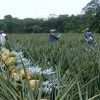
Post COP21: Costa Rica’s Innovation Must Become the Global Norm
The Paris agreement means countries and corporations will be compelled to act much more quickly on making agricultural commodity production more sustainable. Companies must look beyond their supply chains. Farmers need support to overcome barriers such as: struggle with ineffective farming practices, lack of investment and fluctuating commodity prices.
Tanzania Farmers, Pastoralists Launch Forum to Resolve Water Conflicts
At a remote village of Itunundu in Iringa, farmers and pastoralists recently met to discuss the best way to share land resources while charting out a strategy to prevent unnecessary fights among themselves. No one in the village ever imagined that this meeting would ever take place as the two groups had for long considered themselves enemies: they often clashed for water and pastures to feed their animals thus causing deaths and loss of property.
Central America Makes Uneven Progress in Clean Energy
Over the last decade, Central America has managed to reduce its dependence on fossil fuels for the production of electric power, while expanding coverage. But the progress made by each country varies widely.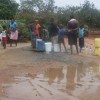
Groundwater Crisis Worsens Food Insecurity
Sijabuliso Nleya has been kept busy in the past few weeks digging up sand. He is not a sand poacher like scores of people who local district councils across the country say are digging along dry river beds for sand used in the construction of houses. "The situation is terrible," said Nleya, who owns a plot in Douglasdale, a small farming community on the outskirts of Bulawayo.
World Leaders Agree to Save the Planet – Now It’s Time to Actually Do It!
The day, 12 December 2015 was historic. Following decades of negotiations, countries agreed to sign the first global, legally binding climate agreement.
Radio rage in India
It is 8 am in Anugondanahalli village about 70 kms from India's IT hub of Bengaluru, capital of the southern Indian state of Karnataka. A group of farmers are huddled around a radio set sipping hot tea and tuned in to Sarathi Jhalak, a local community radio station (CRS) broadcasting on FM 90.4. On air is a programme about climate change that has everybody hooked. Experts are sharing simple tips on how farmers can pro-actively minimise the impact of erratic weather on their crops.
Europe is disintegrating while its citizens watch indifferent
We are witnessing the slow agony of the dream of European integration, disintegrating without a single demonstration occuring anywhere, among its 500 millions of citizens. It is clear that European institutions are in an existential crisis but the debate is only at intergovernmental level.
Tackling Climate Change in the Caribbean: Natural Solutions to a Human Induced Problem
The world is still celebrating the Paris Agreement on Climate Change, the main outcome of the 21st Conference of the Parties of the United Nations Framework Convention on Climate Change. Its ambitions are unprecedented: not only has the world committed to limit the increase of temperature to “well below 2°C above pre-industrial levels,” it has also agreed to pursue efforts to “limit the temperature increase to 1.5 °C.”« Previous Page — Next Page »


As unsustainable human consumption and production systems are driving changes in average temperatures and weather patterns, "abnormal" is increasingly becoming the norm. So far, a lack of financing has been standing in the way of a comprehensive global plan for climate adaptation, and a global financial crisis has contributed to an increasing reliance on public-private partnerships. Our Climate Change page provides you with the latest news about international and local efforts to address what's frequently been called "the challenge of our time", the forces behind the climate change and the impact it has on the world's most vulnerable populations. Along the way, we bring you stories on growing citizen awareness, new scientific data, and emerging climate policies towards sustainable development.

The Week with IPS

Tracking global progress towards a sustainable world

